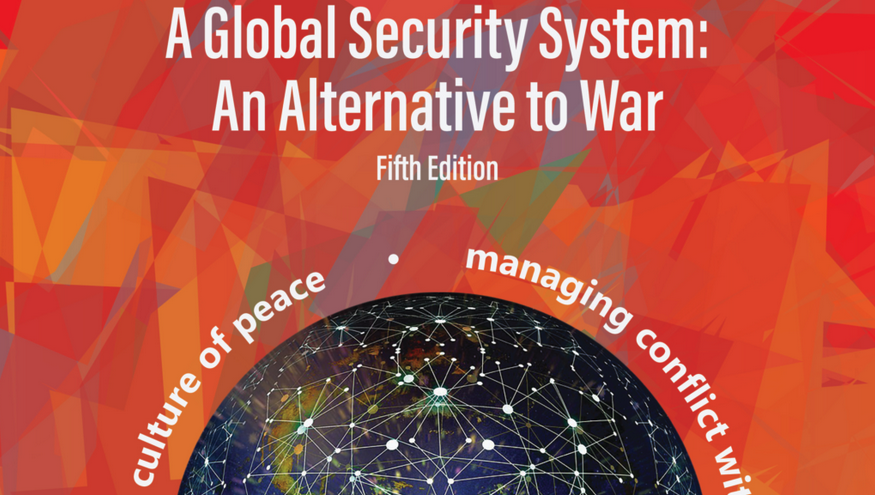
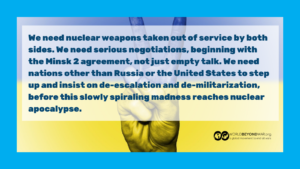
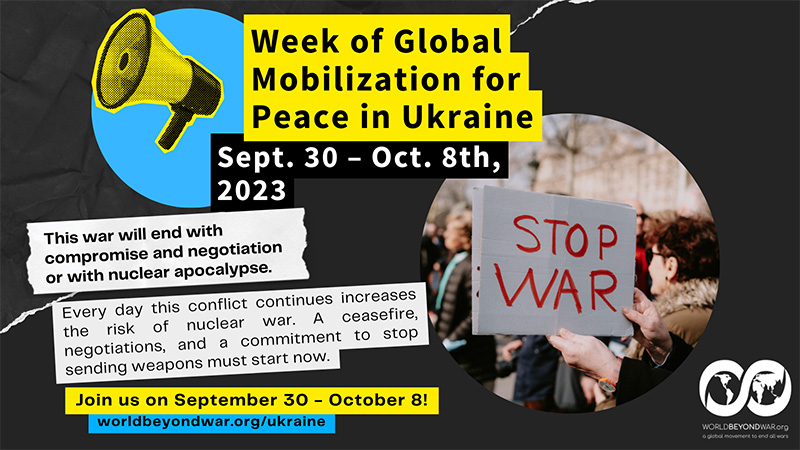
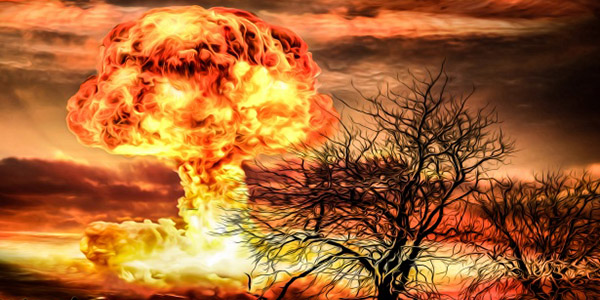
The war in Ukraine will end with compromise and negotiation or with nuclear apocalypse. Total defeat of either side is dramatically less likely. So, while both sides are to blame, and while most people like to blame only one side or the other, what matters right now is that both sides are insisting on unconditional surrender, which will not happen — nuclear war will happen first. We need serious peace negotiations with compromise from both sides — and concern for the self-government of the people — now!
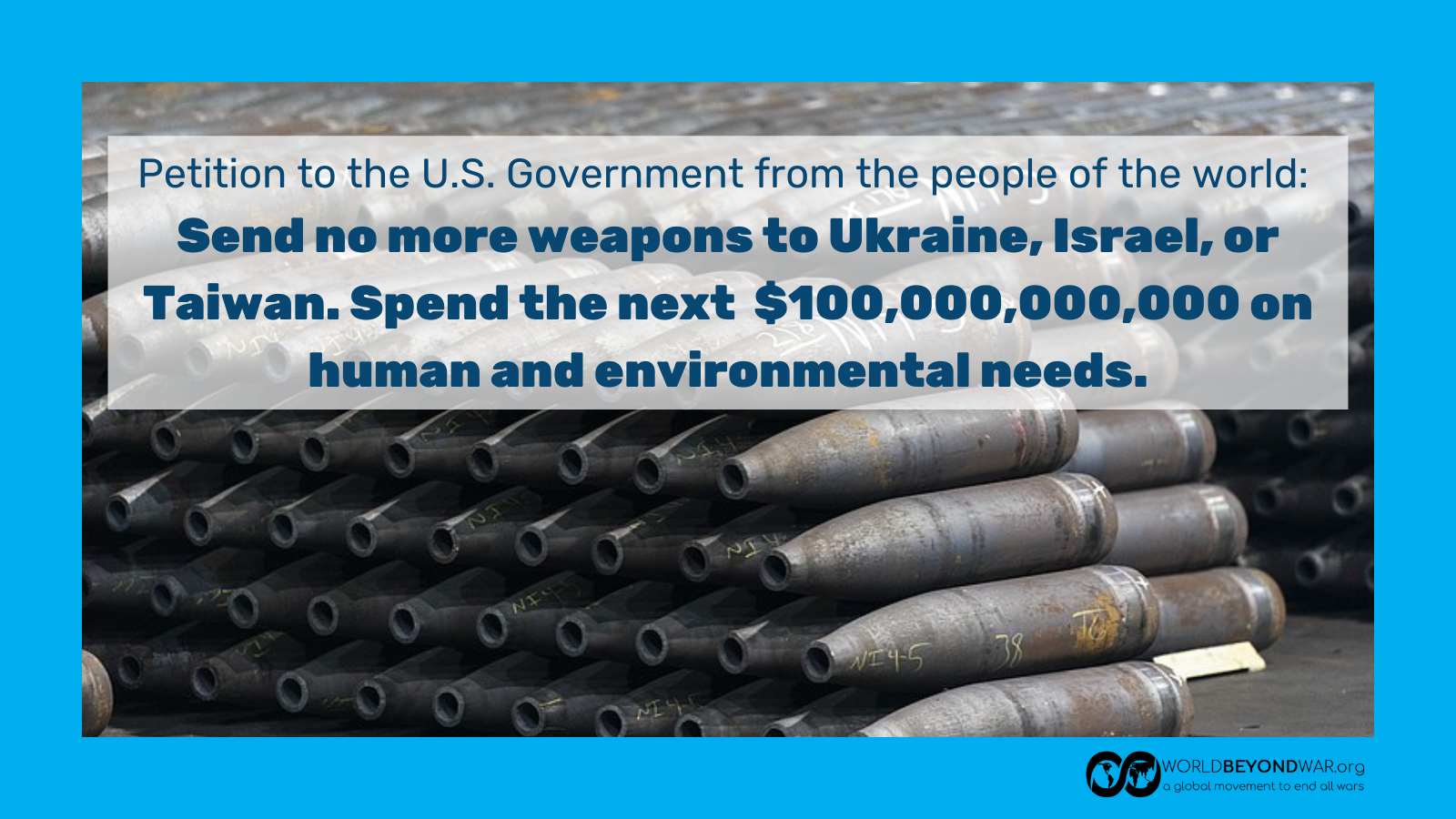
Please Sign These Petitions
Please Support These Coalitions
Find or Post Events:

A Project You Can Help With
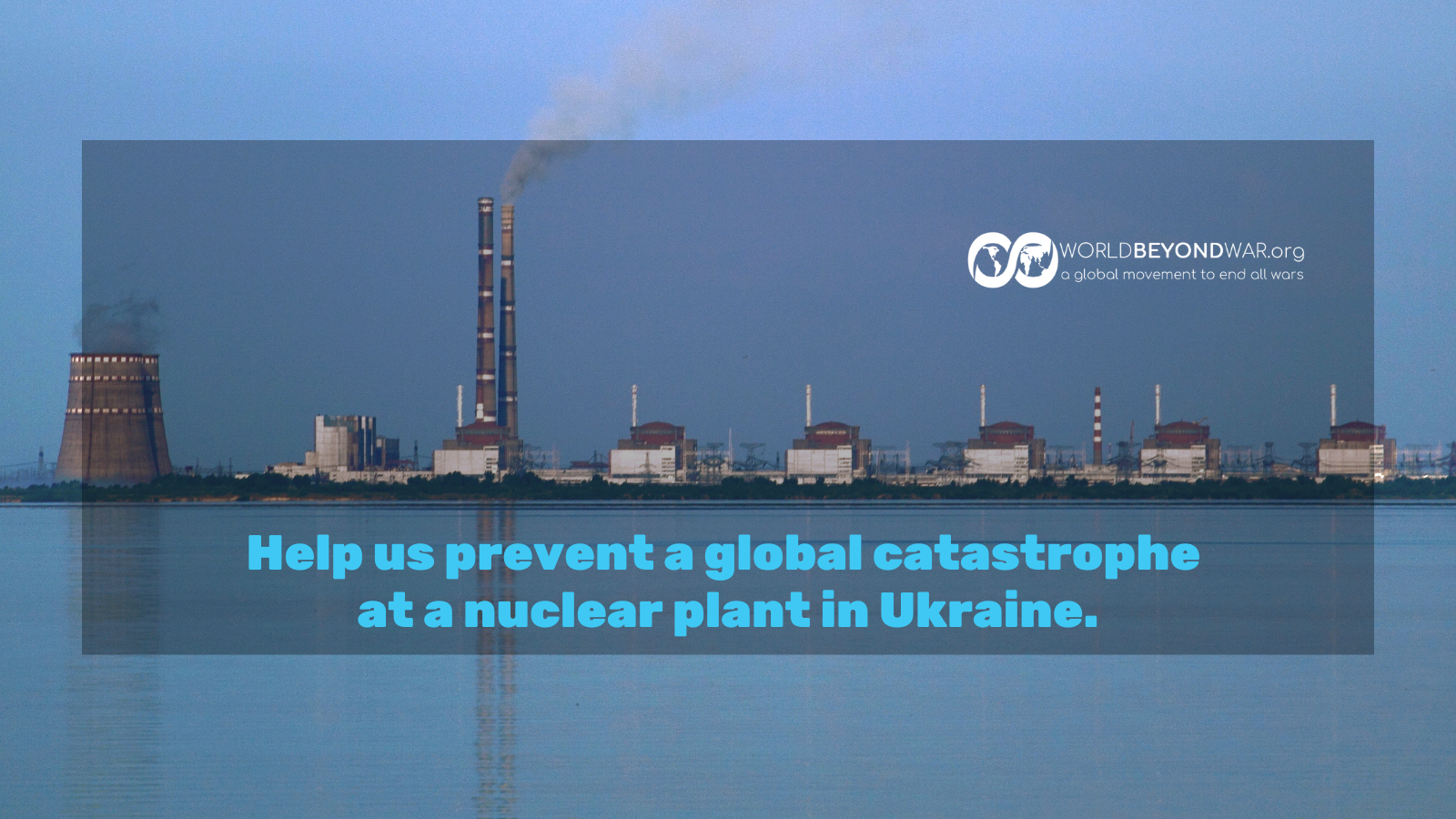
Key Information
The negotiations were in Istanbul
https://www.nytimes.com/2022/03/29/world/europe/russia-ukraine-peace-talks-istanbul.html
And reached agreement
https://www.foreignaffairs.com/ukraine/talks-could-have-ended-war-ukraine
It was quickly reported that Boris Johnson had sabotaged
Over the months since, numerous U.S. and UK and Russian officials have said that it was the West’s refusal to allow the agreement that prevented it
https://responsiblestatecraft.org/ukraine-russia-2669196351/
Including Victoria Nuland on camera
https://www.youtube.com/watch?v=HiS2dg_atfc&t=3176s
Here is the account of a Ukrainian negotiator
https://twitter.com/aaronjmate/status/2109004473804665307
This was what Medea Benjamin and David Swanson put into a book about NATO:
In late March 2022, thanks to peace talks mediated by Turkey, Russia was ready to withdraw from all the territory it had just occupied in return for a simple commitment by Ukraine to give up its ambition to join NATO and not to allow NATO military bases or missile installations on its territory. Ukrainian President Volodymyr Zelensky was ready to accept.
But then, on April 9, 2022, UK Prime Minister Boris Johnson flew into Kyiv and told Zelensky that the “collective West” would not support the agreement—and the talks ended. Germany, France, and Italy eventually fell in line behind the U.S. and the UK, as did Zelensky.
In late 2023, Russia reportedly proposed new peace negotiations—this time with the United States, knowing that the U.S. had pushed Ukraine not to negotiate.[i] Reuters broke the story of the Russian initiative, but reported that, after a meeting of intermediaries in Turkey, followed by a meeting in Washington with top U.S. officials, the U.S. quashed the idea. National Security Adviser Jake Sullivan told Putin’s foreign policy adviser Yuri Ushakov that the U.S. was willing to talk to Russia about other matters, but not about peace in Ukraine.
[i] Guy Faulconbridge and Darya Korsunskaya, “Putin’s suggestion of Ukraine ceasefire rejected by United States, sources say,” Reuters, February 13, 2024, https://www.reuters.com/world/europe/putins-suggestion-ukraine-ceasefire-rejected-by-united-states-sources-say-2024-02-13.
This is what David Swanson put into War Is Still A Lie:
Prior to the Russian invasion and bombing of Ukraine in February 2022, U.S. corporate media consumers had heard horrible things about Russia since 1917, with a bit of a lapse during World War II, intensified during the Cold War, elaborated for several years with the annexation of Crimea presented as a greater threat to peace on Earth than the wars on Iraq and Afghanistan, and hyped up with Russiagate for the last five years or so. The Russian attack was horrific and depicted as such. Victims were shown and discussed as clearly and passionately as though they were Americans or Israelis. Various media commentators openly discussed their own racist perspective of caring about “white” Ukrainian war victims more than other war victims. Almost overnight, people who couldn’t have told you what Ukraine was the day before would stop you on the street and ask you if you were helping Ukraine. This was the most successful propaganda I had ever seen or heard of. “Helping Ukraine” came to mean anything from hanging up a Ukrainian flag (many of them still there in 2026) to sending humanitarian aid to Ukrainians to supporting the U.S. government sending Ukraine mountains of free weapons. This support for Ukraine went deep even into those Americans who had opposed many other wars. This war they were going to support, and with it NATO, and with NATO (somehow) really stick it to Trump.
Of course, what I call “propaganda” was largely true. Russia had invaded Ukraine and was killing and destroying on a major scale. People were truly suffering as they had in every other war. But the story was intentionally and misleadingly and drastically incomplete. Remember that poll showing that people assume everything has been done to avoid war? Almost always everything has been done to guarantee war, and that was the case here as well. To some extent that would become better known as the war went on. To a greater extent, people would simply come to believe the war had lasted too long. Support for this war would weaken. But at first, most consumers of Western corporate media were enthusiastic for the war, while a minority that had opposed all kinds of U.S. wars enthusiastically supported the Russian side of the war in Ukraine. Those of us who oppose all sides of all wars had a hard time getting anyone to even understand our position. If you didn’t support the side someone was on, then you simply must support the other side, or so they told me.
From very early in the war, many of the world’s governments, plus the UN Secretary General and the Pope, took the same position as us incomprehensible war abolitionists: both sides should stop fighting and start talking — and no, we’re not going to support your side or the other side.[i]
Both sides claimed “last resort.” Both said they’d had no options other than war. Both were tragically mistaken. U.S. and other Western diplomats, spies, and theorists had predicted for 30 years that breaking a promise and expanding NATO would lead to war with Russia.[ii] President Obama had refused to arm Ukraine, predicting that doing so would lead exactly where it did. Prior to what would very often be labeled “the Unprovoked War” there had been public comments by U.S. officials arguing that the provocations would not provoke anything. “I don’t buy this argument that, you know, us supplying the Ukrainians with defensive weapons is going to provoke Putin,” said Senator Chris Murphy (D., Conn.).[iii] One can still read a RAND report advocating creating a war like this one through the sorts of provocations that senators claimed wouldn’t provoke anything.[iv]
In September 2023, then Secretary General of NATO Jens Stoltenberg explained the cause of the war in terms Vladimir Putin would have agreed with, saying, “[Putin] went to war to prevent NATO, more NATO, close to his borders.”[v] Ukraine could have simply committed to not joining NATO. This might not have been easy. Ukrainian President Volodymyr Zelensky might have had to keep some campaign promises rather than appease some Nazis. That would have been difficult and risky for him, perhaps. But the war was difficult and risky for millions of people. The United States had facilitated a coup in Ukraine in 2014.[vi] Fighting between Ukraine and eastern provinces that sought autonomy began at that time. In the days prior to the Russian invasion, Ukrainian attacks on those provinces increased significantly, while news reports carried new Western predictions each day that Russia would invade the next day.[vii] Russia’s horror of NATO came not just from NATO’s expansion to Russia’s border but also from the United States tearing up treaties, installing missile bases, and proliferating nuclear weapons. Some Americans are better able to understand this if you describe it as a Cuban missile crisis in reverse, though you could also just call it a Cuban missile crisis, since Kennedy resolved that crisis by agreeing to remove missiles from Turkey in exchange for the Soviet Union removing missiles from Cuba. Now U.S. missile bases are as close to Russia as they were then, but no Russian bases are in the Americas.[viii] Ukraine could have stayed out of this geopolitical rivalry and committed to neutrality.
A reasonable agreement had been reached at Minsk in 2015. Ukraine could have abided by it. President Zelensky had been elected in 2019 promising peace negotiations. He could have kept that promise, even though the U.S. (and rightwing groups in Ukraine) pushed back against it. Russia’s public demands in December 2021 had been perfectly reasonable, and a better deal from Ukraine’s perspective than anything discussed after that date.[ix] Ukraine could have negotiated with Russia at that time. This was before war fever had exploded. When U.S. Congress members suggested negotiating peace in October 22, there was such fury that they pretended their suggestion had been an accident.[x] By then the White House was producing a whirlwind of propaganda claiming the other side was monsters with whom one could not speak, even while negotiating with the Russians on prisoner exchanges and grain exports. By then if you pressed someone on negotiating, they would tell you that it was the people of Ukraine who opposed negotiating and wanted more war, and who the HELL were you to deny them that right?! (You were someone on the planet at risk if the war went nuclear, but who cared about that? Years later, when polling clearly showed that Ukrainians wanted peace negotiations, I feel like I got yelled at less.) But already in February and March of 2022 after meetings in Belarus and Turkey, the two sides had effectively agreed to a 15-point peace plan. Russia was ready to withdraw from all of Ukraine except for Crimea and the self-declared republics in Donbas, while Ukraine would renounce future membership in NATO and adopt a position of neutrality between Russia and NATO, as it should have done all along. There would have been transitions in Crimea and Donbas based on the will of the people there — a concept virtually lost in the subsequent years of discussions of the interests of the two sides of the war (and a concept complicated by mass movement of populations). The U.S. and UK governments effectively ordered the Ukrainian government not to make a peace deal a month into the war.[xi] That bit of information was one of those that war partisans showed a great ability never to learn, but if you learned it, then it became harder to believe that the U.S. government was committed to escalating the risk of nuclear war purely because it respected the wishes of Ukrainians. The U.S. “Defense” Secretary in April 2022 openly talked about using the war to weaken Russia. As the slaughter rolled forward for years, with deaths mounting on both sides, Ukraine could have negotiated at any time, since Russia was willing, and governments around the world proposed numerous very similar peace proposals.[xii] As the war rolled on, by 2025, Victoria Nuland, who at the time had been U.S. Under Secretary of State for Political Affairs, openly admitted on video that the U.S. and UK had blocked a peace agreement very soon after the Russian invasion of Ukraine. Her justification was that the agreement would have denied Ukraine the right to certain kinds of weapons without denying Russia the same.[xiii] For that, hundreds of thousands had to die.
RAND’s scheme had been to weaken Russia and boost NATO by provoking Russia into a war in Ukraine (and the lives of Ukrainians and Russians be damned). The Russian government was not composed of complete idiots. They have to have known that if they took this bait they would give NATO a greater assist than it could ever give itself, that NATO would gain new members in Scandinavia, new funding for weapons, new bases across the nations nearest Russia, and new popularity, at a moment when the purpose of its existence was quite questionable. Nonetheless, Russia chose to attack Ukraine and to cite fear of NATO’s expansion as the reason. Perhaps the thinking was that NATO would expand either way, so why not try a hail mary, but war is not always rational. Did Russia really have no other choices? At the time, I jotted down 30 ideas of things the Russian government might have tried instead of organized mass murder. Russia could have . . .
- Continued mocking the daily predictions of an invasion and created worldwide hilarity, rather than invading and making the predictions simply off by a matter of days.
- Continued evacuating people from Eastern Ukraine who felt threatened by the Ukrainian government, military, and Nazi thugs.
- Offered evacuees more than $29 to survive on; offered them in fact houses, jobs, and guaranteed income. (Remember, we’re talking about alternatives to militarism, so money is no object and no extravagant expense will ever be more than a drop in the bucket of war spending.)
- Made a motion for a vote in the UN Security Council to democratize the body and abolish the veto.
- Asked the UN to oversee a new vote in Crimea on whether to rejoin Russia.
- Joined the International Criminal Court.
- Asked the ICC to investigate crimes in Donbas.
- Sent into Donbas many thousands of unarmed civilian protectors.
- Sent into Donbas the world’s best trainers in nonviolent civil resistance.
- Funded educational programs across the world on the value of cultural diversity in friendships and communities, and the abysmal failures of racism, nationalism, and Nazism.
- Removed the most fascist members from the Russian military.
- Offered as gifts to Ukraine the world’s leading solar, wind, and water energy production facilities.
- Shut down the gas pipeline through Ukraine and committed to never building one north of there.
- Announced a commitment to leaving Russian fossil fuels in the ground for the sake of the Earth.
- Offered as a gift to Ukraine electric infrastructure.
- Offered as a gift of friendship to Ukraine railway infrastructure.
- Declared support for the public diplomacy that Woodrow Wilson pretended to support.
- Announced again the eight demands it began making in December 2021, and requested public responses to each from the U.S. government.
- Asked Russian-Americans to celebrate Russian-American friendship at the teardrop monument given to the United States by Russia off New York Harbor.
- Joined the major human rights treaties it had yet to ratify, and asked that others do the same.
- Announced its commitment to unilaterally uphold disarmament treaties shredded by the United States, and encouraged reciprocation.
- Announced a no-first-use nuclear policy, and encouraged the same.
- Announced a policy of disarming nuclear missiles and keeping them off alert status to allow more than mere minutes before launching an apocalypse, and encouraged the same.
- Proposed a ban on international weapons sales.
- Proposed negotiations by all nuclear-armed governments, including those with U.S. nuclear weapons in their countries, to reduce and eliminate nuclear weapons.
- Committed to not maintaining weapons or troops within 100, 200, 300, 400 km of any borders, and requested the same of its neighbors.
- Organized a nonviolent unarmed army to walk to and protest any weapons or troops near borders.
- Put out a call to the world for volunteers to join the walk and protest.
- Celebrated the diversity of the global community of activists and organized cultural events as part of the protest.
- Asked the Baltic states that have planned nonviolent responses to Russian invasion to help train Russians and other Europeans in the same.
These don’t sound like things the Russian government would do, of course. They’re not macho. They’re not proud. They’re not unilateral. They’re not skeptical or suspicious. They’re not traditional, religious, or homophobic. They’re not in the great tradition of celebrating militarism and World War II. My point — and I understand that it’s a difficult one — is that nothing actually prevented the Russian government from doing such things, had it been able to take them seriously and try them. They might have failed, of course. What Bolivians and Albanians were doing when I wrote this chapter might very well fail to. They also might succeed. And Russia taking outside-the-box steps might have succeeded too, or might have failed in the short term but succeeded over a longer period. That’s hardly a worse choice than choosing something guaranteed to make matters worse while killing lots of people. The war put the world at nuclear risk. It put sections of the world at risk of starvation, deprived of Ukrainian grain. It impeded urgent cooperation on non-optional crises, such as climate. It was the most predictable, most understandable, and worst choice available. And while the Russian government took this cowardly choice, many individual Russians bravely risked their safety and freedom to protest the war or flee the country. Those who made it to the United States were forcibly sent back to Russia to be conscripted into the war or brutally punished.[xiv]
As Nietzsche said, insanity is rare in individuals but the norm in groups, parties, nations, and epochs. Knowing that Russia will fight over NATO expansion, NATO puts everything it has into expansion. Knowing that NATO will expand further if it attacks Ukraine, Russia attacks Ukraine. Knowing that expanding NATO created this mess and can only make it even worse, NATO doubles down on further expansion. Knowing that it takes two for any tango or arms race, Russia invests in a military build-up at its borders. And so on until . . . what?
“We were — knee deep in the Big Muddy
“But the big fool said to push on”
Locked in a vicious cycle, the war has gone on for over four years. We’ve been told that Ukraine is protecting democracy, even as Ukrainians have seen their civil liberties vanish. We’ve been told that if Russia gets anything at all out of the war, the rule of law will crumble, as if Ukraine or the United States or NATO has some actual interest in the rule of law that we are supposed to acknowledge with a straight face. We’ve been told that Russia aims to take over the world, whose nations could fall like dominoes. (This is the U.S. military’s going green by recycling some old lies.) We’ve been told that . . . PUTIN PUTIN PUTIN eeeeek! even though the guy would seem like a slightly comic senior citizen if it weren’t for the standard set by the U.S. Senate. And we’ve been told in the West, as the Russians have likewise been told in Russia, that victory is right around the corner. You know they’re telling the truth because that’s the exact same place it’s been for over four years.
“We were — waist deep in the Big Muddy
“And the big fool said to push on”
The Ukraine War came on top of the COVID pandemic, which had already flipped politics inside-out, making it very difficult to guess what someone thought on one issue by knowing what they thought on another. On Ukraine, the Democrats had the royal throne in the White House, and the display of abject cowardice from the Democrats in Congress was probably unprecedented. From your most “progressive” heroes to your worst AIPAC (American Israel Public Affairs Committee) sell-outs, they all saluted and obeyed. And we all know that you can’t have people outside of politics with any expertise on peacemaking being seen on television or in newspapers. So leftists who still opposed wars spoke with each other and anyone else they could through webinars and social media. But there were occasional antiwar voices in corporate media. They were often the voices of racists, fascists, xenophobes, and believers that bizarre Biblical and apocalyptic scenarios were playing out for the good of us all.[xv] So one had to say “I agree with so-and-so about Ukraine, and, yes, here are all the things we disagree on . . . .” And one had to decide whether to stay home and be called a do-nothing quitter or go and speak on a stage at the only sort of rally happening, the sort with people you believed were generally damaging the world.
“We were — neck deep in the Big Muddy
“And the big fool said to push on”
The U.S. Congress kept funneling money into mostly weapons for Ukraine and calling it “aid.” This led to people like Senator Rand Paul finally saying that they wanted to stop supporting Ukraine and instead support the United States. But a government that is preventing peace agreements while arming fighting that is devastating a country is not self-evidently supporting that country. It would have been nice for everyone to drop the nationalism and militarism and say “I want to stop buying weapons and start buying books.” Instead, one group was busy posing, looking tough at the camera, and declaring their willingness to sit in their air-conditioned offices and fight to the last Ukrainian, while another was proposing to deprive the Ukrainians of support.
By summer and fall of 2023, a rapidly increasing percentage of the U.S. public — a majority in some polls, and a plurality in all polls — wanted to stop supporting or aiding Ukraine. But what did that mean? Was it wisdom or selfishness? And what should we make of the arsenal-of-democracy warriors who have ignored our wishes with hardly a passing thought for democracy?
“Paradoxically, the more sacrifices we make for an imaginary story, the stronger the story becomes, because we desperately want to give meaning to these sacrifices and to the suffering we have caused. In politics, this is known as the Our Boys Didn’t Die in Vain Syndrome.”
— Yuval Noah Harari
Trump 2.0 promised that if he were elected he would just go ahead and end the war on Ukraine prior to his inauguration. A year and a half into his second reign, the war bleeds away just as before, while Trump launches other wars, threatens yet other wars, and distracts from them all with his inane construction projects and logorrhea. U.S. weapons are still sold to Ukraine, but the money now comes from Europe, as no new gifts to the Ukraine war have passed the U.S. Congress since 2024.
In September 2024 there was a presidential election debate between Trump and then-Vice President Kamala Harris. The big news stories out of it were that Trump had lied that Somali immigrants were trying to eat your pets and that he cared in the slightest about healthcare. But perhaps the big stories should have been that Trump had nothing to say about the climate of the Earth while Harris bragged about having increased fossil fuel production, and that when they touched on Ukraine for a few seconds they exchanged their typical roles: Trump blurted out facts while Harris fantasized. ABC “News,” which ran the debate, demanded that Trump swear his support for Ukrainian “victory.” ABC did not define “victory,” or explain how it might be possible in the real world or how many lives might be lost in continuing to senselessly pursue it, or address the growing risk that nuclear apocalypse would actually be achieved, or justify the past years of endless prediction of imminent “victory.” To the delight of many Democrats, Trump refused repeatedly to take the oath of victory-belief. Hah! Nobody would vote for him now! Media outlets that listed some of Trump’s lies and fantasies included in their lists his refusal to take the victory oath. Trump blurted out that negotiations were needed, that lives were being wasted, and that nuclear war was being risked. I’d love to have been able to quote a sane and respectable person saying those things on a U.S. television network, someone I thought would actually act on them, someone I could have trusted further that I could throw him. Instead I got Trump. Yet while Trump rambled on about how Israel would cease to exist if Harris were elected, and the two competed over who loved Israel more, Harris calmly explained that if Trump were elected Putin would take over Ukraine, Poland, and the rest of Europe. I don’t know who believed that, but I know Trump was elected.
“Which of the following statements about the war with Russia comes closest to your personal views?”
- Ukraine should continue fighting until it wins the war
- Ukraine should seek to negotiate an ending to the war as soon as possible
Gallup asked that question in a poll of Ukrainians in 2022, 2023, 2024, and 2025. The first time, 72 percent of Ukrainians wanted Ukraine to continue fighting and only 22 percent to negotiate an end to the war. The fourth time, 24 percent wanted to continue fighting and 69 percent wanted to negotiate an end to the war. Gallup did not ask that 69 percent whether peace should have been negotiated years earlier. Neither did it ask U.S. pundits whether all the free weapons had still been the right thing because Ukrainians said so. Neither did it ask whether more weapons would be. Nor did it ask anyone who had spent years pointing out that a negotiated peace would have to come sooner or later (so why not sooner) how they had managed to know that or what else they knew.
Ukraine was (as of this writing, still is) an unusual war in many ways, a throw-back to older wars. Most wars are fought in places that manufacture few weapons. Most wars kill more civilians than members of militaries. Most wars are far from Europe and across divides of religion or “race.” Ukraine didn’t fit that model. But this gives us an opportunity to consider the assumption built into most discussions of wars that its only the killing of civilians that should concern us. The young men forced into participation in the war by the two governments in this case were human beings, weren’t they? On one side we were shown their humanity, told their stories. In the moment of attacking and killing each other they were engaged in organized mass-murder. Calling one group of them defensive depends on an understanding of politics, not of the battlefield. There were actual battlefields and they were places of slaughter. Nothing that went on there should be acceptable to anyone. We should stop, in every war, speaking of concern over only civilian deaths.
I want to highlight one example of lying about Ukraine and then shifting over a period of years to admitting the truth and bragging about it. In 2022, someone blew up Nord Stream pipelines that brought gas from Russia to Germany. It was in the Russian government’s stated interest to sell gas through those pipelines. It was in the U.S. government’s expressed interest to cut off Russian supplies and instead sell Europe more expensive U.S. fossil fuels. U.S. President Joe Biden had declared that if Russia invaded Ukraine then “we” would “bring an end to” those pipelines. It was in the Ukrainian government’s interest, as it understood it, to hurt Russia economically. It was in humanity’s actual interest to shut down all fossil fuel infrastructure. Yet, on September 28, 2022, the New York Times ran this headline: “Sabotaged Pipelines and a Mystery: Who Did It? (Was It Russia?)” On June 15, 2026, the same paper ran this headline, which referred not to Russians but Ukrainians: “They Blew Up the Nord Stream Pipeline. Some Call Them Heroes.” Time wounds all heels.
[i] David Swanson, “Position of World’s Governments on Ukraine Considered Insane Pacifism in U.S.,” https://davidswanson.org/position-of-worlds-governments-on-ukraine-considered-insane-pacifism-in-u-s
[ii] Paul Keating, “25 Years ago, I Warned Expanding NATO Ranked with the Errors that Led to WWI and II,” https://worldbeyondwar.org/25-years-ago-i-warned-expanding-nato-ranked-with-the-errors-that-led-to-wwi-and-ii
Medea Benjamin and Nicolas J. S. Davies, NATO and a War Foretold, https://worldbeyondwar.org/nato-and-a-war-foretold
[iii] Politico, “Obama pressed on many fronts to arm Ukraine,” https://www.politico.com/story/2015/03/obama-pressed-on-many-fronts-to-arm-ukraine-115999
[iv] David Swanson, “RAND Corporation Urged Creation of the Horrors You’re Seeing in Ukraine,” https://worldbeyondwar.org/rand-corporation-urged-creation-of-the-horrors-youre-seeing-in-ukraine
[v] NATO, “Opening remarks,” https://www.nato.int/en/news-and-events/events/transcripts/2023/09/07/opening-remarks
[vi] Medea Benjamin, Nicolas J. S. Davies and Marcy Winograd, “Will the Senate Confirm Coup Plotter Nuland?” https://worldbeyondwar.org/will-the-senate-confirm-coup-plotter-nuland
[vii] Medea Benjamin and Nicolas J.S. Davies, “How the U.S. Started a Cold War with Russia and Left Ukraine to Fight It,” https://worldbeyondwar.org/how-the-u-s-started-a-cold-war-with-russia-and-left-ukraine-to-fight-it
[viii] Ibid.
[ix] David Swanson, “Russia’s Demands Have Changed,” https://warisacrime.org/2022/03/07/russias-demands-have-changed
[x] CNN, “‘People are furious’: Jayapal withdraws letter on Ukraine policy amid Democratic anger,” https://www.cnn.com/2022/10/25/politics/pramila-jayapal-ukraine-letter-democratic-backlash/index.html
[xi] Common Dreams, “Boris Johnson Pressured Zelenskyy to Ditch Peace Talks With Russia: Ukrainian Paper,” https://www.commondreams.org/news/2022/05/06/boris-johnson-pressured-zelenskyy-ditch-peace-talks-russia-ukrainian-paper
[xii] Pravda, “Putin ready for negotiations with West on certain conditions,” https://www.pravda.com.ua/eng/news/2022/10/30/7374148
David Swanson, “The Question of a Ukraine Agreement Is Not a Question,” https://davidswanson.org/the-question-of-a-ukraine-agreement-is-not-a-question
[xiii] Mikhail Zygar, “Victoria Nuland on Russia-NATO relations, peace negotiations with Ukraine, and the U.S. elections,” https://www.youtube.com/watch?v=HiS2dg_atfc&t=3192s
[xiv] New York Times, “He Fled Putin’s War. The U.S. Deported Him to a Russian Jail.” https://www.nytimes.com/2025/09/16/world/europe/trump-russia-war-deportations-vovchenko.html
[xv] David Swanson: “The Vicious Nasty Fascist Racists Are Right About Ukraine,” https://davidswanson.org/the-vicious-nasty-fascist-racists-are-right-about-ukraine
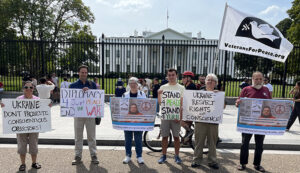
Remarks by David Swanson, World BEYOND War Executive Director, at a rally in U.S. President Joe Biden’s hometown in July 2023.
Here we are outside what appears to be a factory where U.S. government dollars create jobs, boost the economy, and fund activities that support the important needs of the U.S. public and the people of the world. Not a bit of those appearances is real.
When government dollars are spent on weapons, they eliminate jobs, because spending those dollars on education or green energy or never taxing them in the first place creates more jobs than spending them on weapons — and better paying jobs with wider economic impact — and that’s regardless of whether the weapons are given away to a foreign government and whoever ends up with them. Weapons are not products or services that circulate in the economy. They are made to destroy themselves and much else. And a huge chunk of the money ends up with very few people. This economy is drained and degraded by the funding of this factory — a reality that becomes apparent if we direct our vision more widely.
Compare life around here with life in many more wealthy and less wealthy countries. Where is our free higher education? Where is our secure retirement? Where is our healthcare as a human right? Where is our protection from the indignity and ordeal of poverty in the midst of mountainous wealth? Where, oh Amtrak Joe, for the love of all that is decent, are our non-antique trains? Why do we all travel about in Earth-eating automobiles? How is it that we’ve been kept so ignorant that we can be told we’re dreaming of fantasies when we speak of things that are normal for many more people than live in this country — a country where bringing back child labor is deemed progress?
Wait! we are told, first things first. We must manufacture weapons to save the world. After that we can worry about lesser matters. But we have been misled. All is not as it seems. The expansion of NATO, driven by the desire to sell weapons, is one half of the war dance that got us here. The U.S. refusal to allow peace negotiations keeps the war going. It’s not good enough to say that the Russians are immoral and evil and therefore the U.S. should do whatever Russia does. It’s not good enough for each side to justify using various weapons because the other side does, to place nuclear weapons in more countries because the other side does, to declare the only acceptable outcome complete overthrow of a government — whether Ukraine’s or Russia’s — because the other side does. It’s not good enough to say we are fueling a war that is killing off the people of Ukraine because the Ukrainian government supports it. When did corrupt governments run by television actors and bowing to rightwing pressures become our arbiters of moral wisdom? Is it the fumes from these factories that make us forget that we know better?
A journalist recently called giving weapons to Ukraine “too big to fail.” Like giving money to dirty banks. But one only says that about things that should fail but for which one imagines there are no alternatives. We have been misled. All is not as it seems.
President Biden says that Ukraine will join NATO after the war — practically guaranteeing that there will be no end to the war, other than a nuclear end to us all. The U.S. Senate just passed a bill banning ever leaving NATO, meaning that an ever-growing list of governments have the power to compel the rest of them to join in WWIII. Anything — anything at all — is a preferable alternative to this collective suicide pact. And there are some good alternatives. Unfortunately, they require certain emotional and intellectual feats that some find more difficult than sacrificing their own quality of life and the very lives of Ukrainians and Russians. The alternatives require compromise, humility, and acceptance of others as equals — skills we teach our children but not our Congress Members or Presidents.
Peace requires that neither the Russian not the Ukrainian government get everything it wants, everything it thinks it needs, everything it thinks it has killed a great many people for. That’s not easy. But the motivations for making peace could hardly be greater. Not only is this the path away from nuclear apocalypse, but it is also the path toward slowing the climate apocalypse and the accompanying catastrophes of homelessness, hunger, disease, and fascism. We need cooperation in place of combat, and we need it immediately.
The notion that we cannot demand and obtain such changes is in every news report and film. But we have been misled. All is not as it seems. The power of nonviolent action is exactly as strong as is reflected by the massive efforts invested in persuading us that it will not work. Let us remember in the words of Shelley to
Rise like Lions after slumber
In unvanquishable number–
Shake your chains to earth like dew
Which in sleep had fallen on you–
Ye are many — they are few.
The question of a Ukraine agreement is not a question, for two reasons. One, the warmaking parties want the war to continue. Two, if they were willing to make an agreement, everybody on all sides knows exactly (or darn near exactly) what it would have to be, and always has. Sooner or later, it will have to be agreed to, or the world end. (Yes, I’m aware that post-nuclear-apocalypse a rock will still be here with possibly some cockroaches on it; I just don’t find that particularly interesting.)
If we look at the Minsk II agreement in place prior to the war, compliance with which would have avoided the war, or at the proposals Russia was making just before its invasion, or the proposal from Italy last year (also here), or the proposal recently made by China, or the proposals from war-supporting stink tanks in the U.S. such as Brookings and the Center for the National Interest, we find that they share in common these points:
Ceasefire.
All foreign military forces out of Ukraine.
(Only China does not specifically state this, while it does state general principles that require it.)
Ukraine neutral / not in NATO.
(Only Minsk II does not say this, while China says it in its own vague way.)
Significant autonomy for the people of Crimea and Donbass to govern themselves as they see fit.
(Only Russia and China do not include this, and Minsk II does not mention Crimea; Italy says that these autonomous regions will be part of Ukraine, while the think tanks and Minsk II say that Donbass with be part of Ukraine, and the think tanks say that Crimea will be part of Russia. The National Interest proposes that Luhansk and Donetsk vote on their fate, and presumably does not say the same for Crimea only because Crimea already has voted and absolutely everyone knows how it would vote if it were to vote again.)
Demilitarization.
(While the details vary, all agree on the need to reduce the high level of weaponization, troops, and war preparations in the region.)
Ending sanctions.
(Only the two proposals that pre-date the recent sanctions on Russia fail to include the need to end unilateral sanctions.)
Rule of Law.
(All agree, only with variations in the details and hypocrisies, on the need to strengthen the international rule of law and the United Nations — except for the National Interest.)
Peaceful Relations.
(All agree on the need to establish peaceful, diplomatic relations, provide humanitarian aid, and — using other language — advance some process of truth and reconciliation.)
The fact that the above outline of an agreement is known to all is further suggested by the fact that Ukraine and Russia darn near agreed to it in March of 2022, before the U.S. and UK pressured Ukraine to keep the war going. Here’s a relevant bit from Medea Benjamin’s and Nicolas Davies’ book War in Ukraine: Making Sense of a Senseless Conflict:
“On March 10, the foreign ministers of Russia and Ukraine met in Antalya, Turkey, with Turkish Foreign Minister Mevlüt Çavuşoğlu mediating. These talks continued by video conference from March 14 to 17, with Israel as a second mediator, and produced a 15-point plan that Zelenskyy called ‘more realistic’ than previous proposals. The main points of the plan were for a cease-fire and Russian withdrawal, and for Ukraine to adopt a neutral status similar to that of Austria. Ukraine would renounce any future plan to join NATO and promise not to host foreign weapons installations or military bases, in exchange for new security guarantees from other countries. The Russian language would also be recognized as an official language in Ukraine. Russia’s sticking points involved the nature of the security guarantees and which countries would provide them, and the details of how the future of Crimea and the two People’s Republics in Donbas would be decided. But the outlines of a peace settlement were on the table.”
Until they weren’t. But it’s not as though we don’t still know what they are.
By David Swanson, World BEYOND War, September 6, 2023
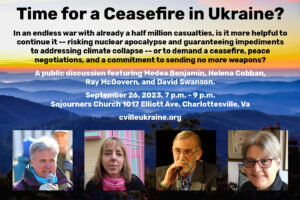
As much as any other town in the U.S., my town, Charlottesville, has failed in recent years when it comes to opposing wars. We used to be a leader, passing early resolutions through our city council — inspiring others — to advocate against wars in Iraq or Iran, against armed drones, telling Congress to move funding to human and environmental needs, divesting public dollars from weapons companies, ridding local police of weapons of war, etc. Peace rallies were not rare occurrences.
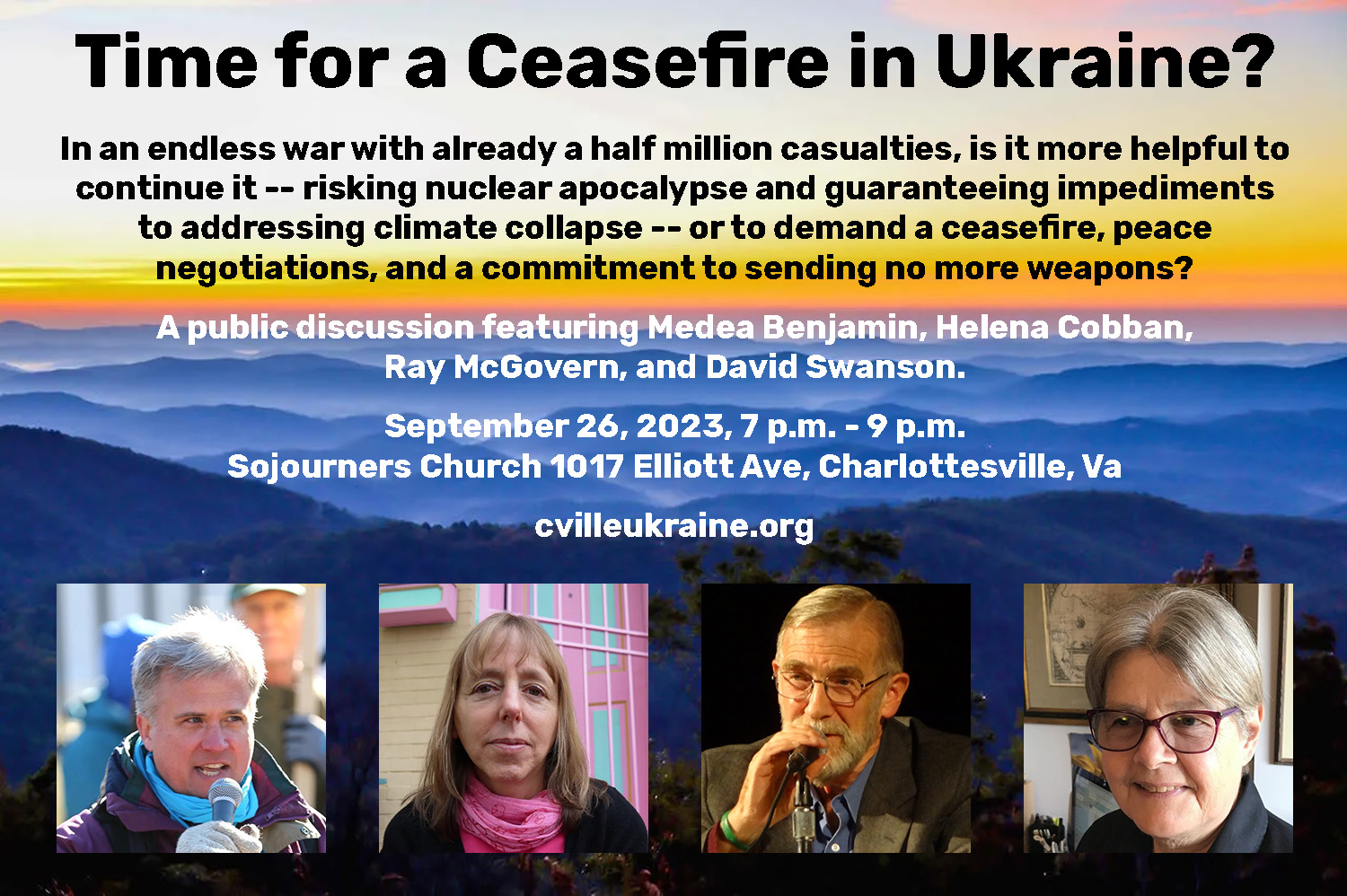
At long last we have an event planned to advocate and strategize for peace in Ukraine, one that will be livestreamed for the world to see at cvilleukraine.org. From a certain perspective, it’s very strange that it’s taken so long. Nothing in my lifetime has done more to increase the risk of nuclear apocalypse than the war in Ukraine. Nothing is doing more to impede global cooperation on climate, poverty, or homelessness. Few things are doing as much direct damage in those areas, devastating the environment, disrupting grain shipments, creating millions of refugees. While casualties in Iraq were heatedly disputed in U.S. media for years, there’s widespread acceptance that casualties in Ukraine are already near half a million. There’s no way to precisely count how many lives could have been saved around the world by investing hundreds of billions in something wiser than this war, but a fraction of that could end starvation on Earth.
From another perspective, it’s clear why there has been so much acceptance of this war. It’s U.S. weapons, not U.S. lives. It’s a war against a country demonized in U.S. media for decades, for its actual crimes and for fictions like imposing Donald Trump on us. (I can understand not wanting to admit that we did that to ourselves.) It’s a war against a Russian invasion of a smaller country. If you’re going to protest U.S. invasions, why not protest a Russian invasion? Indeed. But a war is a not a protest. It’s mass slaughter and destruction.
Manipulating good intentions is part of the standard package, folks. Destroying Iraq was marketed in the United States as for the benefit of the Iraqis. The most obviously provoked war in recent years, in Ukraine, was christened “The Unprovoked War.” U.S. and other Western diplomats, spies, and theorists predicted for 30 years that breaking a promise and expanding NATO would lead to war with Russia. President Barack Obama refused to arm Ukraine, predicting that doing so would lead toward where we are now — as Obama still saw it in April 2022. Prior to the “Unprovoked War” there were public comments by U.S. officials arguing that the provocations would not provoke anything. “I don’t buy this argument that, you know, us supplying the Ukrainians with defensive weapons is going to provoke Putin,” said Sen. Chris Murphy (D-Conn.) One can still read a RAND report advocating creating a war like this one through the sorts of provocations that senators claimed wouldn’t provoke anything.
But what can be done? Provoked or not, you have a horrendous, murderous, criminal invasion. Now what? Well, now you have endless stalemate, with years of killing or nuclear war. You want to do what you can to “help” Ukraine, but the millions of Ukrainians who have fled, and those who have stayed to face prosecution for peace activism, look wiser each day. The question is whether keeping a war going is more helpful to Ukrainians or the rest of the world than ending it with a compromise aimed at a sustainable peace. According to Ukrainian media, Foreign Affairs, Bloomberg, and Israeli, German, Turkish, and French officials, the U.S. pressured Ukraine to prevent a peace agreement in the early days of the invasion. Since then, the U.S. and allies have provided mountains of free weapons to keep the war going. Eastern European governments have expressed concern that if the U.S. slows or ends the weapons flow, Ukraine might become willing to negotiate peace.
Wow! Ukraine Ambassador Chalyi, who participated in peace talks with Russia in Spring 2022, states that “we concluded” “Istanbul Communique” & “were very close in… April to finalize our war with some peaceful settlement” & that Putin “tried everything possible to conclude… pic.twitter.com/NxknX9mTgP
— Ivan Katchanovski (@I_Katchanovski) December 28, 2023
Peace is viewed by some on both sides of the war (many of them quite far removed from the fighting), not as a good thing, but as even worse than ongoing slaughter and devastation. Both sides insist on total victory. But that total victory is nowhere in sight, as other voices on both sides quietly admit. And any such victory would not be lasting, as the defeated side would plot vengeance as soon as possible.
Compromise is a difficult skill. We teach it to toddlers, but not to governments. Traditionally a refusal to compromise (even if it kills us) has more appeal on the political right. But political party means everything in U.S. politics, and the President is a Democrat. So, what is a liberal thinking person to do? I would suggest a heavy dose of independent thinking. Nearly two years of peace proposals from around the globe almost all include the same elements: removal of all foreign troops, neutrality for Ukraine, autonomy for Crimea and Donbas, demilitarization, and lifting sanctions.
At this point, some observable action must precede negotiations. Either side could announce a ceasefire and ask that it be matched. Either side could announce a willingness to agree to a particular agreement including the elements above. If a ceasefire is not matched, the slaughter can be quickly resumed. If a ceasefire is used to build up troops and weapons for the next battle, well then, the sky is also blue and a bear does it in the woods. Nobody imagines either side as capable of switching off the war business that quickly. A ceasefire is required for negotiations, and an end to weapons shipments is required for a ceasefire. These three elements must come together. They could be abandoned together if negotiations fail. But why not try?
Allowing the people of Crimea and Donbas to determine their own fate is the real sticking point for Ukraine, but that solution strikes me as at least as big a victory for democracy as sending more U.S. weapons to Ukraine despite the opposition of the majority of people in the United States.
Key Books
- War in Ukraine: Making Sense of a Senseless Conflict by Medea Benjamin and Nicolas J.S. Davies with a preface by Katrina Vanden Heuvel.
- How the West Brought War to Ukraine by Benjamin Abelow
A Tale of Two Perspectives
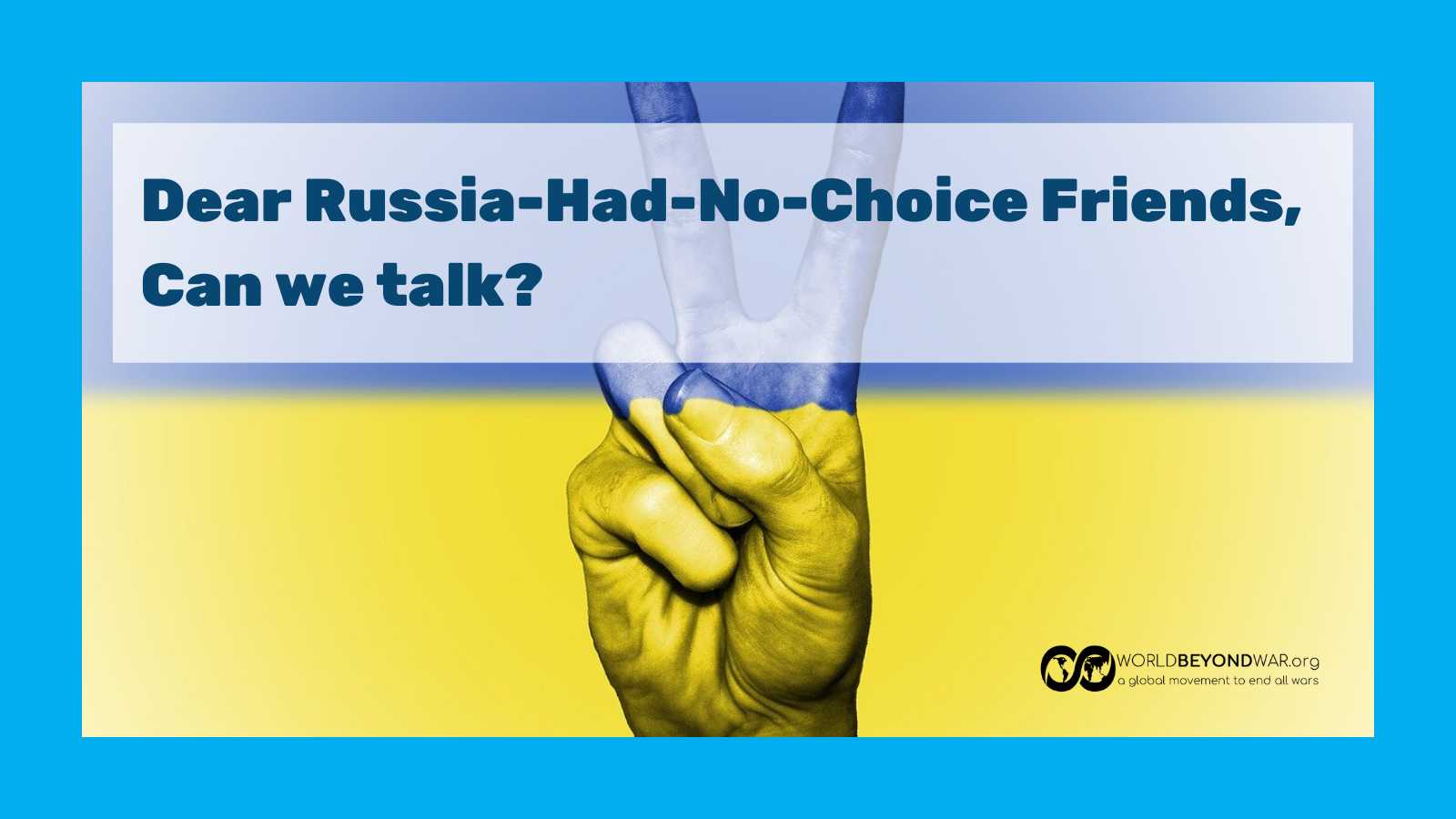
Blog Posts


Briefly, Where This War Came From
A reminder of why, when and how the war in Ukraine started…
— Laura Aboli Official (@LauraAboli_X) March 1, 2025
Geo-Political Scholar Jeffrey Sachs Schools the EU Parliament on the reasons behind the Russia Ukraine Conflict. pic.twitter.com/dKzd0EOe8i
How You Can Tell It's a War for Freedom
🚨 Lindsey Graham has just confirmed that they are not sacrificing the Ukrainian people for “freedom” and “democracy,” but for Ukraine’s minerals, which are worth trillions of dollars, and the West wants them.
This is unbelievable…
pic.twitter.com/A1aYqy6CPb— Gabe (@GabeZZOZZ) June 9, 2024
A Video Clip
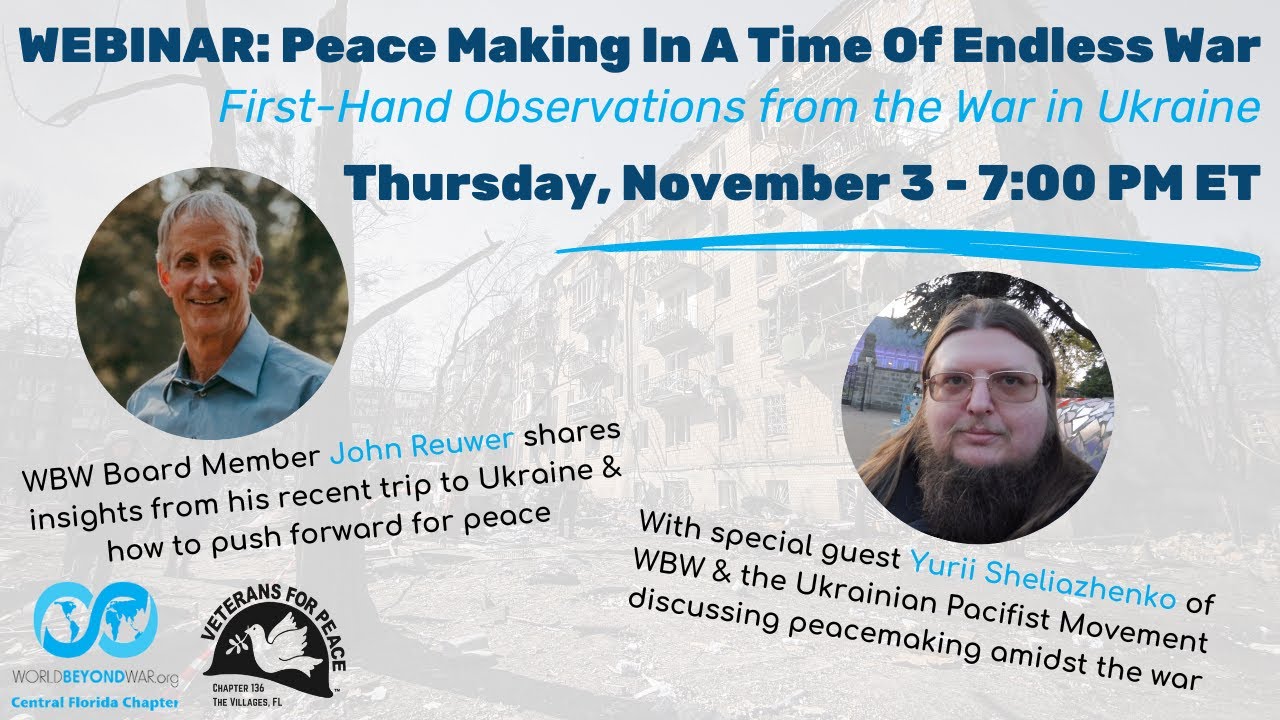
Watch this short clip of World BEYOND War Board Member Yurii Sheliazhenko. Find the full video of that interview, and other videos and articles below.
"It is disappointing that support of Ukraine in the West is mainly military support," says Ukrainian peace activist Yurii Sheliazhenko (@sheliazhenko). "Reporting on conflict focuses on warfare and almost ignores nonviolent resistance to war." pic.twitter.com/SiaTkRumj9
— Democracy Now! (@democracynow) March 1, 2022
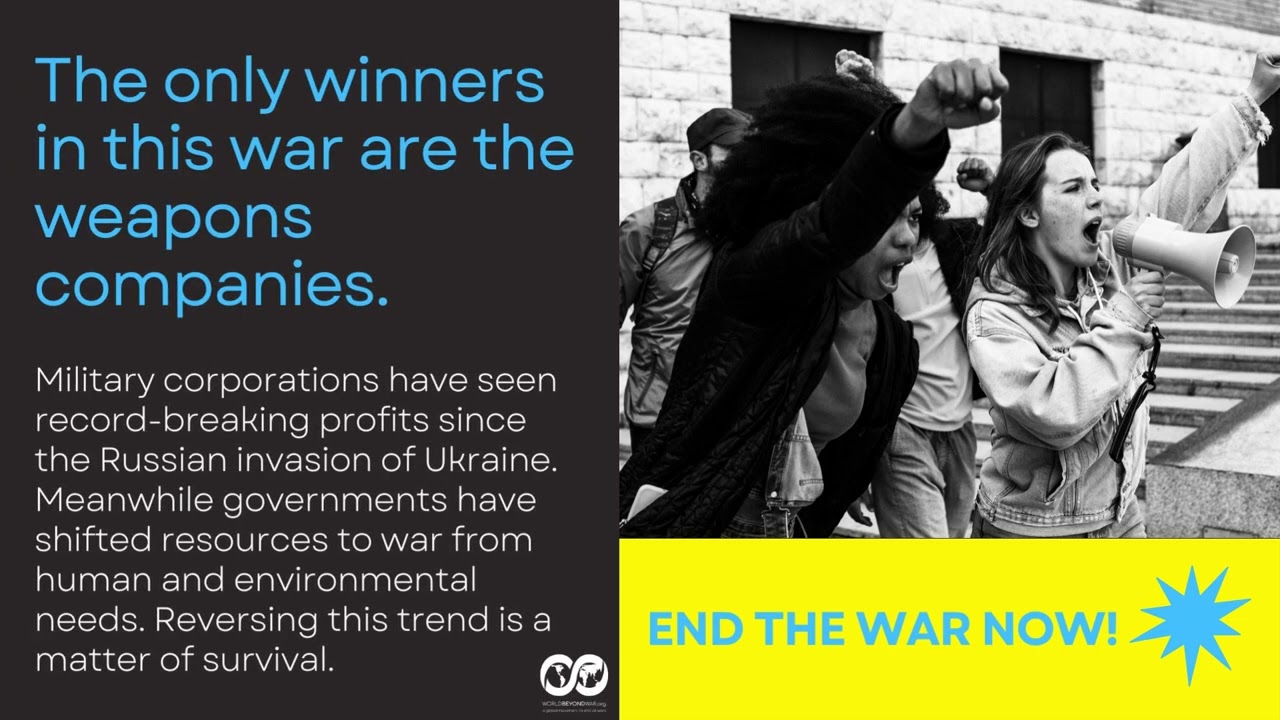
Social Media Graphics




Letters to Editors
Find sample letters to editors here and modify them (or not) as you like and submit them to your local media outlets along with plans for your events.
Things You Can Chant at Rallies
Chants
No more sobbing parents’ cries!
Time to make a compromise!
Ceasefire and negotiation!
No to nuclear escalation!
Videos
Playlist
0:10
1:29:40
58:01
29:18
1:23:53
1:26
1:28:18
1:28:46
2:20
0:32
0:11
Photos
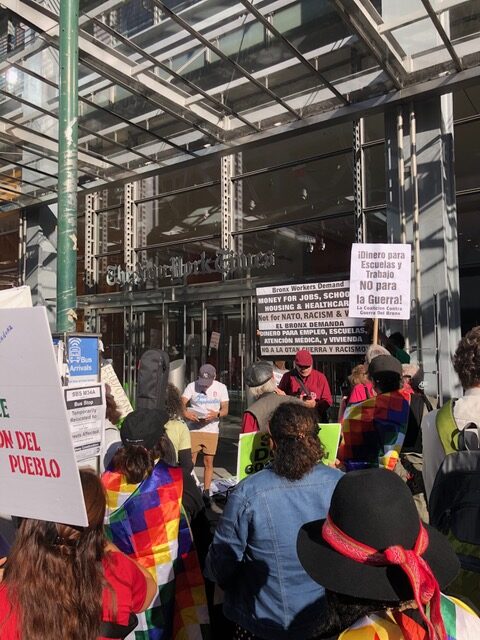
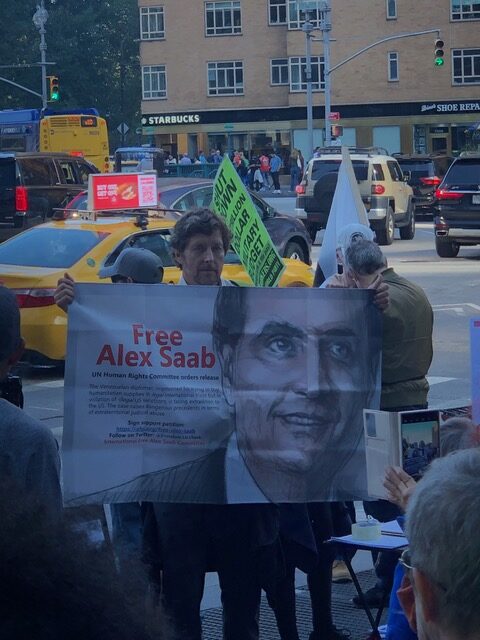
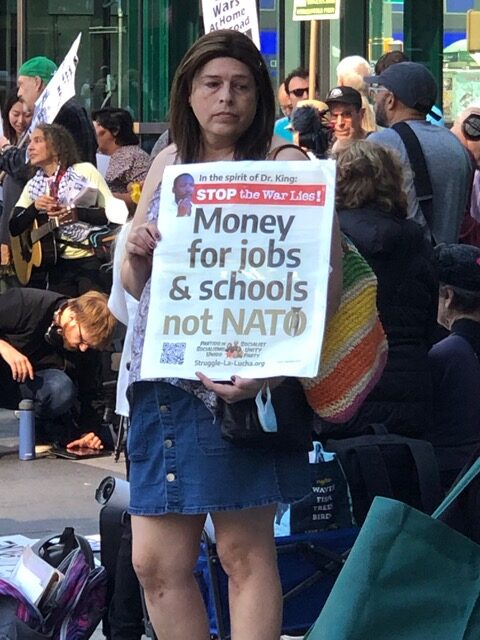
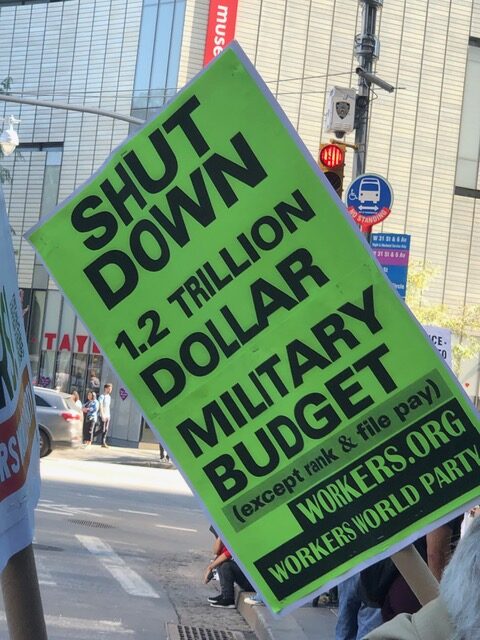
Myths
War gains support and acceptance from widespread belief in false information, and the accumulation of false information into generally false concepts or myths about war. This is good news, because it means we are not intractably divided by ideology or worldview. Rather, we will find more widespread agreement about war if we can just achieve more widespread awareness of accurate information. We’ve grouped myths about war into the following categories:
A Book Worth Reading Now