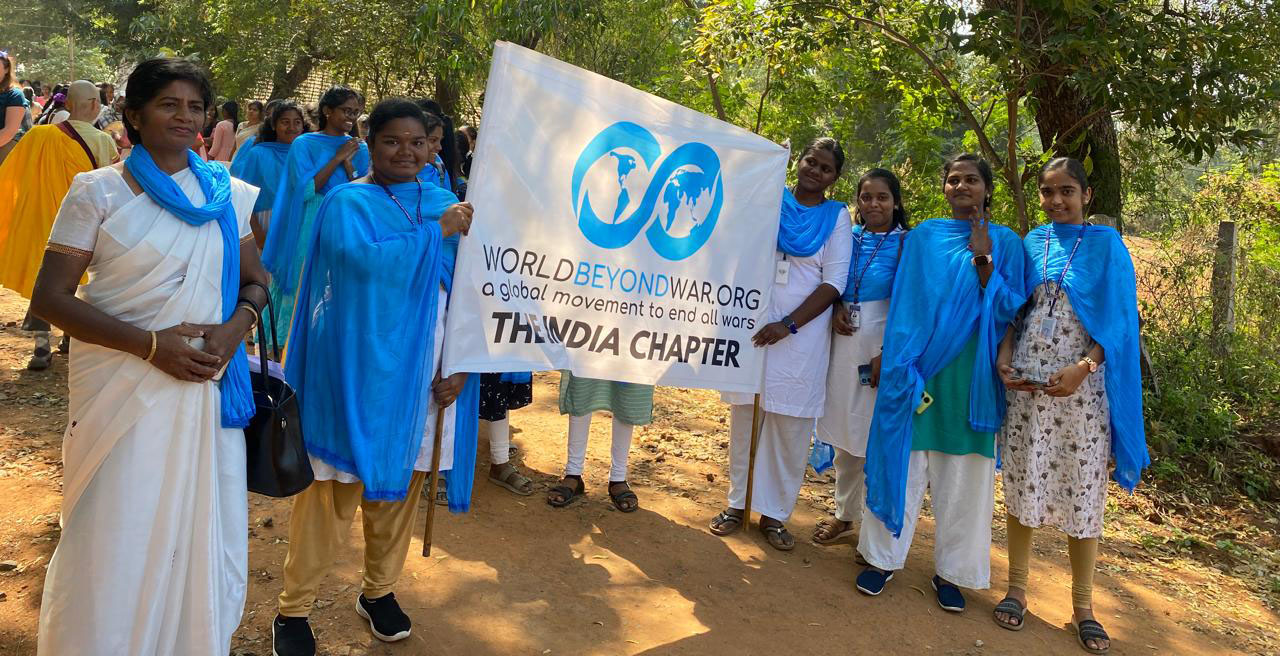
India for a World BEYOND War is a local chapter of the global World BEYOND War network, dedicated to the abolition of war and the promotion of lasting peace. Our mission is to challenge the pervasive belief that war is inevitable, just, or necessary, and to present nonviolence as the most effective, sustainable means to resolve conflict. We offer a roadmap for peace, rooted in demilitarizing security, nonviolent conflict resolution, and fostering a global culture of peace.
The human, environmental, and economic toll of war is catastrophic. Over the last century, war has claimed over 100 million lives, with millions more suffering from displacement, injury, and trauma. According to the Stockholm International Peace Research Institute (SIPRI), global military spending reached $2.1 trillion in 2021 (Stockholm International Peace Research Institute SIPRI Yearbook 2021). In India, ongoing conflicts—from insurgencies in Kashmir to the Naxal struggle—continue to claim lives, while critical resources are diverted from sectors like healthcare, education, and poverty alleviation. India’s military budget alone for 2021-2022 exceeded ₹5 lakh crore (approximately $65 billion), while the nation still grapples with vast socio-economic challenges. The misallocation of funds toward militarization instead of human security demonstrates the urgent need for a shift toward nonviolent strategies.
India’s nonviolent tradition offers powerful examples of how peace can be achieved without war. Mahatma Gandhi, regarded as the Father of Indian Nonviolence, led India’s independence struggle through the philosophy of ahimsa (nonviolence) and satyagraha (truth force). Gandhi’s iconic words, “An eye for an eye only ends up making the whole world blind,” remind us that violence breeds only more violence. His principles of peaceful resistance not only led India to freedom but also inspired countless global movements for justice and human rights. Through campaigns like the Salt March and nonviolent protests, Gandhi demonstrated that nonviolence was not only a moral choice but also a highly effective political strategy. His influence extended beyond India, shaping civil rights struggles worldwide.
Gene Sharp, often referred to as the father of global nonviolent strategies, further developed the principles of nonviolent resistance on the global stage. Sharp’s research demonstrated that nonviolent methods of resistance are twice as likely to succeed as violent uprisings (Sharp, From Dictatorship to Democracy: A Conceptual Framework for Liberation, 2010). He argued that “the power of the dictator comes from the consent of the people, and the power of the people comes from their willingness to act nonviolently.” His strategies—outlined in works like From Dictatorship to Democracy—have been used successfully in global movements, from the fall of dictatorships in Eastern Europe to the Arab Spring uprisings. His work highlights the transformative power of nonviolent struggle to disrupt unjust systems without the devastating costs of war.
Nonviolence is not merely an abstract concept—it is a practical and effective tool for conflict resolution. The success of India’s independence movement, along with modern movements like the Chipko Movement in the 1970s and the Narmada Bachao Andolan (Save Narmada Movement), prove that nonviolence can effectively challenge both social injustices and environmental degradation. The Chipko Movement in Uttarakhand, where villagers embraced trees to prevent deforestation, is a prime example of how nonviolent action can protect natural resources while also empowering communities. Similarly, the Narmada Bachao Andolan used peaceful protests to resist the construction of large dams that would have displaced thousands of people, illustrating how nonviolence can address development challenges.
At World BEYOND War, we advocate for a comprehensive plan to demilitarize global security. According to the Institute for Economics and Peace (IEP), global military spending is a massive drain on resources that could be better used to address human security needs such as education, healthcare, and climate change (Global Peace Index, 2022). For example, India’s military expenditure ranks as one of the highest globally, accounting for over 2% of GDP, while the country still faces significant challenges in areas like poverty, inequality, and climate change. Redirecting these funds toward sustainable development would create a more peaceful and secure world for all.
The United Nations High Commissioner for Refugees (UNHCR) reports that over 100 million people worldwide have been displaced due to armed conflict, underscoring the catastrophic human cost of war (UNHCR Global Trends, Global Trends: Forced Displacement in 2022). India, too, continues to witness displacement due to ongoing violence in regions like Kashmir and Chhattisgarh. However, nonviolent conflict management strategies—such as dialogue, negotiation, and diplomacy—hold the potential to resolve these conflicts without the violence and trauma that war brings. By embracing these peaceful methods, we can break the cycles of violence and build a more stable, just society.
India’s legacy of nonviolence offers an invaluable foundation for a world beyond war. As a nation that has demonstrated the power of peaceful resistance through figures like Gandhi and movements such as Chipko, India has the opportunity to lead by example in promoting a culture of peace. Nonviolence is not only a historical ideal but a practical, achievable approach to resolving conflict, creating security, and building a better future.
We believe a world without war is possible—and that nonviolence is the key to achieving it. By raising awareness, engaging in peaceful activism, and advocating for policy changes, World BEYOND War works toward creating a global system that prioritizes peace over war. We invite you to join us in building a world where war is no longer seen as an option, and where every nation, including India, can thrive in peace.
Together, we can create a future in which ahimsa and satyagraha guide the way forward for all of humanity.
Show your solemnity by signing the Declaration of Peace, or reach out using the contact form below.
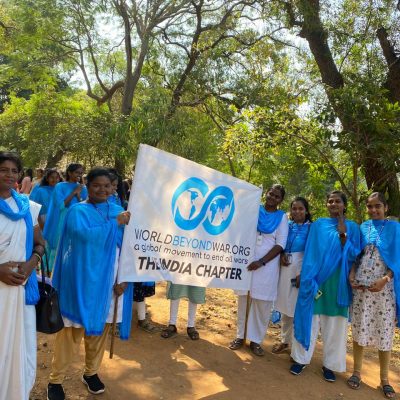
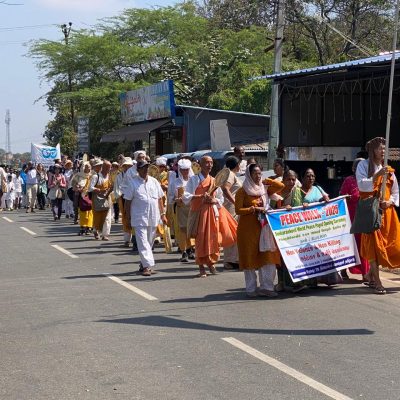
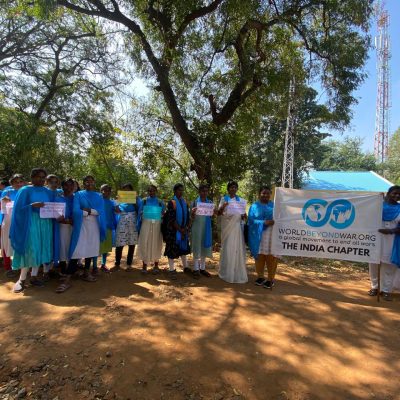
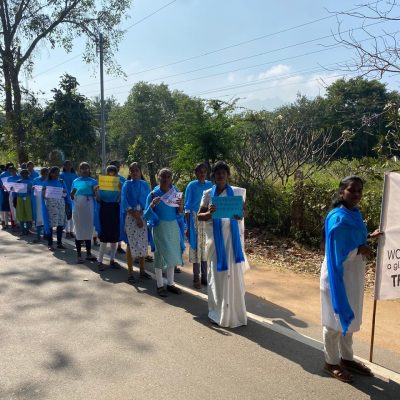
On February 12, 2025, members of the World BEYOND War India Chapter marched wearing blue peace scarves and carrying signs with messages about peace and nonviolence in support of the Buddhist Peace March to Sankarankoil. #WorldBEYONDWar