
Translate this page to any language:

This annual event on or about February 23 will continue in 2027!
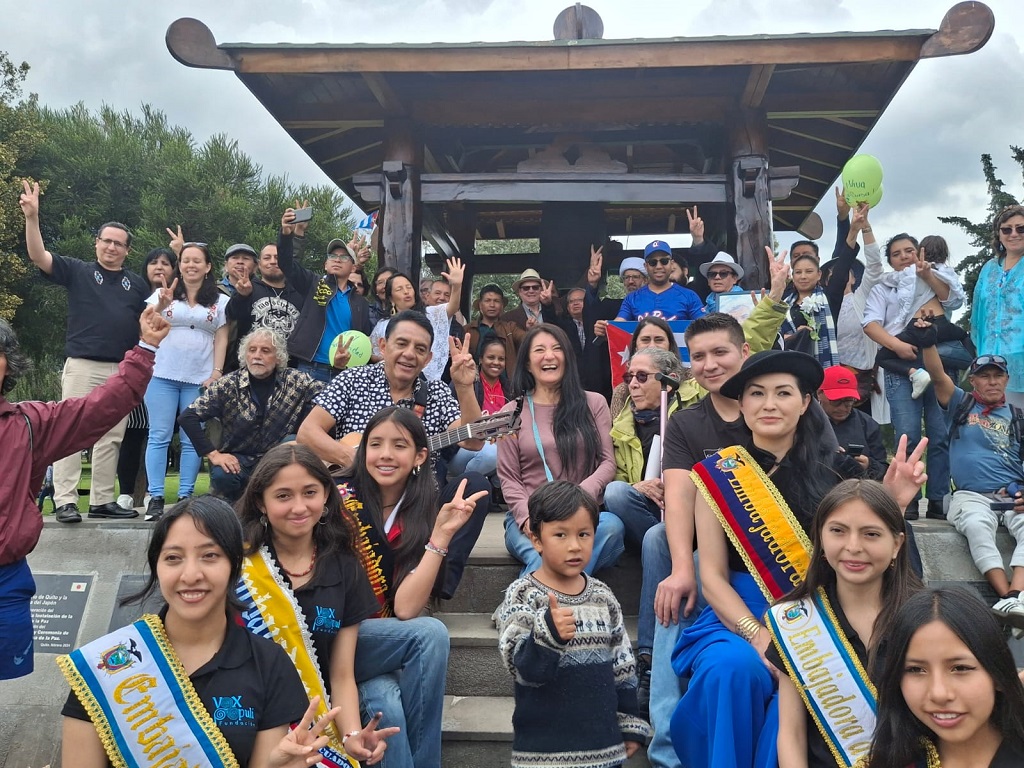
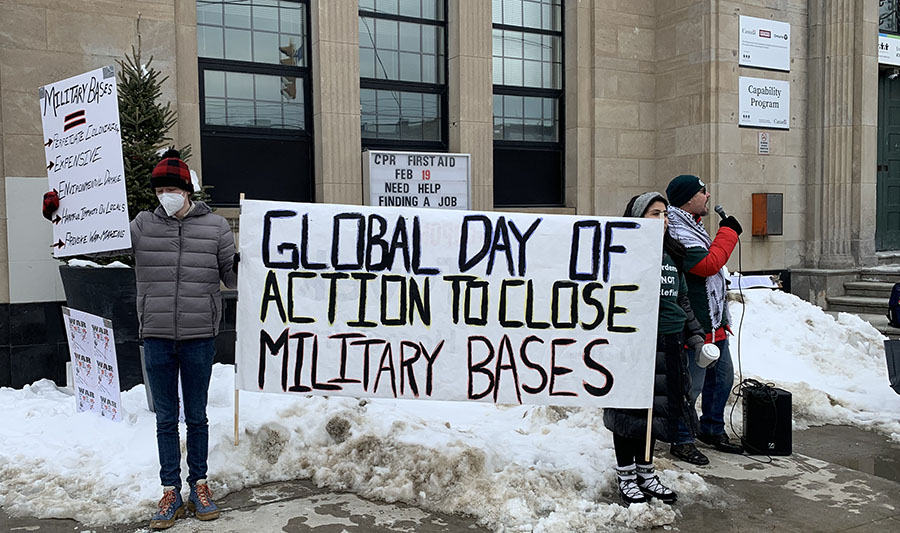
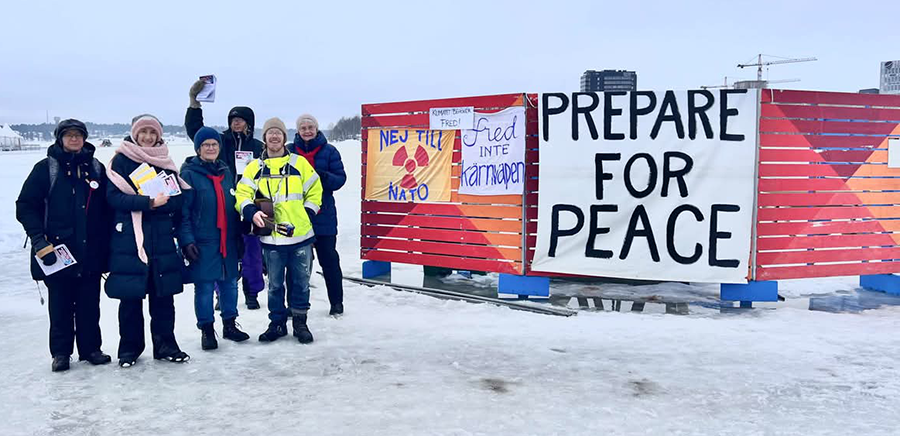
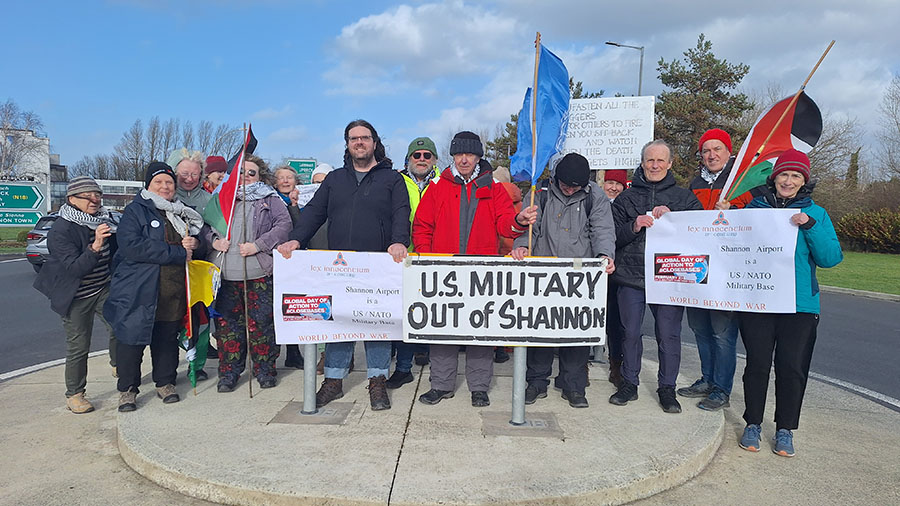
The 2026 Global Days of Action to #CloseBases happened on February 21-23, 2026.
For reports, photos, and videos from around the world, CLICK HERE.
Global Days of Action to #CloseBases Endorsers
Bay Area Cuba Solidarity Network.
CODEPINK.
Folk mot DCA.
Gesellschaft Kultur des Friedens.
Ground Zero Center for Nonviolent Action.
Illinois for a World BEYOND War.
Independent and Peaceful Australia Network.
International Committee of the National Lawyers Guild.
International Peace Bureau.
Kilusan para sa Pambansang Demokrasya (KILUSAN).
Lex Innocentium 21st Century.
Madres Contra La Guerra.
Malu ‘Aina.
Menwith Hill Accountability Campaign.
Military Poisons.
Observatory of International Organizations and Globalization (PADOP).
Pax Christi International.
Pax Christi New York State.
Peace Action.
Peace Economy Project.
The Rising Together Theater Company.
RootsAction.
Stopp Airbase Ramstein.
Stop AUKUS WA.
Stop the War Coalition.
Veterans For Peace.
War Prevention Initiative.
We Are Not Your Soldiers.
WILPF UK.
Women’s International League for Peace and Freedom US.
World BEYOND War.
Endorse by scrolling down and clicking on “Endorse as an Organization”
About the Global Days of Action
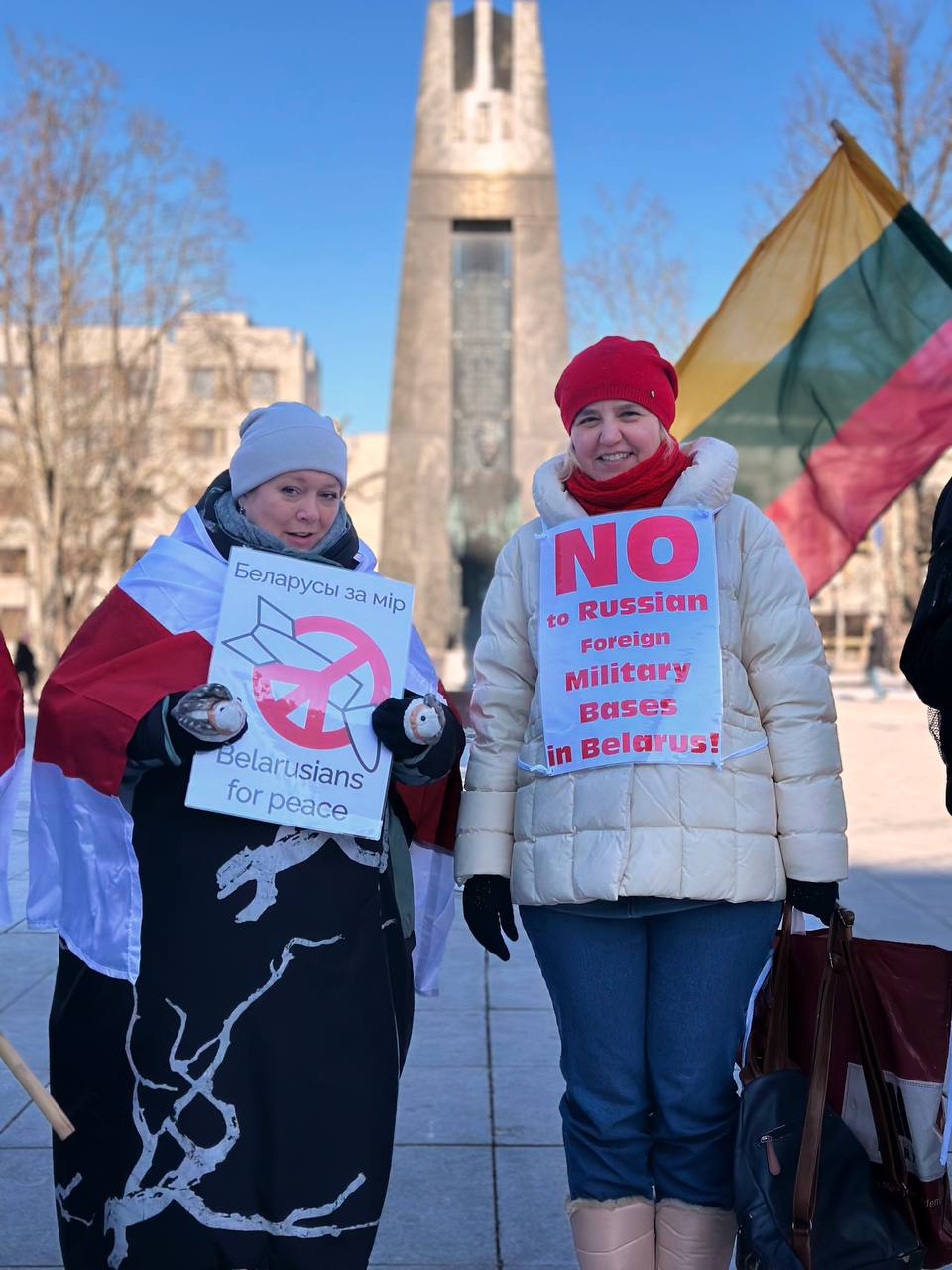
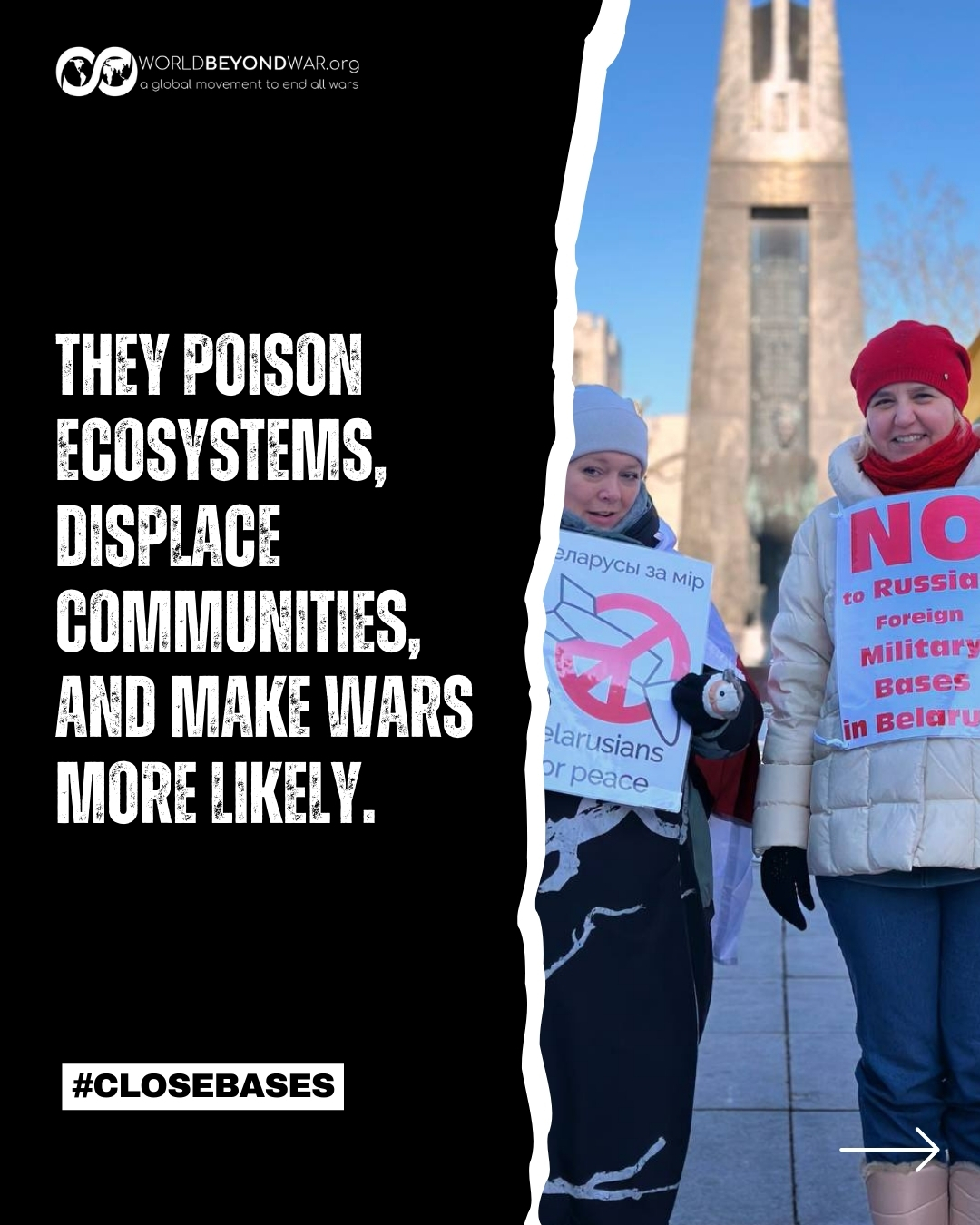
Military bases, especially foreign ones — current and sought — generate wars. The United States has used its bases in Latin America and the Caribbean to attack Venezuela, while threatening to take over Greenland to build more bases there. Iran is bordered by seven nations with U.S. bases. The nations to the south and east of China are packed with U.S. bases, as is Europe, as is Israel. Africa has foreign bases from several empires. Russia is making more use of its bases in Belarus.
Within the United States, bases are being used to stage invasions of cities and to imprison people snatched by ICE.
On February 23, 1903, the United States took over Guantanamo from Cuba. It has never restored it. People across Latin America have used this date to organize events opposing bases, militarism, and the Monroe Doctrine. We made it a global day of action for the first time in 2025. We’re expanding our second annual collection of events to include the February 21-22 weekend.
What you can do: Use our resources to easily plan a local educational or activist event of any kind: a panel, a protest, an art display, a banner-drop, a sit-in, a press conference, a film screening, a rally, a march. All kinds of nonviolent events opposing all kinds of military bases!
We call on individuals and organizations around the world to join the Global Days of Action to #CloseBases on February 21-23, 2026, by organizing events at military base sites or other locations near you.
Videos of Planning Meetings Held on February 3, 2026
Planning Help

1:01:18

1:02:15
Top 5 Reasons Why We're Calling for the Global Days of Action to #CloseBases
- Bases often perpetuate colonialism, removing Indigenous people from their lands. From Panama to Guam to Puerto Rico to Okinawa to dozens of other locations across the world, militaries have taken valuable land from local populations, often pushing out Indigenous people in the process, without their consent and without reparations. For example, the entire population of the Chagos Islands was forcibly removed from the island of Diego Garcia by the UK so that it could be leased to the U.S. for an airbase.
- Bases cost an exorbitant amount of $$. The cost of U.S. foreign military bases alone is estimated at $80 billion a year, money that could be better spent on healthcare, education, renewable energy, and so much more.
- Bases exacerbate environmental damage and the climate crisis. Military emissions are exempted from climate agreements, like the Kyoto Protocol. The construction of bases has caused irreparable ecological damage, such as the destruction of coral reefs and the environment for endangered species in Henoko, Okinawa. Furthermore, it is well documented at hundreds of sites around the world that military bases leach toxic so-called “forever chemicals” (PFAS/PFOS) into local water supplies, which has had devastating health consequences for nearby communities.
- Bases can have violent and harmful impacts on local communities.
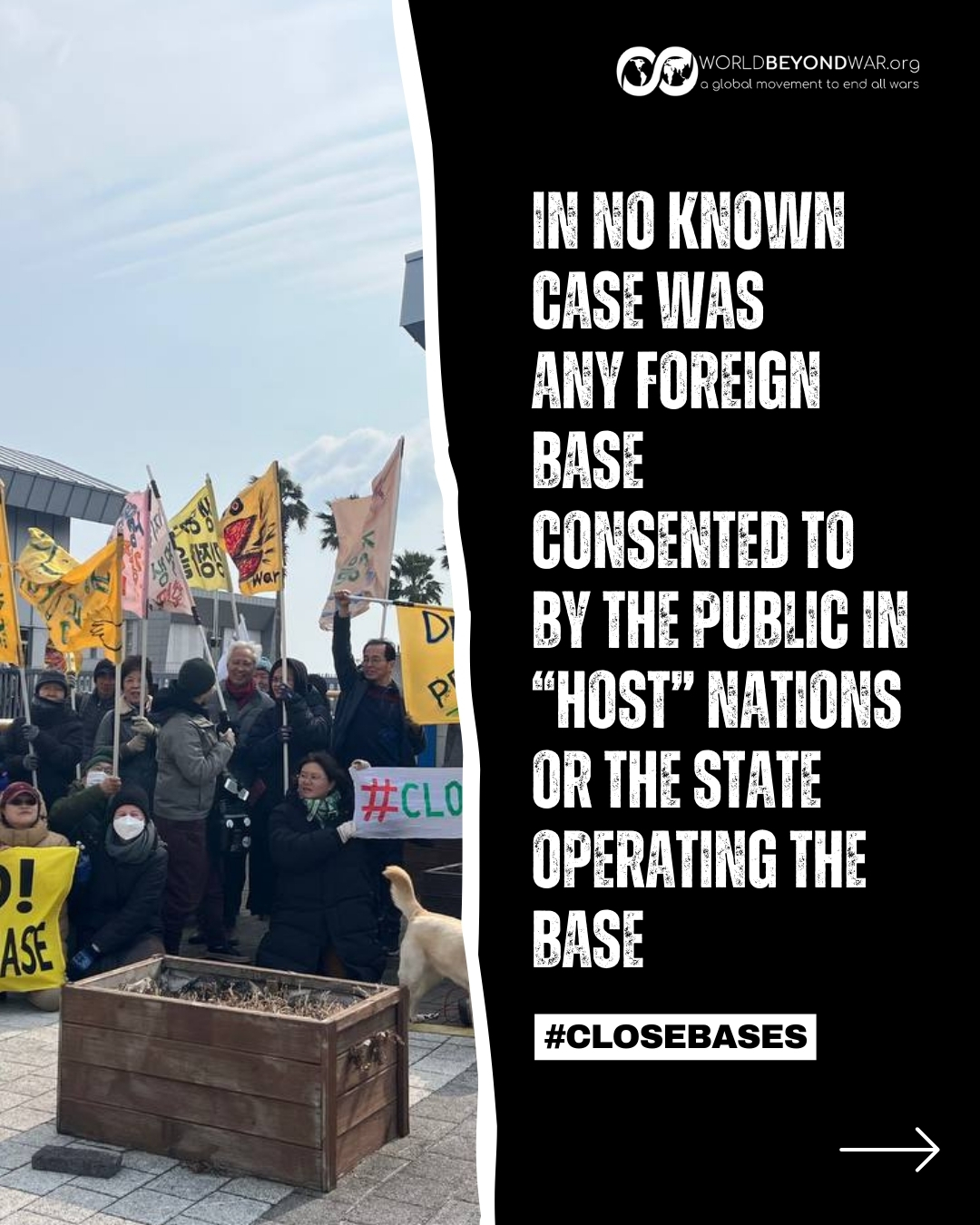
Militaries have a notorious legacy of sexual violence, including kidnapping, rape, and murders of women and girls in nearby communities. Yet troops stationed at foreign bases are often afforded impunity for their crimes due to Status of Forces Agreements (SOFAs) with the so-called “host” country. Bases can also bring a rise in property taxes and inflation in areas surrounding them which has been known to push locals out. - Bases heighten tensions and provoke war-making. The presence of hundreds of thousands of troops, massive arsenals, and thousands of aircraft, tanks, and ships in every corner of the globe facilitates war-making and promotes an arms race. Additionally, bases make locations into targets for attack. And foreign bases implicate countries in the crimes of foreign militaries.
Resources
You don’t need to study all of these things in order to create an event, but you may find one or two of them helpful!
Here is a slideshow presentation (Canva template and Powerpoint).
Be sure to use presenter mode to see the notes.
You can add to this presentation to include information on your local base(s) — feel free to ask us for help in doing so.
Here is a version for Africa, which you can also take and edit further (Canva template and Powerpoint). Also in French (Canva template and Powerpoint).
Swedish version: Världens kamp mot militärbaser (Thanks to https://folkmotdca.se)
- They heighten tension. The presence of almost 200,000 U.S. troops, massive arsenals, and thousands of aircraft, tanks, and ships in every corner of the Earth present a very real threat to surrounding nations. Their presence is a permanent reminder of the military capacity of the U.S. and are a provocation to other nations. Even worse for heightened tensions, the resources housed on these bases are used for military “exercises,” which are essentially, practice for war.
- They facilitate war. The prepositioning of weapons, troops, communications equipment, aircraft, fuel, etc. make the logistics for U.S. aggression quicker and more efficient. Because the U.S. is continually creating plans for military actions around the world, and because the U.S. military always has some troops “on the ready,” the initiation of combat operations is very simple.
- They encourage militarism. Rather than deterring potential adversaries, U.S. bases antagonize other countries into greater military spending and aggression. Russia, for example, justifies its interventions in Georgia and Ukraine by pointing to encroaching U.S. bases in Eastern Europe. China feels encircled by the more than 250 U.S. bases in the region, leading to a more assertive policy in the South China Sea.
- They provoke terrorism. In the Middle East in particular, U.S. bases and troops have provoked terrorist threats, radicalization, and anti-American propaganda. Bases near Muslim holy sites in Saudi Arabia were a major recruiting tool for al-Qaeda.
- They endanger host countries. Countries which have U.S. military assets stationed on them become targets for attack themselves in response to any U.S. military aggression.
- They house nuclear weapons. Effective 22 January 2020, the Treaty on the Prohibition of Nuclear Weapons (TPNW) will take effect. Nuclear weapons belonging to the U.S. are positioned in five European countries which do not have nuclear weapons themselves: Belgium, Germany, Italy, the Netherlands, and Turkey, plus one that does: the UK. The possibility of an accident, or becoming a target could be catastrophic.
- They support dictators and repressive, undemocratic regimes. Scores of U.S. bases are in more than 40 authoritarian and less-than-democratic countries, including Bahrain, Turkey, Thailand, and Niger. These bases are a sign of support for governments implicated in murder, torture, suppressing democratic rights, oppressing women and minorities, and other human rights abuses. Far from spreading democracy, bases abroad often block the spread of democracy.
- They cause irreparable environmental damage. Most host country agreements were made in the years before many environmental regulations were in place, and even now, the standards and laws that have been created for the U.S. do not apply to U.S. foreign military bases. There are no enforcement mechanisms for host countries to apply to ensure adherence to local environmental regulations either and may not even be permitted to do inspections due to Status of Forces Agreements (SOFA) between the countries. Moreover, when a base is returned to the host country there are no requirements for the U.S. to clean up the damage it has caused, or even disclose the presence of certain toxins like Agent Orange or depleted uranium. The cost to clean up fuel, firefighting foam, etc., can cost billions. Depending on the SOFA, the U.S. may not have to fund any of the clean-up at all. The construction of the bases has caused permanent ecological damage as well. The construction of a new facility which is currently being constructed in Henoko, Okinawa is destroying soft coral reefs and the environment for endangered species. Jeju Island, South Korea, an area designated as an “Absolute Conservation Area” and a UNESCO Biosphere Conservation, and despite strong opposition by inhabitants of Jeju Island, a deep water port is being constructed for use by the U.S. which has caused irreparable damage.
- They cause pollution.The exhaust of U.S. planes and vehicles cause significant degradation of air quality. Toxic chemicals from the bases enters the local water sources, and jets create enormous noise pollution. The U.S. military is the single biggest consumer of fossil fuels and producer of greenhouse gas emissions in the world, yet this is rarely acknowledged during discussion of climate change. In fact, the United States insisted on an exemption for reporting military emissions in the 1997 Kyoto Protocol.
- They cost an exorbitant amount of money. Estimates of the yearly cost of U.S. foreign military bases range from $100 – 250 billion. According to the United Nations, world starvation could be ended for the cost of only $30 billion per year; just imagine what could be done with an additional $70 billion.
- They deny land to indigenous populations. From Panama to Guam to Puerto Rico to Okinawa to dozens of other locations across the world, the military has taken valuable land from local populations, often pushing out indigenous people in the process, without their consent and without reparations. For example, between 1967 and 1973, the entire population of the Chagos Islands – about 1500 people, was forcibly removed from the island of Diego Garcia by the UK so that it could be leased to the U.S. for an airbase. The Chagossian people were taken off their island by force and transported in conditions compared to those of slave ships. They were not allowed to take anything with them and their animals were killed before their eyes. The Chagossians have petitioned the British government many times for return of their home, and their situation has been addressed by the UN. Despite an overwhelming vote of the UN General Assembly, and an advisory opinion by the International Court of Justice in the Hague that the island should be returned to the Chagossians, the UK has refused and the US continues operations from Diego Garcia today.
- They cause economic problems for “host” countries. The rise in property taxes and inflation in areas surround U.S. bases has been known to push locals out of their homes to seek more affordable areas. Many of the communities hosting bases overseas never see the economic windfalls that U.S. and local leaders regularly promise. Some areas, especially in poor rural communities, have seen short-term economic booms touched off by base construction. In the long-term, however, most bases rarely create sustainable, healthy local economies. Compared with other forms of economic activity, they represent unproductive uses of land, employ relatively few people for the expanses occupied, and contribute little to local economic growth. Research has consistently shown that when bases finally close, the economic impact is generally limited and in some cases actually positive — that is, local communities can end up better off when they trade bases for housing, schools, shopping complexes, and other forms of economic development.
- They station American troops who commit crimes. Throughout decades of a permanent U.S. military presence abroad, the military and its personnel have committed many atrocities. Overwhelmingly, the crimes go unnoticed and the perpetrators go unpunished. Rather than a collection of isolated incidents, they comprise a pattern of human rights abuses and, in some cases, war crimes. The lack of respect for the lives and bodies of indigenous people is another product of unequal power relationships between U.S. military and the people whose land they occupy. American troops abroad are often afforded impunity to injure and kill those understood to be inferior to them. These crimes carried out directly by U.S. personnel are suffered by powerless populations who have no recourse to obtain justice. Even their narratives are covered up and ignored. American troops commit crimes out of uniform as well. There is a long history on the Japanese island of Okinawa of the local population suffering violent crime at the hands of the American military including kidnapping, rape, and murders of women and girls. Prostitution is often pervasive around U.S. bases.
See bases mapped across the globe, along with other measures of war and peace.
- Coalition Against U.S. Foreign Military Bases
- Overseas Base Realignment and Closure Coalition
- Let Us Return USA — Support for the Chagossian People
- Australian Anti-Bases Campaign Coalition (AABCC): Resources about the impact of military bases in Australia
- Resources on military bases compiled by David Vine, author of Base Nation
- United States of War by David Vine
- The Sun Never Sets: Confronting the Network of U.S. Foreign Military Bases by Joseph Gerson
- Base Nation: How U.S. Military Bases Abroad Harm America and the World by David Vine
- Island of Shame: The Secret History of the U.S. Military Base on Diego Garcia by David Vine
- The Bases of Empire: The Global Struggle against U.S. Military Posts by Catherine Lutz
- Homefront by Catherine Lutz
Environmental Working Group’s Map of 720 Military Sites in the U.S. with PFAS Contamination.
Bombs in Your Backyard Database: An interactive map and database of military sites in the U.S. that contain toxic pollutants and contaminants in the soil or water, as well as sites that contain explosives or discarded military munitions.
Article: Converting U.S. Military Bases to Peaceful Use by Christian Sorensen.
Military bases could provide land for urgently needed solar and wind energy facilities, and are largely connected by rail lines which could be used to run power lines.
Action Types
All events should be dedicated to nonviolence, de-escalation of any conflict that arises, and involve absolutely no weapons other than those being protested. Here are a few ideas:
- An educational event using WBW resources and local information we can help you compile
- A film screening or slide show or speakers presentation
- Rallies and vigils at military bases
- Demonstrations at decision-makers’ offices, such as at embassies and Parliament buildings, to advocate for policy change to prevent, close, and convert bases
- Flyering workers at the entrance gates as they drive in and out of the base
- Celebratory events at base sites that have been prevented, closed, or converted
- An event announcing a proposal to convert a base to something useful
- A banner drop or art creating or concert or town-square rally or march
- An event aimed at moving a particular media outlet, such as a march to a media outlet’s offices to ask for a meeting that has been denied.
- Your creative new idea
Action Demands
The demands for each local action will vary based on the localized impacts of the military base(s) in your area. Example demands include:
- Shut down an existing base
- Halt plans for a proposed base
- Transparency about whether nuclear weapons are stored on-site
- Environmental remediation for pollution caused by the base
- Justice for those harmed by military personnel stationed at the base
- Conversion of the base site to peaceful uses
Action Planning Toolkit
The toolkit contains action planning tips, talking points, template emails, customizable graphics and posters, sample social media posts, and tips for media outreach including a template media advisory. Get Started!
Add Your Planned Event to the Map
Go ahead and put the event you are hosting on the map, so that we can start helping to promote it, even if you don’t have all the details yet. ADD EVENT YOU’RE HOSTING HERE.
Endorse as an Organization
Contact us at info@worldbeyondwar.org for action planning assistance.

In 2025-2026 the U.S. military has bombed, invaded, or been used to publicly threaten the red and purple nations above, while U.S. military bases are found in the blue and purple nations above. The desire to add bases to the red nations is part of the problem. The use of the bases in the blue nations is another part. Similar maps could be made, on a smaller scale, for other, smaller base empires.
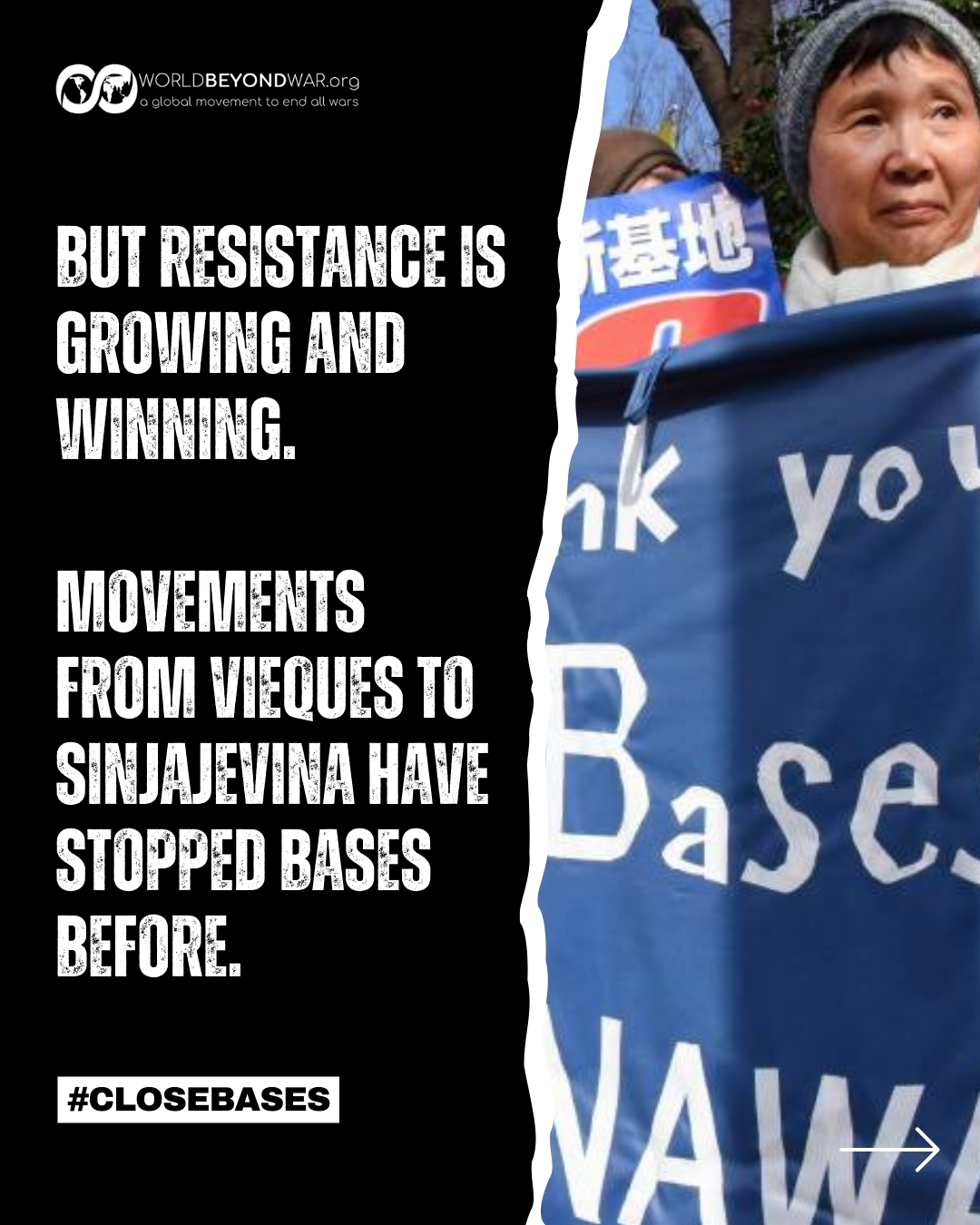
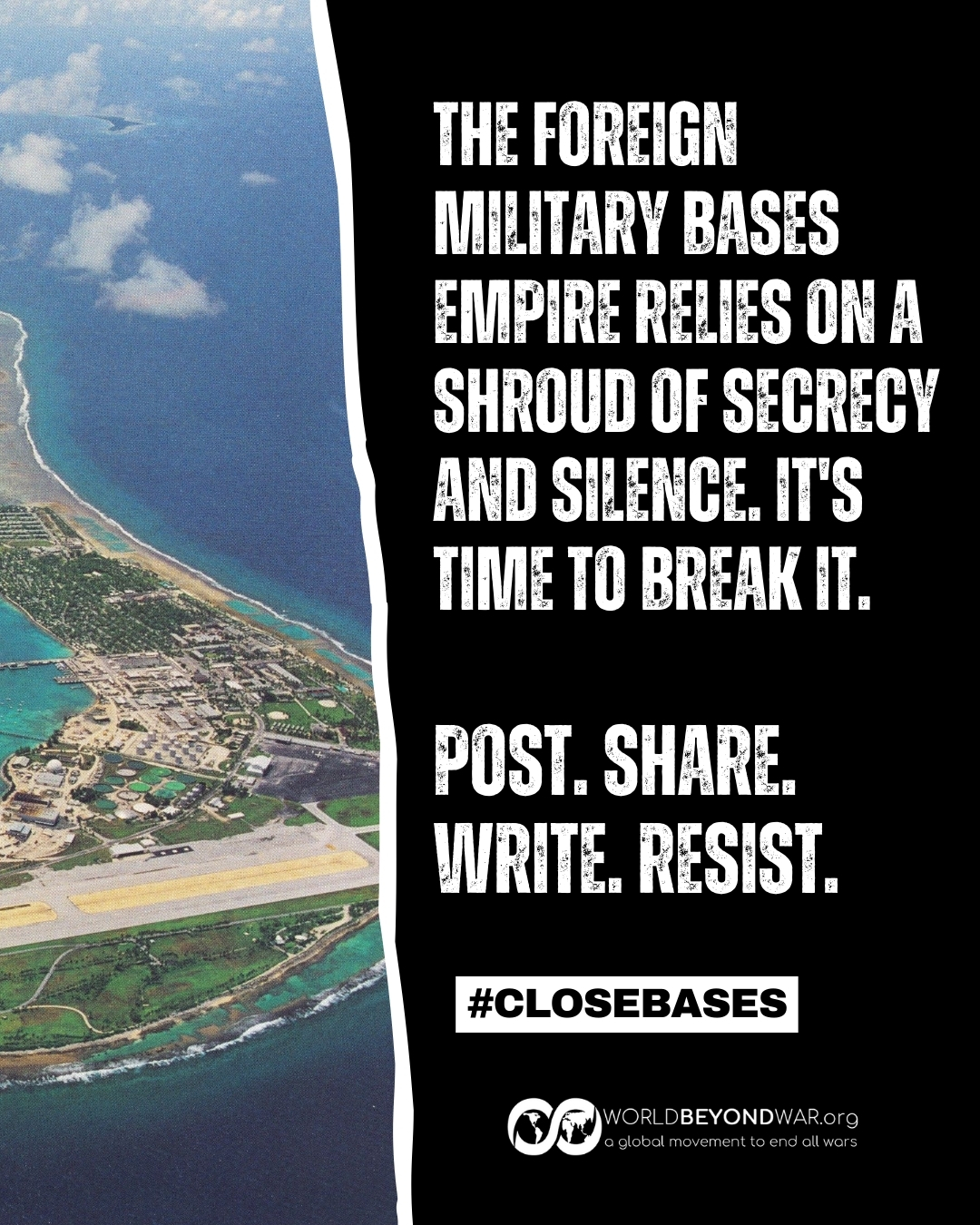
Shareable graphics


Contact Us
