

In 2025, Peace Education and Action for Impact (PEAI) delivered its third global cycle, connecting young people and those supporting them across cultures and generations, strengthening peacebuilding capacity, and supporting the design and implementation of locally grounded peace initiatives across eight country teams spanning Africa, Asia, Europe, and Latin America.
Ahead of the program, PEAI convened mentors and country coordinators for shared preparation and learning. This initial training focused on youth-led and intergenerational practice, exploring what mentors and coordinators need to know, be, and do to effectively support and accompany young people. Mentors and coordinators came from diverse backgrounds, including university professors, community leaders, Rotary members, civil society and NGO practitioners, educators, and youth workers—creating a rich intergenerational and cross-sector learning environment.
The program then began with six weeks of online peace education, delivered through a shared learning platform that connected participants across regions, cultures, and faiths. Participants explored the dynamics of conflict, violence, and war; nonviolent approaches to change; and the role of young people in peacebuilding. The learning phase also supported participants to imagine, design, implement, monitor, evaluate, and communicate high-impact peace projects through dialogue, shared reflection, and cross-border exchange.
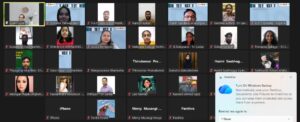
Alongside structured sessions, participants joined informal virtual gatherings, including a global virtual potluck at the end of the six-week learning phase. Country teams shared elements of their cultures and everyday realities, alongside reflections on peace and conflict in their contexts. These exchanges helped build trust, deepen relationships, and ground peace learning in lived experience before transitioning into action.
This was followed by eight weeks of supported action, during which country teams co-designed and implemented peace projects responding to issues identified in their own communities. Projects were youth-led, adult-supported, and community-rooted, with young people taking responsibility from conception through implementation, reflection, and communication, while receiving support from mentors, country coordinators, and World BEYOND War staff. While highly context-specific, projects collectively advanced one or more of the pathways articulated in World BEYOND War’s A Global Security System: An Alternative to War (AGSS): demilitarizing security, managing conflict without violence, and creating a culture of peace.
Since 2021, PEAI has connected and built the capacity of hundreds of emerging peacebuilders, and supported a wide range of youth-led peace projects across more than 28 countries and five continents, including contexts such as Afghanistan, Bosnia-Herzegovina, Cameroon, Colombia, Haiti, Iraq, the Philippines, Russia, South Sudan, Ukraine, and Venezuela. Click here for more information about PEAI:
https://worldbeyondwar.org/action-for-impact/
Impact Across Individuals and Communities
Across monitoring and reflection processes conducted during the 2025 cycle, participants consistently described PEAI as a space where connection, learning, and action were meaningfully integrated. Participants highlighted three interlinked aspects of their experience: building relationships across cultures, generations, and faiths; deepening their understanding of the foundations of pro-peace and anti-war work; and applying this learning through youth-led, locally grounded peace projects.
This was reflected in participants’ own accounts:
“I completed my master’s in peace and conflict resolution, but I had not had the chance to implement my knowledge. In PEAI, I am learning lots of new things – it is a real blast.”
— Sowaida, Afghanistan
“What I like most is that it is not just knowledge, it is applying that knowledge in meaningful projects. That is something missing in so many other programs.”
— Hana, Egypt
“I really like the multidisciplinary approach – when different careers are brought together. PEAI allows many perspectives to meet. It is a great opportunity to learn from others and share insights from our own contexts.”
— Pabasara, Sri Lanka
“PEAI helped me to develop skills in leadership, intercultural communication, teamwork, and project management… Completing our project and presenting Honduras to an international audience was a source of pride and motivation.”
— Mario, Honduras
2025 Country Project Summaries
At the community level, youth-led projects translated shared learning into locally grounded action, addressing peace and security challenges across diverse political, cultural, and social contexts. The summaries below synthesize key themes and outcomes drawn from final reports submitted by each country team.
Afghanistan – Reclaiming Afghan Ownership
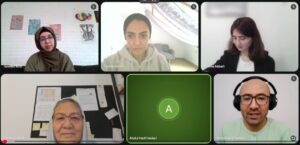
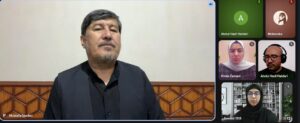
This project addressed the exclusion of Afghan voices—particularly women and youth—from formal peace processes. The Afghan team conducted targeted research and produced four podcast episodes featuring Afghan activists, writers, and contributors to peace processes connected to the Doha Agreement. The project amplified locally grounded perspectives and fostered international reflection on inclusion, ownership, and representation in peacebuilding.
Bolivia – Peace Toolkit for Community Dialogue
This project addressed polarization and limited public understanding of peace and conflict by developing a context-specific peace education booklet. Drawing on Peace and Conflict in Bolivia, the team translated academic concepts into accessible guidance on different forms of violence, conflict, and peace. The toolkit was shared through Rotary and community networks and used in classroom and public dialogue settings to support informed discussion on peace and social cohesion.
Egypt – Peacebuilding Workshop Day
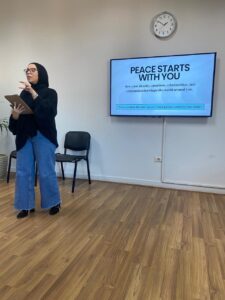
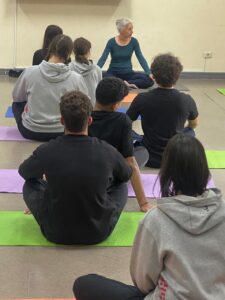
Implemented in Alexandria, this project partnered with local schools and a sustainability-focused business to deliver a full-day peacebuilding workshop for adolescents, combining interactive learning with environmental action through tree planting and student-led follow-up care. Participants reported increased awareness of conflict, communication, emotional regulation, and community responsibility.
Ghana – Promoting Peaceful Communication
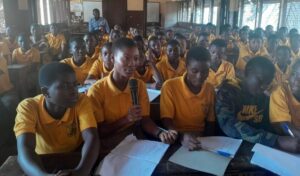
Conducted in Mataheko, Greater Accra, this project engaged 75 junior high school students in a peace education workshop focused on harmful language and everyday conflict. Through group discussions and role-plays, students practiced nonviolent communication and alternative responses to everyday conflict. Facilitators observed early signs of improved peer relationships and more respectful communication.
Honduras – Community Peace Schools
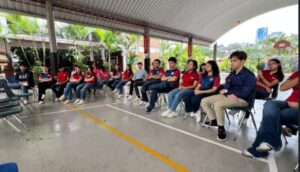
Based in Tegucigalpa, this initiative mobilized 19 core youth organizers to deliver peace awareness talks and education sessions addressing youth exposure to violence and social exclusion. More than 20 young people participated in early activities centered on dialogue, service, and collective reflection, contributing to increased youth interest in peace engagement within schools and community spaces.
India – Peace through Art
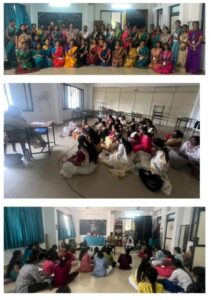
Implemented in Chennai, Tamil Nadu, this project engaged 50+ students and community members in participatory workshops using traditional and folk art forms, movement, and storytelling. Across the eight-week action phase, participants explored peace and conflict through creative expression, strengthening emotional awareness, cultural connection, and interpersonal relationships.
Pakistan – Youth as Peacebuilders for Climate Action
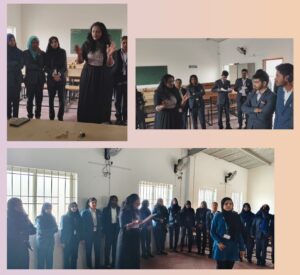
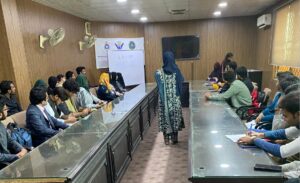
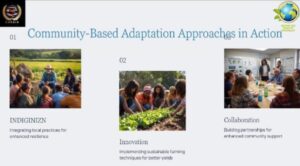
Based at the University of the Punjab, Lahore, this project engaged university students (ages 21–40) in exploring links between climate change, peace, and youth leadership. Activities included research, dialogue sessions, workshops, awareness campaigns, and student-led initiatives. Participants reported increased understanding of environmental conflict dynamics and strengthened collaboration and leadership skills.
Poland – Better Relations, Better World
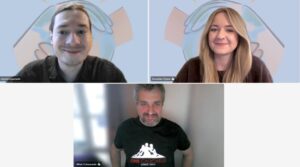
This media-based project in Warsaw addressed social polarization by surveying over 200 respondents to inform a series of podcast and videocast episodes on communication and empathy. The youth team, supported by academic and community partners, shaped content around real community concerns. The project contributed to public dialogue on empathy, communication, and relationship-building as foundations for everyday peace.
Sri Lanka – Peace Education and Reconciliation in University Spaces
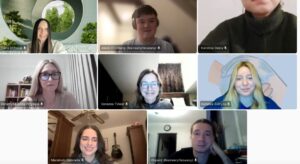
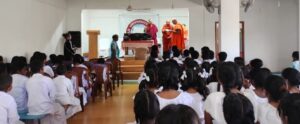
Building on earlier peace education and reconciliation work across 19 social and reconciliation centers, the 2025 Sri Lanka team focused on introducing peace and anti-war perspectives within university settings, where peace education remains underdeveloped. The project combined preparatory research with online and in-person activities, including the South Asian Webinar Series and creative dialogue initiatives, to foster reflection, cross-cultural exchange, and foundations for future university-based peace education work.
Acknowledgements and Support
The 2025 PEAI cycle was made possible through the collective support of coordinators, mentors, facilitators, community partners, and donors who contributed time, expertise, and resources. Collaboration with locally embedded partners—including NGOs, universities, and Rotary districts and clubs—helped anchor the work in local contexts and supported inclusion, buy-in, and ownership. This shared commitment reflects the collaborative spirit at the heart of PEAI’s model and approach.
Why the 2025 Work Matters
Taken together, the 2025 PEAI projects demonstrate how structured peace education—when paired with mentoring, reflection, and locally led action—can translate learning into concrete outcomes. Across diverse contexts, young peacebuilders moved from shared learning to meaningful local action, while remaining connected through a global community of practice that extends beyond the program cycle.