By Marc Eliot Stein, World BEYOND War, August 31, 2026
The following is a complete transcript of episode 87 of the World BEYOND War podcast. NOTE: Our monthly podcast usually features interviews, which we don’t transcribe since automatic transcription might not accurately reflect what our guests say. This month’s podcast is my own personal statement, a reflection of various topics ranging from the revolutionary legacy of classic opera to the histories of Haiti, Venezuela and Cuba to USA apartheid and USA’s war with Iran, concluding with a message about what it feels like for a middle-class urban progressive to be constantly accused of being privileged and out of touch.
Disclaimer #1: As always, this podcast contains only my own words and opinions.
Disclaimer #2: It’s unfortunate that I claim in this episode to have gained some ability to speak Italian and French by singing opera, because upon listening back to this recording I realize I badly mangled many Italian and French names here. I do think I am able to achieve some level of good pronunciation when slowly singing rehearsed parts, but my accuracy obviously drops once I get on a roll and start talking fast in English. Apologies!
Militarism and the Art of Slander
Welcome to episode 87 of the World BEYOND War podcast. I’m Marc Eliot Stein, technology director of World Beyond War, speaking from the Lanape lands of Brooklyn, New York. It’s August 2026 and the first thing I want to do today is express our love for the people of Nepal and China and Tibet, as we all try to grasp the enormity of the tragedy from the mudslide that began with a glacial collapse. This seems to be a disaster caused by climate change, and the world better wake the hell up because our planet is at a boiling point right now in more ways than one. Last month’s episode was about Asia, and our hearts go out to the people of Tibet and Nepal.
I’ve got a lot to talk about today and I hope you don’t mind if I seem to ramble from one topic to another, because I actually do have a particular plan and purpose here today, and I hope it will all come together in the end.
I mentioned a few times on this podcast that when I’m not busy being a peace activist or a software developer, my favorite thing to do is sing opera. It’s been a thrill to me to sing ensemble with a couple of different community theater opera companies in New York City and Long Island. I’m a self-trained musician and hardly an exceptional singer, but I do always work hard in rehearsal and take my parts seriously, and that’s really what it takes to make community theater work.
Opera is only a recent obsession in my life, and what originally got me involved in opera is basically the same impulse that got me involved in peace activism: my desire to learn and understand world history. Reading a lot of books and trying to analyze and comprehend patterns in world history has been my lifelong pursuit and it has also been really my gateway to pacifism – and what I mean by this is that anybody who observes many historical and current wars and genocides and violent subjugations of peoples over the sweep of history will start to see a simple and obvious repeating pattern, which is that the decision to go to war is always a bad decision, rather like the decision of a habitual drunk driver to have a drink. Wars are sold as a method to solve conflicts, but this is a dangerously false promise, because in the real world wars never solve problems, but rather create new problems that lead to worse conflicts. Militarism also always leads to a degradation of government and a hollowing out of democracy, as war profiteers use their stolen gains to influence corrupt politicians to enable the continuance of their crimes.
The biggest pattern of all is that wars are self-replicators. A war may finally wrench to its painful end, when enough misery has been suffered on all sides, but time always reveals that wars of the past plant seeds for the wars of the future. No war ever really ends, and we can look at World War One, World War Two and today’s looming World War Three as evidence of this. It turns out that fear and racism and trauma from violence is passed down from generation to generation intact, with no reduction in intensity. These are the patterns I’ve learned from a lifelong study of world history.
The strange funny thing that happened during a lifetime of reading books and watching shows about history, not least the history of 18th, 19th and 20th century Europe where so much shit went down, is that I kept noticing how world history was reflected, refracted and represented in classic opera – Mozart, Rossini, Wagner, Verdi, Offenbach, Bizet, Puccini. Opera often shaped history too, like during the Italian risorgimento that began with the Napoleonic wars. Guiseppe Verdi’s operas became absolutely the soundtrack to the Italian people’s resistance to their overlords in Vienna, the Austrian Habsburg empire. I mean they didn’t have soundtracks then, but Verdi’s relationship with progressives and activists of his time was sort of like the Beatles and Bob Dylan’s relationships with the Woodstock generation.
I think it’s fair to say that opera was always politically revolutionary and progressive. This may contradict the modern idea that opera is a hobby for wealthy or fancy people, but there was no such idea during the classic age of opera in Europe, when opera was the popular music that people knew and shared and passionately followed between international communities. The two pillars of opera in the second half of the 19th century were the Italian Guiseppe Verdi and the German Richard Wagner. Verdi, composer of “Nabucco”, “Rigoletto”, “La Traviata” and “Macbeth”, was openly revolutionary and progressive, and his operas were always taken as symbols of Italian anti-imperial struggle and humanitarian idealism.
Richard Wagner of Germany’s legacy is more difficult to place today. He was the genius who wrote music and words for masterpieces like “Tristan und Isolde” and the Ring Cycle (which was echoed closely by JRR Tolkien in “Lord of the Rings”) and was massively popular during his life, but his reputation took a posthumous beating decades after his death when it turned out his #1 fanboy was Adolf Hitler, and when the Nazis claimed his music as their own. Wagner was also a bigot and an antisemite in his own way, though being an antisemite for Wagner mainly meant that he was jealous of and competitive with many Jewish opera composers and opera personnel who dominated the field in Wagner’s time. I don’t believe it’s accurate for us to project backwards and blame Richard Wagner for the atrocities caused by 20th century fascists. The entire mindset of the 20th century with its paroxysms of mass politicized state violence and industrialized genocide had no correspondence in the world Wagner had known. During Wagner’s time, progressivism and liberty seemed to be on an upswing as royal fiefdoms became nations and abused populations of serfs and peasants became citizens. This was the movement both Verdi in Italy and Wagner in Germany embraced. Based on what I know of Richard Wagner, I believe he would have rejected Nazism on lofty principle, though he might have been tempted by the adulation. Wagner was most aligned with the revolutionary generation of 1848, like Verdi. He was considered idealistic and progressive in the context of his time, and that’s the context his work should be appreciated in today.
Opera and history are deeply intertwined in so many ways. I wonder if many of my listeners have immersed themselves in this world too. I know I’m not the only pacifist opera freak around. Please post a comment on the show notes page if you have your own thoughts on opera and progressive politics or history.
Giacomo Puccini’s “Tosca” is an example of an opera that illuminates history. It takes place in Rome during a precise moment of rapidly overlapping regime change in June 1800 that happened during the early years of the Napoleonic wars, and when I sang chorus in “Tosca” I had a chance to immerse myself in all the insane and surreal minutiae of a season of regime change that the people of Rome lived through in the summer of 1800. The opera made this historical event vivid to me in a way that none of the books I’ve ever read about the Habsburg Empire or the emerging nation of Italy ever could.
I found myself in the shadow of the Napoleonic Wars yet again when I sang chorus in Georges Bizet’s “Carmen” earlier this year, and I sure had a great time doing this show. Now we were playing Spanish or Romani smugglers in southern Spain, where an intricate web of black market merchants were having a ball collaborating with English sailors and pirates carrying tobacco and valuable textiles into the anarchic interzone of the Rock of Gibraltar. It calls to mind the movie “Casablanca”, but a hundred years earlier, and with even better music. This is the kind of thing – the opening of past historical worlds, bringing them back to three dimensional life – that makes opera so enticing and joyful for me.
So this is why a pacifist is obsessed with opera. There’s also the fact that I’ve always wanted to learn a foreign language, though whatever method they used when I took Spanish in my high school on Long Island clearly didn’t work. Via opera, I am finally starting to develop the slightest ability to comprehend two foreign languages, Italian and French. Now if I can only find a company in New York that performs Zarzuela, the vibrant Spanish form of comic opera, then I can finally learn Spanish like I’ve wanted to my entire life!
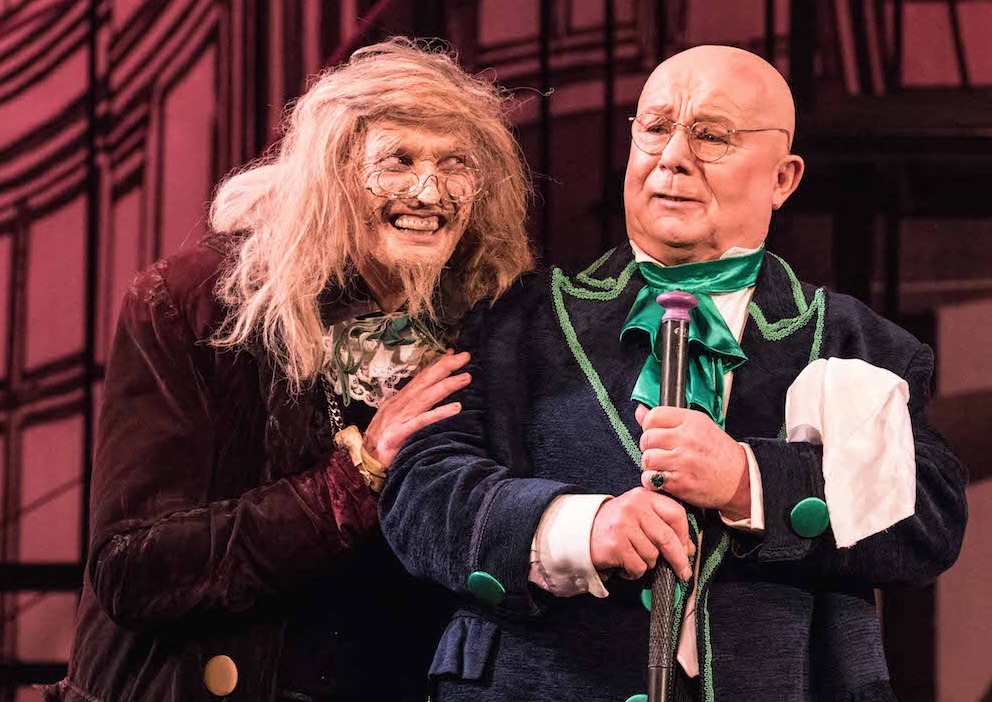
One of my favorite Italian comedies is “The Barber of Seville”, “Il Barbiere di Siviglia”, by the great composer Giachino Rossini, which premiered in 1815. This has a famous satirical song called La Calunnia, or the Calumny, the Scandal, the Big Lie. It’s sung by the smugly evil Don Basilio, a self-proclaimed professor and music teacher and expert in many things. The character of Don Basilio is an echo of similar phony professor character types from Commedia dell Arte, and French comedies by Moliere, which makes sense since “The Barber of Seville” is an Italian opera based on a French comedy by Beaumarchais.
It’s revealing that opera audiences would laugh at Don Basilio more than 210 years ago, since his corruption and lack of morality might strike us as very modern today. The satirical song he embodies points to an old truth, an ancient truth, even at the time when this opera was new – the truth that lying is an intricate art, that there are expert professional liars who can help to construct a really successful lie, and that when expert liars put in their full effort to fabricate and promote a useful slander to destroy some innocent victim’s life, there is a good chance that the fabrication will succeed and many people will believe the lie.
What makes this song especially funny is how much Don Basilio, this 19th century spin doctor, relishes the pleasure of creating fake news. I’ll play this song in Italian at the end of the show. It starts off gently, in a softly mumbling voice, as a manufactured scandal often does. A new scandal, the professor tells us, is like a sweet zephyr that glides and rambles into the ears of the innocent listeners it reaches. The music builds from sweetness to menace as the song continues, as the lie finds a home in people’s minds, and they repeat and amplify it, and then the song becomes cataclysmic as the lie reaches a crescendo, a cannon, an earthquake, a tornado. Finally, after the song’s ecstatic climax, the slimy Dr. Basilio tells us the final result: the victim of the phony scandal, vilified, beaten down, attacked on all sides, simply dies.
So I’m inspired by this bitterly satirical song – a song that told a truth 210 years ago that audiences recognized and intuitively understood. We may think our own era of mechanized and algorithmic manufactured consent for war and oppression is unique – and maybe it is unique because today the evil governments these algorithms build consent for have so much dreadful power to destroy and kill so many innocent people so quickly today. And they are using this dreadful power, they are acting on this power, and maybe this makes the horrors of today unique. But what isn’t unique is the technique, the craft, the expertise, the marketplace for the professional art of slander.
And, really, why should we imagine governments were ever less skilled at lying than they are today? Governments were enslaving, murdering, trampling on, starving and imprisoning innocent people in 1815 just as they are today, and they needed propaganda machines then just as they do now.
So when I listen to “Il Barbiere di Siviglia” I try to put myself into the past, I try to imagine what the real horrors and fears and outrages and oppressions of living in Italy or France or Austria or Germany or Hungary in the 19th century felt like. One thing is clear: audiences in Europe 2 centuries ago could laugh at this familiar character of a sneaky, greedy and venal professor singing with passion about the beautiful art of slander. They immediately understood who Don Basilio was and what he represented.
I’m thinking about the manufactured scandals in front of me today – and the manufactured crises that are killing innocent people every day. I’m beyond enraged at the suffering in the Caribbean orchestrated by the hot mess known as the Trump administration in the so-called United States. I’ve been enraged, and I hope you’ve been enraged too, since Trump and his partners in crime Marco Rubio and Pete Hegseth began a new crisis by blowing up small fishing boats in the Caribbean sea near the Venezuelan coast – just blowing them up with remote guided weapons, claiming via sketchy press releases that the victims were drug traffickers but backing this up with no evidence and obviously no trial. Trump and Rubio and Hegseth then began posting sadistic videos of the explosions, literally posting on social media videos of people off the Venezuelan coast in small boats being instantly killed by drones, captured by cameras on other drones. This absolutely fucked-up behavior has been treated as normal all over the world. I’m so sick of the Big Lie that the United States of America has anything but shame before the world right now. And I say this as a person who has the misfortune to live in this cursed country, and I can’t easily leave because my whole family is here, and this is the only place we’ve ever lived.
I’m sick of the lie that the United States itself is not an apartheid government. Think about this: we know that Israel is an apartheid country, but why don’t we admit that the United States is an apartheid country too? We have a permanent secondary class of “illegals” here – a recognizable and distinct tier of human beings who aren’t citizens and can’t vote even though many of them and their families have lived and worked here all their lives. They are widely hired and employed in every part of our economy, especially holding up healthcare and public service industries, working harder for a living than most privileged white citizens do. Yet they are wildly underpaid, and have to endure being insulted and demeaned on all sides, as they live alongside us with blatantly less rights and privileges, and of course right now they are openly terrorized by brutal masked armored mobs of ICE and police. Why is it so hard to admit that USA is an apartheid society? And once we admit it, can we work together to stop this injustice?
I really can’t get over it that the Trump Rubio Hegseth so-called government began their Caribbean adventurism with remote control executions of Venezuelan people, sharing videos on social media of unknown, nameless human beings dying instantly in explosions of metal and plastic and glass. What the fuck? Then, after traumatizing Venezuela and all of Latin America and the Caribbean and really all of planet Earth with this sadistic behavior, not only killing these people but traumatizing their families and communities and letting every single Venezuelan person know that USA might attack by drone at any moment for any reason – after months of this, USA swoops into Venezuela’s capital city, randomly kills over a hundred people with bomb explosions that served no purpose other than distracting anyone who might try to help prevent other atrocities that were committing at the same time, then captures the country’s president Nicolas Maduro and his wife and imprisons them far from home.
When I think of Nicolas Maduro, I think of Toussaint L’ouverture, the famous, widely beloved and also much maligned leader of the slave rebellion in the French colony of Saint-Domingue that led to the birth of the nation of Haiti. I mentioned in a previous podcast that I was really knocked out when I read a book about the Haitian Revolution called “The Black Jacobins” by CLR James.
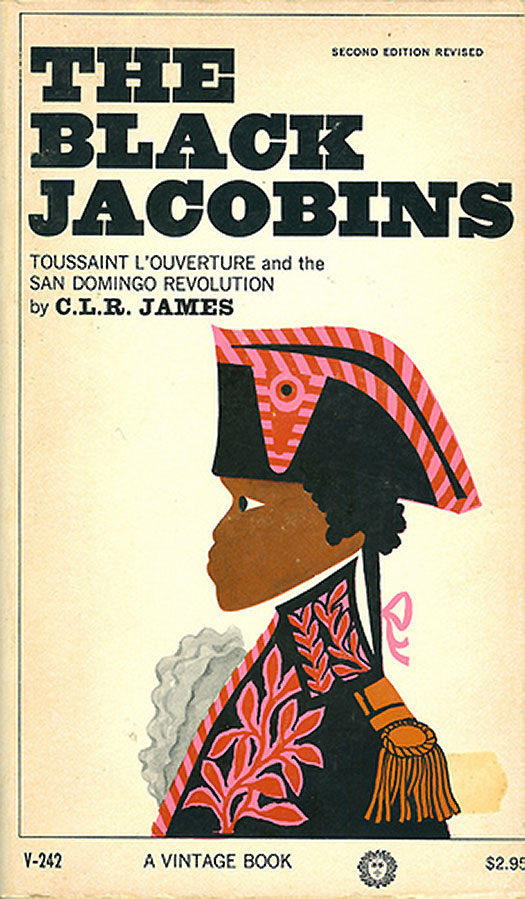
I value this book because unlike most books I’ve ever seen that describe the Haitian Revolution, “Black Jacobins” doesn’t fully center itself upon the viewpoint of the slaveholders. It also reveals many surprising facts about this widely misunderstood revolution, generally said to have taken place between 1791 and 1804 – another revolution, like Simon Bolivar’s soon-to-follow campaigns in South America, that was intricately interwoven with the Napoleonic Wars in Europe.
Maybe it’s because I’m lucky to have lived in a part of Brooklyn with a big Haitian population that I’ve recently managed to learn how ignorant I’ve always been about Haiti. Well, my American society has a deeply ingrained habit of slandering and attacking Haiti, when we notice Haiti at all. There’s a sort of popular sense that Haiti has a legacy of cheap dictatorship and gang violence, but this is a complete reversal of the fact that North American and European powers have been exploiting, stealing from and manipulating Haiti since, well, since before Toussaint L’ouverture’s revolution, which is why this revolution had to happen, except the relationship of hostility and abuse never ended even after Haiti managed to escape from French colonial rule. And I’m speaking sarcastically when I speak of the 12-plus years between 1791 and 1804 as Toussaint L’ouverture’s revolution, because it was no such thing. This Black leader was one of several independent actors who had risen informally to become leaders and power brokers within and between several distinct racially-defined communities. The most consequential and controlling ethnic group during the long period of revolution was not the French whites nor the Black slaves, but rather the populations in the middle, the mixed-race who formed a central party to the revolution with their own distinct representation. Unfortunately these mixed-race centrists often aspired to collaborate with whites against blacks, even as the black populations led by Toussaint L’ouverture stretched themselves to the limits of toleration to try to find compromise and alliance with white and mixed populations.
Toussaint L’ouverture was not a firebrand but a diplomat. He spent year after agonizing year trying to negotiate peaceful outcomes with an everchanging series of white and mixed-race leaders. Much of the violence of these years was manufactured and maintained by whites in Saint-Domingue and their slaveowner partners in France. Some white and mixed-race leaders were more moral and less greedy than others. In the Haitian Revolution we see Napoleon Bonaparte at his grotesque worst, mandating a horrific and unimaginable return to slavery after years of freedom, and of course this was simply impossible for the Black population to accept. Napoleon’s lapse of principle here provides a sad counterpoint to the naive notions found in Giuseppe Verdi’s and many other Italian operas that the Napoleonic Wars stood for any notion of “liberty”. Not for slaves in Haiti it didn’t. France didn’t stop abusing and exploiting Haiti after it became an independent country, nor did France stop abusing and exploiting Haiti after Bonaparte’s regime collapsed and the French Kings came back, nor when the Bonapartists took power again. The French couldn’t figure out their own government, but they could always figure out how to exploit Haiti. Of course, the United States got in on the act too. Slavery, ruinous debt, regime change operations, military occupation, harsh and inconsistent immigration laws – this is how external powers created instability in the proud nation of Haiti today.
Toussaint L’ouverture was captured by Napoleon’s French forces in 1802, and died in 1803. Today, as I speak to you from here in Brooklyn New York, it’s weird and surreal that Venezuela’s captured president Nicolas Maduro is being held in a prison a few subway stops from me, a prison on the waterfront in the vicinity of Red Hook and South Slope and Sunset Park that I catch a glance of often. I don’t have any particular regard for Maduro or any other professional politician, but I do recognize that Maduro was the successor to the important and widely respected Venezuelan revolutionary leader Hugo Chavez, and I think it’s pretty strange that the legitimate leader of Venezuela is wasting away in a prison right near where I live as a secretive new government cabal collaborates with Marco Rubio to maximize oil profits for the USA while trickling some of the wealth back to Venezuela too.
It’s jarring to consider how little has changed between the capture and imprisonment of Nicolas Maduro and the capture and imprisonment more than 200 years ago of the lonesome leader Toussaint L’ouverture, who’d endured so many successes and failures and achieved so much, only to be rudely transported to France and shoved into a prison where, incredible but true, he was deprived of even basic health care by his white French prison guards, because they could not bear to treat a Black man as a human being. This is how Toussaint L’ouverture died in April 1803. Today, I wonder how Nicolas Maduro is being treated by the thug white cops at the Brooklyn Detention Center.
Since we’re chronicling big lies here, it’s a huge lie that the United States and Europe have ever been benevolent towards the countries of the Caribbean. And that brings us to the obscene suffering the so-called United States is also doing right now in the great country of Cuba. You know, the Cuba issue is another one that feels close for me because I have many Cuban friends. I remember how excited we all were in the final years of the Obama administration when there was a really meaningful and successful turn towards friendly relations between USA and Cuba. I remember the ecstatic stories my Cuban friends told of being able to go back and visit and meet relatives for the first time in their lives. You know, a long time ago I was a big fan of Barack Obama, and then I wasn’t after I came to realize that for all his smarts and charisma he was also a terrible war criminal who basically innovated the practice of murdering people and their families by remote controlled drone attack. Yeah, there’s a straight line from Barack Obama calling in a drone attack on a wedding in Pakistan and Donald Trump calling in a drone attack on a boat in the Caribbean Sea. Since I do confess to once having believed very much in Obama, before he revealed himself as a war criminal, I will give him credit for two great moves: peace with Cuba and peace with Iran.
It’s tragic that Trump, Rubio and Hegseth are now inflicting cruel sanctions on the entire nation of Cuba, and children and vulnerable people are dying in Cuba every day because of the sick politics led, apparently, by Marco Rubio, a man of mediocre mind who was groomed since adolescence to be a shill for USA interests in Cuba. I don’t know how Rubio can look at himself in the mirror. I do imagine that he’s the only one in the driver’s seat when it comes to USA policy in Venezuela and Cuba, since Trump and Hegseth are scratching their heads looking at maps of Iran, while Jared Kushner is sharing his plans for ethnic cleansing and hotel building in Gaza with business partners like Hakeem Jeffries. More about Hakeem Jeffries soon.
I feel like I’m speaking very directly and also very broadly here about many different crises going on, so I should mention that anything I say on this podcast is my own opinion only, not reviewed or approved by anyone but me, and that I’m honored to work with World Beyond War’s Latin America organizer Gabriel Aguirre and hear his valuable reports from the places he knows well. It’d be a good idea to read World Beyond War’s regular coverage of the crises especially in Venezuela and Cuba – and regarding Cuba I just want to say one more time how absolutely ashamed I am of what the United States of America has been doing to Cuba all my life, starting with the Bay of Pigs fiasco. Which, by the way, provided the cast of characters who became the Watergate burglars, yet another example of the seeds planted by failed wars that grow in unusual ways. I pray there is some way to end the insane tragedy in Cuba that Marco Rubio is spin-doctoring right now.
Am I being too harsh on USA? I don’t think so. As Huey Lewis said, sometimes bad is bad. The Trump regime is also killing people by carelessly ending aid programs in Asia and Africa. As these demoralizing problems grow, many of us also feel less well-informed than we used to be, not only because of algorithmic news but also because of the walls governments are putting up to keep journalists out – when they aren’t murdering journalists for being journalists as Israel, Russia and Saudi Arabia proudly and openly do. It’s tough standing up for peace and justice today, and that’s why we need to keep doing it.
The other good thing Obama did while he was being a war criminal in the White House was the JCPOA, the peace deal with Iran. This was a very positive turn for the entire planet back in 2015, though it’s depressing how fast this good news collapsed. One of the absolute worst things Trump did in his first so-called administration was to throw the unique, valuable and hard-won US/Iran peace agreement in the trash. A disgusting move, and he should have been impeached and removed from office on the spot for endangering the world by ending a serious agreement for nuclear disarmament because militarists and Zionists persuaded him that USA could profit more by attacking Iran instead.
Well, today the war with Iran is raging, and I can’t begin to talk about the enormity of the incredibly foolish US-Iran war right now, but I really have been burning up about one big lie that I constantly hear right-wing or pro-military people say regarding Iran. Donald Trump says it and everybody else repeats it. I’m talking about this disgusting lie that Iran has a plan to develop nuclear weapons not for strategic or defensive reasons, even though it’s widely understood that Iran does have a plan to develop nuclear weapons for strategic and defensive reasons, but rather that Iran has a plan to develop its first nuclear weapon and IMMEDIATELY BLOW UP THE ENTIRE PLANET.
This is an obviously childish belief, a phony belief, because even the most racist right-winger must realize that Iran is a country filled with people – 92 million people actually – and it also has a very full society and civilization and culture including both religion and science and arts and music and entertainment and love and family, and these people prefer to live and not immediately die. The idea that Iran would immediately blow up Israel or the United States is too ludicrous to be called a paranoid fantasy. What it is is a phony talking point – a slander that isn’t even seriously believed by the liars who spread it.
But mainstream media sure does spread this truth, this sick slander that a nuclear-armed Iran would be any more dangerous than nuclear Israel or nuclear North Korea or nuclear England because Iran would immediately use these weapons to end all life on earth. You can hear this childish slander intoned seriously by earnest national security professionals on cable news and broadcast news, and echoed infinitely by gullible believers on YouTube and Twitch and TikTok. Trump says it, so it’s Republican party dogma. But phony pro-war politicians in the Democratic party say it too. It’s a pathetic, nasty lie. I have nothing but contempt for the kinds of spin doctors who sink this low, who will seriously declare that they believe the government of a nation of 92 million people will immediately choose to commit planetary suicide if they get a chance. When I hear the supposed opposition to Trump in the phony Democratic party repeat this vicious slander, I just want to throw up.
I’d like to talk about one more lie, and this one gets personal for me.
This is the slander that young people, or any people at all, who are progressive activists and protestors are privileged white people. I most recently heard this slander from a politician who I consider to be one of the most despicable in USA right now, and I’m not talking about a Trumpy Republican but an establishment, AIPAC-supported, Wall Street-bro Democrat congressperson with a big role in party leadership: Hakeem Jeffries. I consider Hakeem Jeffries a complete phony, an agent left behind by the incompetent power structure of the Biden administration to make sure that the Democrats never try too hard to challenge the Trump administration (which is funded by the same corporate and war-profiteering donors who fund the Democrats) but will always go all out to attack any progressive Democratic candidate, or any charismatic young progressive journalist like the talented Twitch streamer Hasan Piker who dares to challenge Israel. That’s the role Hakeem Jeffries plays in the Democratic party: it’s his job to take progressives down.
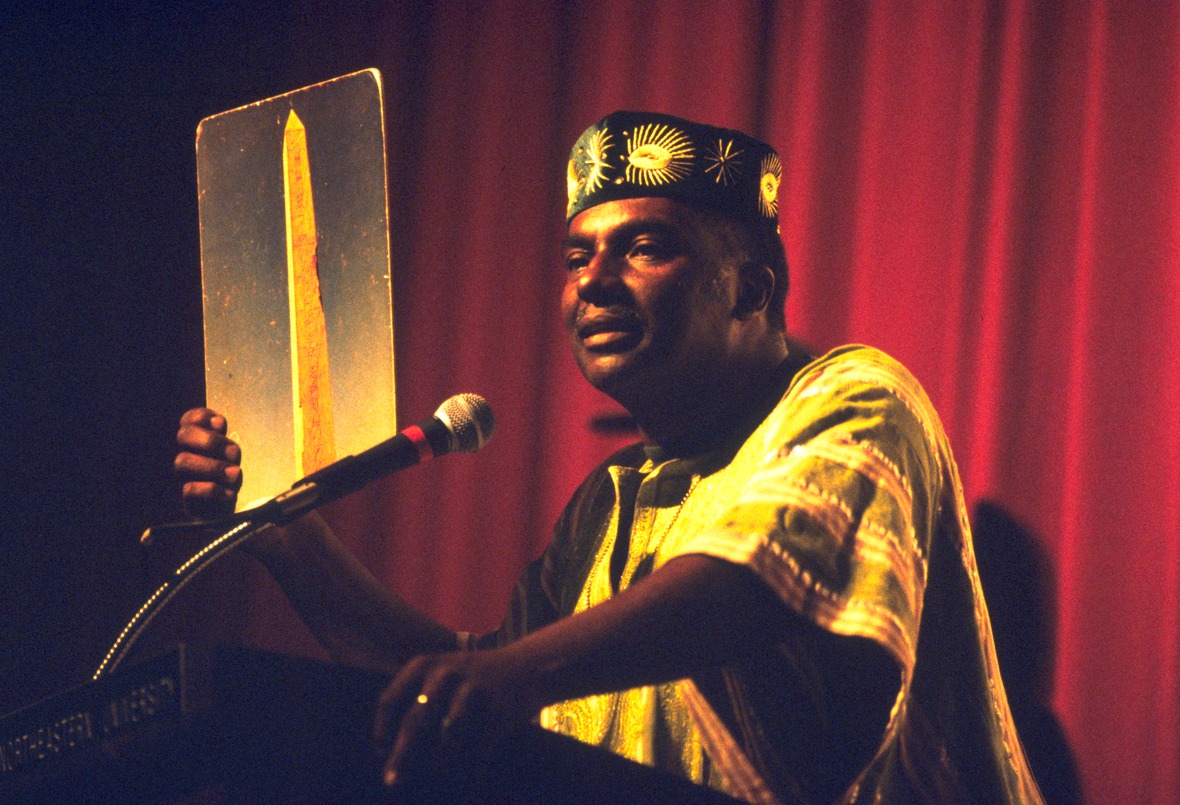
Hakeem Jeffries is from Brooklyn, where I live. He’s a real piece of work, and I may as well throw in a little New York City racial history here. Back in the 1990s, there was a really fiery afrocentric professor of Black Studies at City College of New York, which is an excellent college in Manhattan that a few people in my family have gone to, including my mother. Leonard Jeffries got himself in big trouble by saying things that seemed racially inflammatory and was accused of being antisemitic, so go read about him in Wikipedia, but I will tell you that during the 1990s when I was reading about Leonard Jeffries in the Village Voice and New York Times, I wasn’t offended by his eccentric musings about various races, and thought he was an interesting and outspoken guy who’d clearly gotten himself into trouble going out on an intellectual limb. There’s a long tradition of racial pseudo-science, and other academics like the famous DNA co-discoverer James Watson have also gotten themselves into big trouble by musing in public about the science of ethnic superiority.
This is all kind of related to what I said about the German composer Richard Wagner before. As a Jew, I don’t really think Jews need to be over-sensitive whenever somebody wants to mouth off with stupid opinions about various ethnic groups. If somebody wants to be an asshole in public, that’s their problem, and they’ll usually end up paying the price for their mistake without my help.
When a German composer or CUNY professor says something bigoted, I personally think we should sometimes just take a breath and realize that people have the right to say stupid things, and realize the really important point that holocausts and genocides absolutely do not happen because some scientist has a theory about natural intelligence, or some eccentric CUNY professor waxes poetic about the superiority of sun people in Africa.
What I just said may even be controversial with some of my own Jewish friends and relatives, who do tend to really jump at the slightest suggestion of antisemitism, and I want to be really clear about what I’m about to say. This is a message I’ve given a lot of thought to, and it comes from my in-depth study of the history of World War Two and the Holocaust from authors like William Shirer, Hannah Arendt, Saul Friedlander and Nicholson Baker. The holocaust of the Jews during World War Two did not happen because anyone personally disliked Jews. Sorry if this shatters anyone’s naive notion that World War 2 happened because Hitler was an antisemite. What I’m saying here is nothing new – it shocked people generations ago when Hannah Arendt wrote a book calling attention to the fact that chief Holocaust bureaucrat Adolf Eichmann had many Jewish friends and relatives, and did not dislike Jews at all.
The reality is that the Jewish Holocaust happened for the same reason every genocide happens: because bad, greedy and corrupt politicians supported by bad, greedy and corrupt war profiteers consider it good strategy to kill members of an ethnic group, or let an ethnic group starve to death. The strategic usefulness of antisemitism in Germany became clear immediately after World War One when new political and paramilitary parties found it persuasive to blame Jews for Germany’s defeat. Then, as Russian/Soviet Communism spread following the ruin of this war, these parties found it persuasive to identify German Jews with Communists. After the sequel to the Great War began it became more useful to persecute Jews, and when Germany invaded Russia, the construction of work camps that turned into death camps aligned with German military strategy on many levels.
If the Holocaust hadn’t aligned with German political and military strategy it wouldn’t have happened, no matter what people thought about Jews. The Holocaust in Gaza is happening right now, I’m dreadfully sad to say, because slick Israeli politicians like Netanyahu find endless war a great distraction from being prosecuted for their financial crimes, and cynical American politicians like Joe Biden and Donald Trump think they can win US elections by courting Israeli backing. It’s because of opportunists like Hitler and Netanyahu and Biden and Trump that genocides happen. This pattern also explains the genocides of Armenia, Pakistan/India, China’s Great Leap Forward, Cambodia, the breakup of Yugoslavia, the tragedy in Rwanda. In all cases, genocides do not happen because of individual people’s personal ethnic prejudices or bigotry. Genocides happen because incompetent and evil political and military bureaucrats consider it good strategy to make genocides happen.
So, how did we get here from talking about Hakeem Jeffries? Right, Hakeem Jeffries is not the son but the nephew of this 1990s afro-supremacist firebrand Leonard Jeffries, who I remember I thought was pretty cool. But I don’t think Hakeem Jeffries is pretty cool. I don’t know what went wrong here, I guess he’s the narc in the family. Anyway, maybe one reason Hakeem Jeffries takes tons of money from AIPAC and other pro-Israel lobbies today is that he’s ashamed about his once-famous uncle Leonard Jeffries, the only interesting person the Jeffries family have yet produced.
Why are we talking about Hakeem Jeffries? Because he’s one of the Dem’s super-centrist power brokers, him and Chuck Schumer and Pete Buttigeig and Jim Clyburn, and whenever a miracle happens and an actually honest and talented politician with a progressive bent gets elected in the Democratic party, Hakeem Jeffries is there in the news the next morning to spread gloom about why Zohran Mamdani is a bad idea, or Brad Landers is a bad idea, or Abdul El-Sayed is a bad idea, or Angie Nixon is a bad idea, or Darializa Avila Chevalier is a bad idea, or Claire Valdez is a bad idea, or Melat Kiros is a bad idea, or … going back to their greatest work, their one hit wonder, from the golden years of 2020 when these centrist Dems joined forces to select Joe Biden as Democratic response to Trump, despite the fact that voters didn’t like or trust him – yes, the old classic that they’re still putting out there today: why Bernie Sanders is a bad idea.
So the backdrop to the Hakeem Jeffries story I’m trying to get back to here is, if you don’t know, and I sure hope that people who listen to this podcast are from all over the world and don’t have to watch the excruciatingly inane election season here in USA where I live and am inundated with political advertising – whether you follow this or not, there has been a really positive turn towards pro-Palestine candidates winning primaries in various parts of the United States. Now I’ve gotta say, when an excellent politician like Abdul El-Sayed wins a primary in the state of Michigan, I personally don’t even think it’s the electoral outcome of this that matters. What matters more is that by winning a primary Abdul El-Sayed is elevated to a new platform, and people all over the world are going to start hearing Abdul El-Sayed, and that’s an absolutely great thing, because he’s a great speaker with lots of smart things to say. So I’m not all hung up on whether he actually wins his Senate election or not – either way, he’s already made a big difference by showing that AIPAC can’t always manipulate an election by dropping millions of dollars to support a puppet alternative, even though AIPAC has succeeded in this more often than it has failed.
Well, the morning after Abdul El-Sayed’s victory in the Michigan Senate primary, of course they roll Hakeem Jeffries out to the morning news shows to rain on the parade, which is kind of illogical, isn’t it, because Hakeem Jeffries is supposed to be a leader of the party Abdul just became a candidate for – huh – well, he’s a leader in fundraising anyway, that’s for sure. Of course, Jeffries scoffs at El-Sayed’s dangerous attitude towards Israel – but that’s not even the big lie that I’m focused on right now, because we all know at this point, I hope, what a big lie that is. Hakeem Jeffries goes farther and puts the icing on the cake with another old cliche: he says that when candidates like Brad Landers, Abdul El-Sayed or Darializa Avila Chevalier wins a primary, that’s because privileged, collegiate, not-typical-American type voters voted for them. Progressives are just privileged white people – this is the familiar big lie, constantly repeated everywhere, that I want to end this podcast talking about, because this is a big lie about me, who I am, and who my friends and allies and fellow activists are.
I’m here to call out the lie that progressives in USA are more privileged, more elite, more wealthy or more out of touch with “regular Americans” than people with conservative politics.The truth is very much the opposite.
Even though it’s false, this lie often hits home and stops progressives in their tracks, because lies that hit on the level of personal accusation have a sharp potency. Nobody likes to be called privileged. But the truth is, people like me, which could mean people who live in Queens or Brooklyn, or middle-class Jews or Catholics from 2nd or 3rd generation immigrant families, or just people who went to affordable colleges and work hard for a living – yeah, we do tend to be progressive, but we don’t tend to be wealthy. But a lot of other people in the USA are wealthy. They have huge McMansions and huge bank accounts and go to elite schools, and these are not urban east coasters or west coasters but rather Trump voters who’ve been so brainwashed by past decades of Rush Limbaugh and Fox News that they don’t even know that they are elite, they are wealthy, they are out of touch with the working class. Just look at any statistics – there are a whole lot of wealthy elite conservatives who either inherited their money or made it profiteering on health insurance or weapons or predatory finance or corrupt litigation, and these people live all over the USA.
The canard – the scandal, the lie that progressives are privileged and conservatives are not surely has deep roots, maybe going back to urban populations and rural populations vying for power in various societies of the past. But whatever those situations of the past are, I don’t think the patterns hold true for societies today. In fact there’s been a lot of growing wealth inequality in countries like the USA, and the extreme wealth getting concentrated at the top, I don’t think that’s going to people like me who work day jobs and live in cities. I think it’s going to people out in the suburbs, and there’s a lot of suburbs out there and a lot of golf courses, and a lot of gated communities – don’t get me started talking about apartheid America again.
It pisses me off when I’m characterized as a privileged progressive, and maybe that’s why I’ve tried to answer the question of where most wealth and elitism actually can be found in America using statistics, and I’ve also studied it on a personal level. I have a wide variety of Facebook friends, dating way back many decades and many past schools and jobs and places I’ve lived. I have friends who are conservative and friends who are progressive. I also have many friends who are confused centrists, shell-shocked by what America is turning into, sometimes retreating into blissful ignorance of news because they can’t handle the truth of how rotten our government has become. I notice there’s a lot of this going around in the last few years. Anyway, the point is, I have a wide variety of personal friends who share political opinions on social media.
So I started noticing: is it my conservative friends or progressive friends who seem to drive big SUVs and have big houses in the suburbs and show off expensive clothes and expensive hobbies? The answer came back loud and clear. My progressive friends generally have much less money than my conservative friends. I believe this is partly because progressive values just don’t align with wealth generation. It takes a lot of effort to get wealthy and stay wealthy, and people with progressive mindsets usually choose to focus on healthier life goals instead.
My progressive friends also went to less elite schools and have less establishment jobs than my conservative friends, and their kids go to less elite schools too. I’ve come to the conclusion that it’s a complete lie that progressives represent any type of elite population in the United States, although I suppose there may be some layer of very rich progressives out there who are also very wealthy, but even if so, even though I live in New York, and I went to college and I’m Jewish – all keywords for “privileged” in conservative parlance – I promise you I don’t know anyone in these wealthy tiers, and I don’t get invited to elite parties. Some of my rich conservative friends out in New Jersey and Texas and North Carolina and California and Oklahoma though? They might be getting invited to some elite parties. They might be pretty out of touch with the problems of regular people.
I will tell you one more personal thing about how it feels to be accused of being an out-of-touch elite when I’m certainly not – and I know I’m really rambling here in this podcast episode, maybe just because there’s a lot of tension out in the world these days and it seemed like a good idea for me to just spend one episode jumping around on hot takes, so here’s one last hot take. I am blessed to come from a close and large family. We don’t always get along in my family, we sure as hell don’t always agree about politics or religion or music, but we do stick together, and this has really helped me through my life. Few people in my family are remotely wealthy, and the few relatives I have who have some money are the ones who struggled through medical school or law school to get there. None of us had a free ride or a trust fund. I barely know what a trust fund is, though I hear the phrase a lot. Most of my relatives and my friends live paycheck to paycheck, and most of us could be seriously sidelined by a medical bill at any time. I don’t think we resemble the out of touch elites that Hakeem Jeffries claims are the backbone of the progressive movement.
Still, just because I’m blessed to have a close family, and my friends see that I’m blessed to have the support of a close family, this gives people the idea that we’re privileged. I suppose it is a form of privilege to be in a close family, even though we are not wealthy and have no access to power. And I think people with progressive values often do have strong family values, and also values of forming close relationships with friends, because supportive networks of friends are just as good as supportive networks of family. So maybe this is why people sometimes think progressives are privileged, because we have supportive networks of family and friends. I hope every person knows that this is the most important ingredient to a happy life – having strong relationships with relatives and friends. If anybody out there thinks the most important ingredient to a happy life is money – that person is probably not my relative or my good friend. And I bet any person who thinks money matters more than relationships isn’t smart enough to listen to a World BEYOND War podcast episode either.
Well, all of this brings me back to opera. Recently I was in a parking lot with folks from one of the opera companies I’ve performed with for the last few years. And I noticed how everyone was driving a broken down car, very few SUVs, no BMWs or Lexus’s, sure as hell no Cybertrucks. Furthermore, nobody seemed embarrassed that we were all saying goodnight and getting into our broken down falling-apart cars. Maybe a few of my fellow opera singers are privately rich – I don’t know – but I do know that somebody who cares a lot about money isn’t going to have the kind of personality that will enjoy rehearsing and singing opera. And I smiled to myself and thought, this is why I hang around with opera singers. And this is kind of a family too. And it’s why I hang around with peace activists, and this is kind of a family too. It sure is a privilege to be able to sing or protest with people who work hard for a living, and value everything they have. This is the kind of privilege I value – and this is a kind of privilege that has nothing to do with wealth or elitism or money. I do think many of my fellow progressives and antiwar activists are privileged in this way, and I do realize how blessed we all are to have this prosperity in our lives.
So I’ve just rambled a lot, but I do think I had some real stuff to say here today, and at least I did manage to bring us back to where we began. So with no further ado, now that we’ve talked about some of the sickest lies, cruel and craven slanders which are flying all around the world right now, here’s the famous and popular song “La Calunnia e un Venticello” on a public domain recording sung by the Bulgarian bass Nicolai Ghiaurov with the Naples Rossini Orchestra in 1964, from the really great opera “Il Barbiere Di Siviglia”, “The Barber of Seville”, one of two operas that became a Bugs Bunny cartoon. I’ll put the lyrics in English on the show page. Enjoy, and I’ll be back with another interview next month.
Calumny is a little breeze,
a gentle zephyr,
which insensibly, subtly,
lightly and sweetly,
commences to whisper.
Softly softly, here and there,
sottovoce, sibilant,
it goes gliding, it goes rambling.
Into the ears of the people,
it penetrates slyly
and the head and the brains
it stuns and it swells.
From the mouth re-emerging
the noise grows crescendo,
gathers force little by little,
runs its course from place to place,
seems the thunder of the tempest
which from the depths of the forest
comes whistling, muttering,
freezing everyone in horror.
Finally with crack and crash,
it spreads afield, its force redoubled,
and produces an explosion
like the outburst of a cannon,
an earthquake, a whirlwind,
a general uproar,
which makes the air resound.
And the poor slandered wretch,
vilified, trampled down,
sunk beneath the public lash,
by good fortune, falls to death.
Music: “La calunnia è un venticello” sung by Nicolai Ghiaurov with the Naples Rossini Orchestra, 1964.
The World BEYOND War Podcast page is here. All episodes are free and permanently available. Please subscribe and give us a good rating at any of the services below:
World BEYOND War Podcast on iTunes
World BEYOND War Podcast on Spotify
World BEYOND War Podcast RSS Feed