By Helsinki Plus 50, August 2, 2025
This year marks the 50th anniversary of the Helsinki Accords, when diplomats and heads of state met to reduce Cold War tensions and work towards security and cooperation in Europe. Fifty years later, the European Union is funneling resources away from civil society towards arms manufacturing and war wages on in Ukraine. That’s why the Nordic Peace Alliance, a coalition of peace organizations in Finland, Denmark, Norway, and Sweden, together with voices representing international peace, human rights, migration, anti-racist, and environmental movements, farmers, and trade unions, have taken part in shaping the Helsinki+50 People’s Initiative.
The world again needs cooperation, détente, and a commitment to human rights. Governments have failed to commit themselves to this, even when humanity is facing a severe global poly-crisis. It is now necessary that peoples movements and civil society give the spirit of the Helsinki Accords new life.
In parallel with the Helsinki+50 Conference led by governments, the Helsinki+50 People’s Initiative has drafted a People’s Declaration and organized its own events July 30-August 1. Sign the Declaration here.
Activities Held in Helsinki July 30 – August 1:
JULY 30
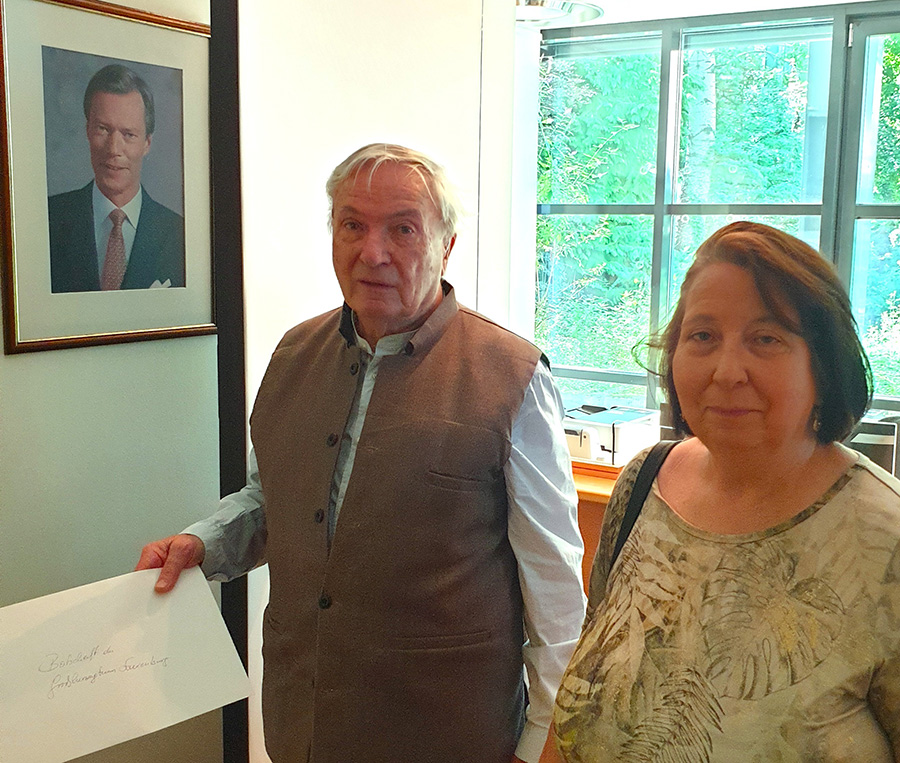
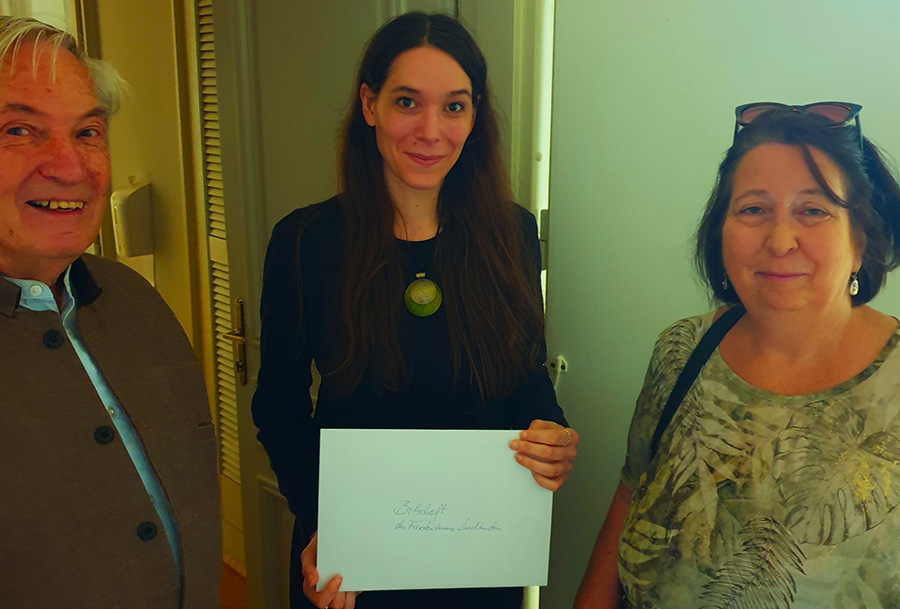
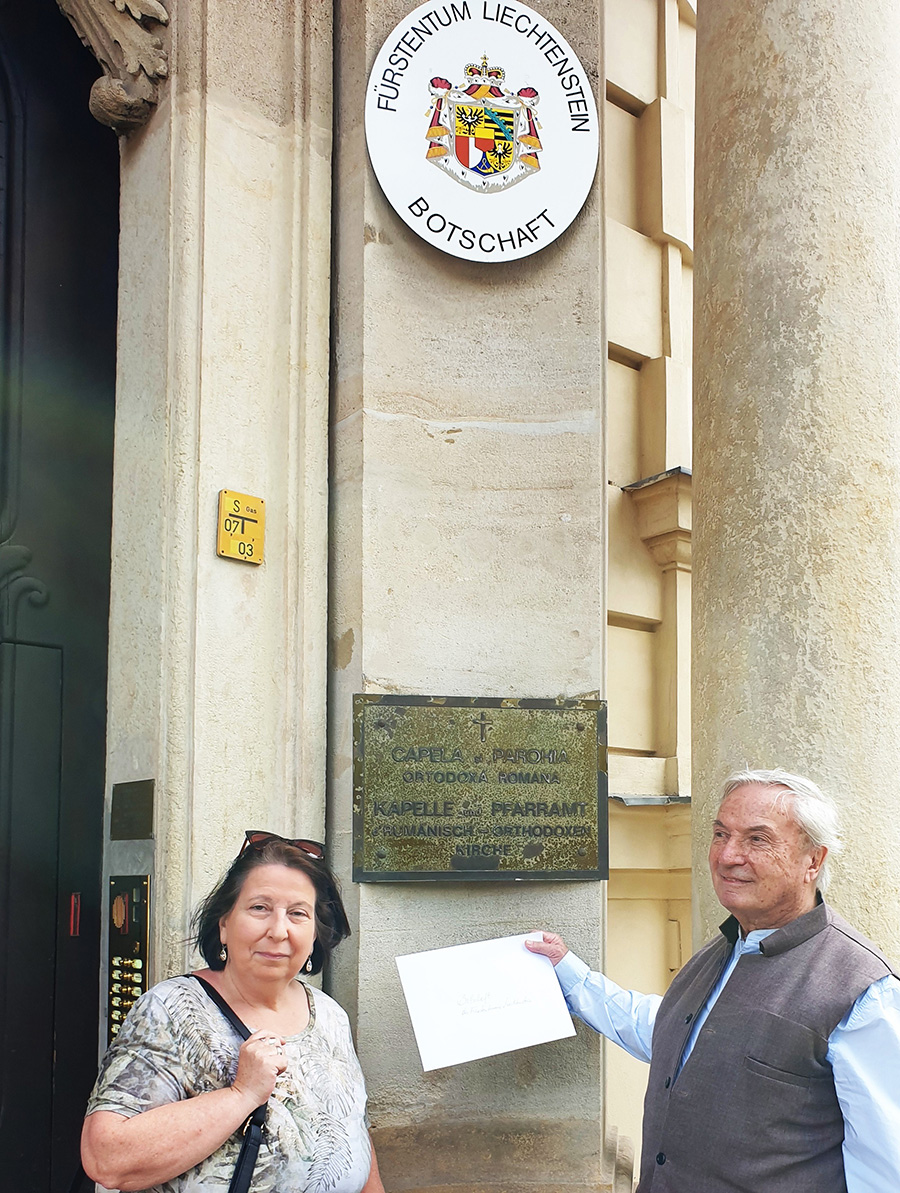
Delivering the Helsinki+50 People’s Declaration to OSCE member state embassies in Finland.
12.00-16.00: Seminar at Helsinki University, Hall 4, Unioninkatu 40. Featuring Noora Kotilainen, Heikki Patomäki, and Markku Kangaspuro.
Evening socializing at the Peace Station in Pasila.
July 30
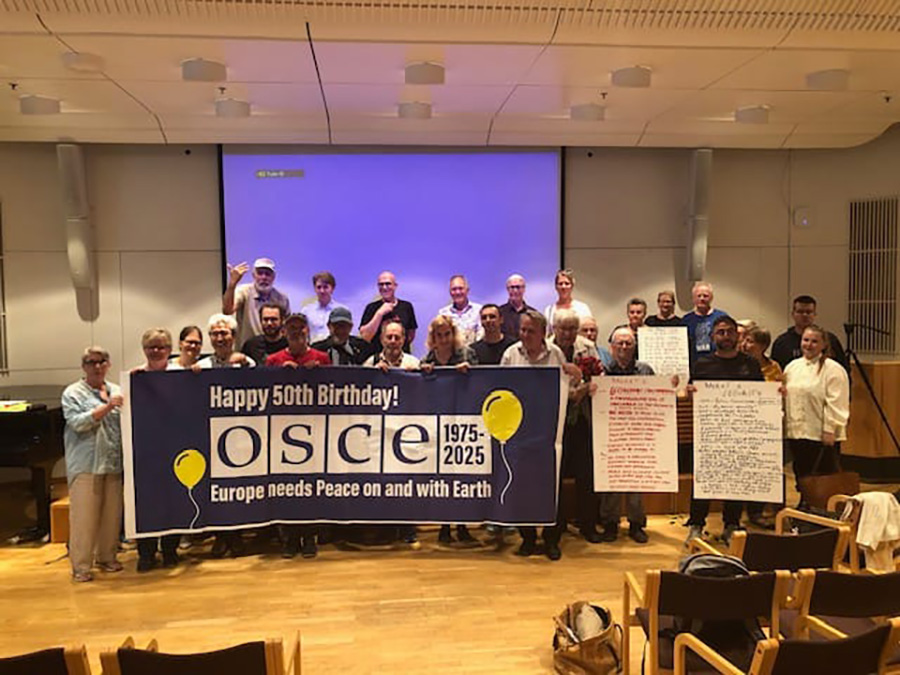
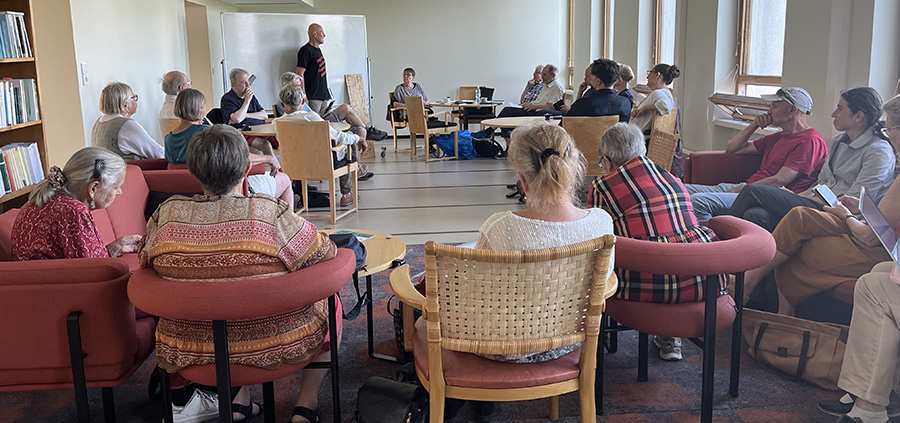
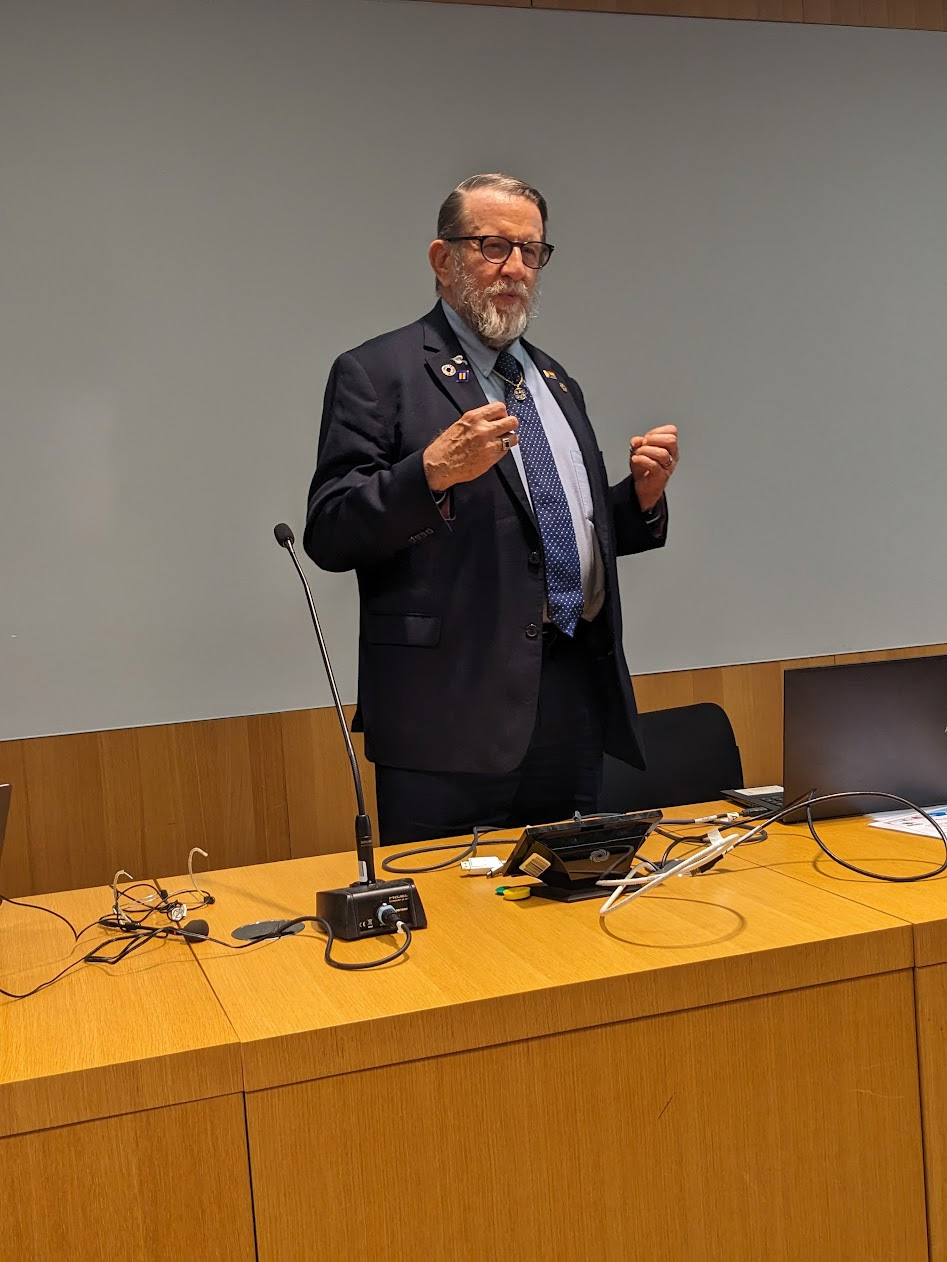
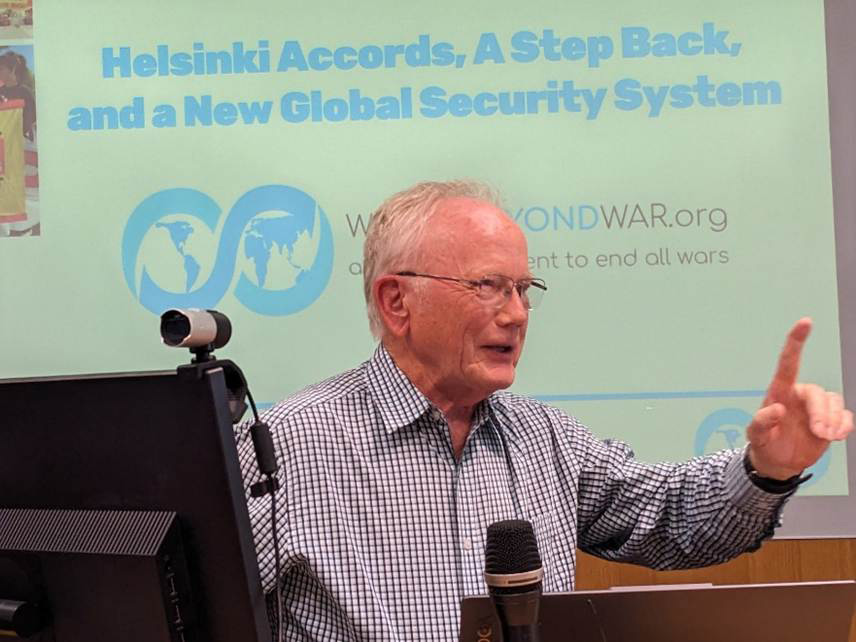
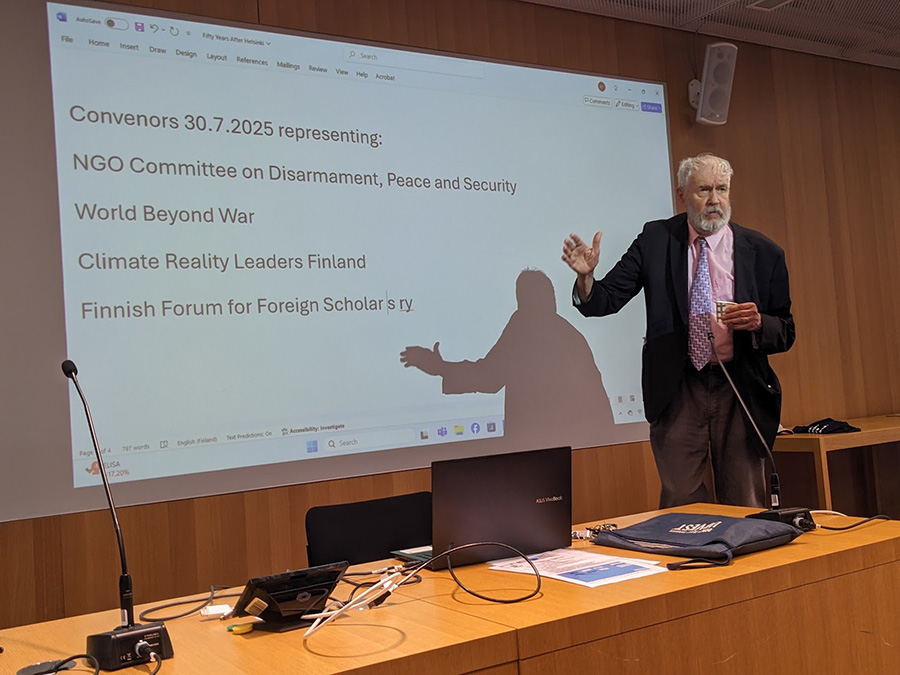
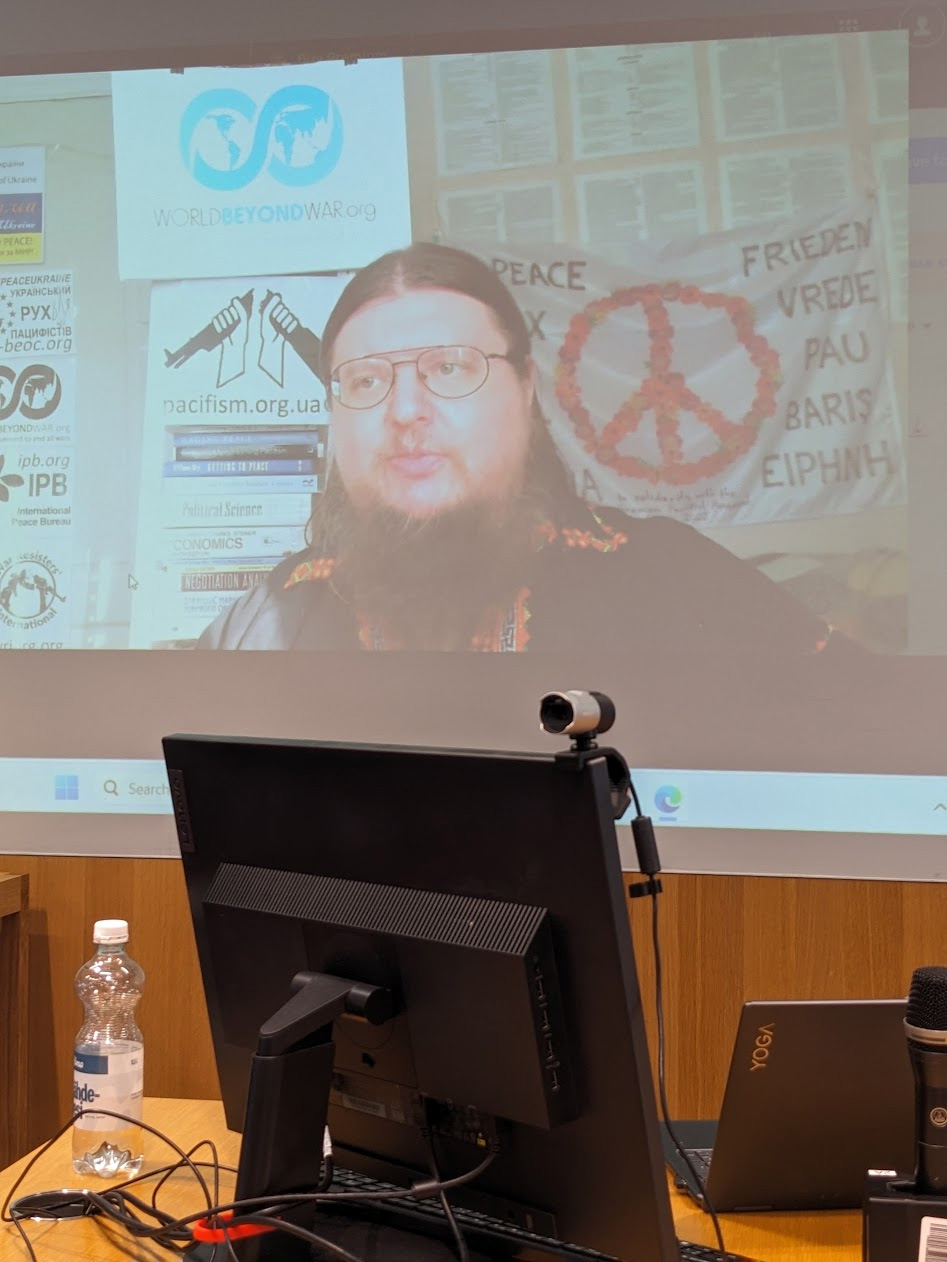
A forum was held at the Helsinki University Library. Among others, Bruce Knotts, Ahti Tolvanen, and Al Mytty spoke. Yurii Sheliazhenko presented a recorded message.
JULY 31
The Helsinki+50 People’s Declaration was presented at the officially initiated Helsinki+50 Conference: Respecting the Legacy, Preparing for the Future in Finlandia Hall with possibility for selected civil society organizations to participate.
AUGUST 1
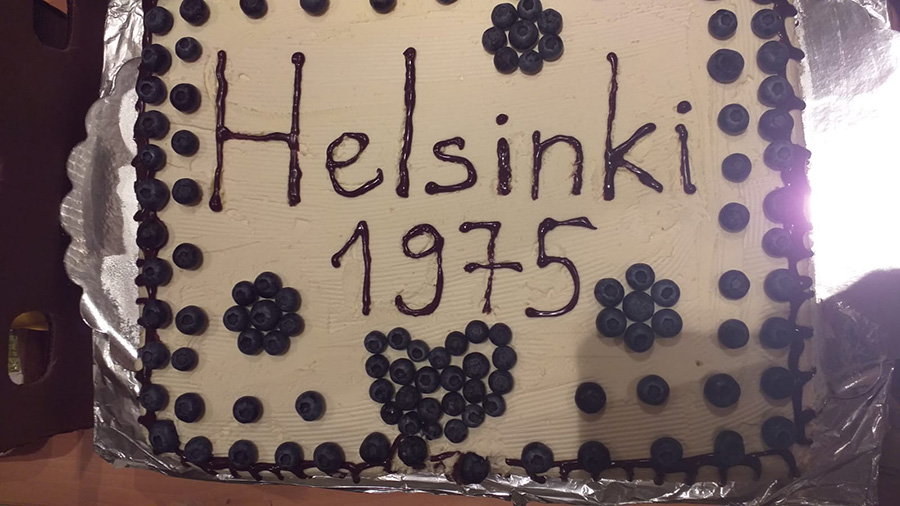
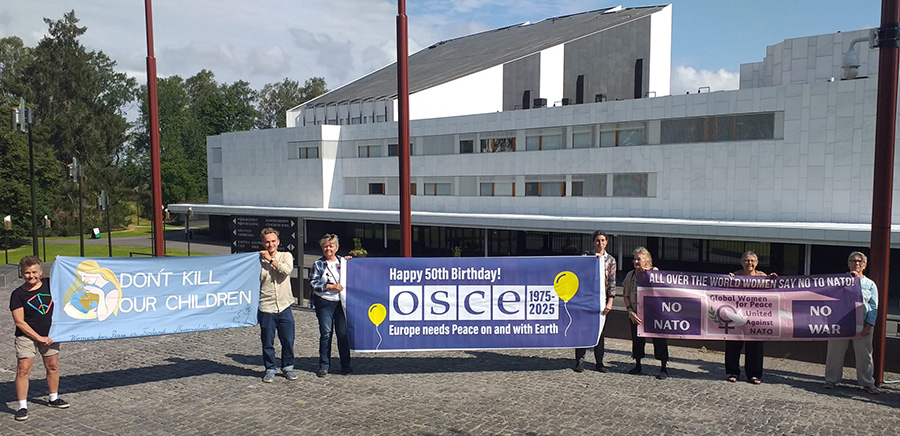
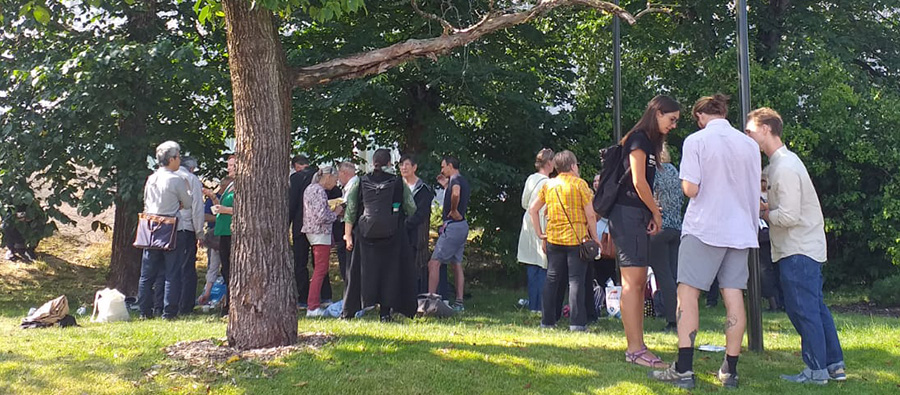
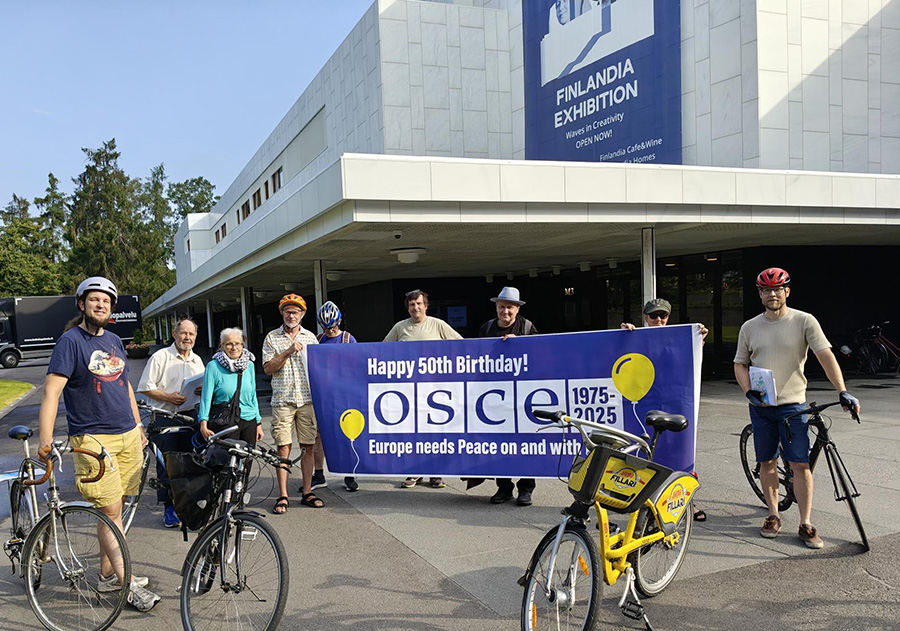
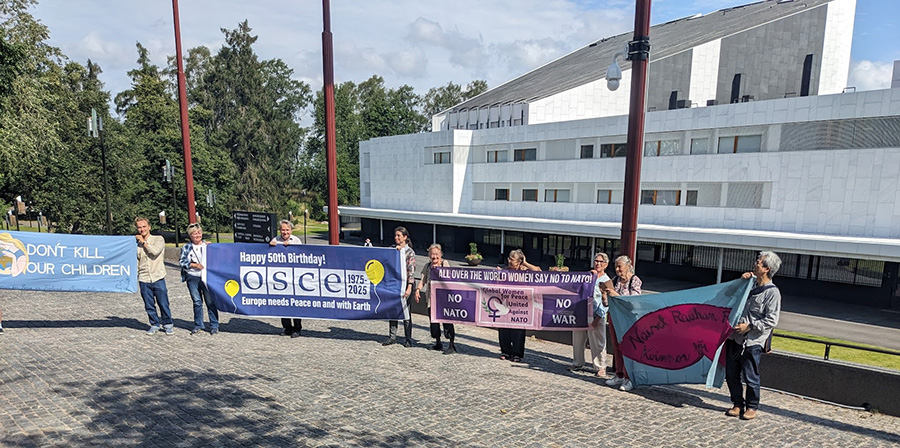
11.00-12.00: “OSCE 50th Birthday Party” in the park surrounding Finlandia Hall—the historic site of the signing of the Final Act on August 1, 1975—to celebrate the founding of the OSCE and to raise the spirit of the Helsinki Accords.
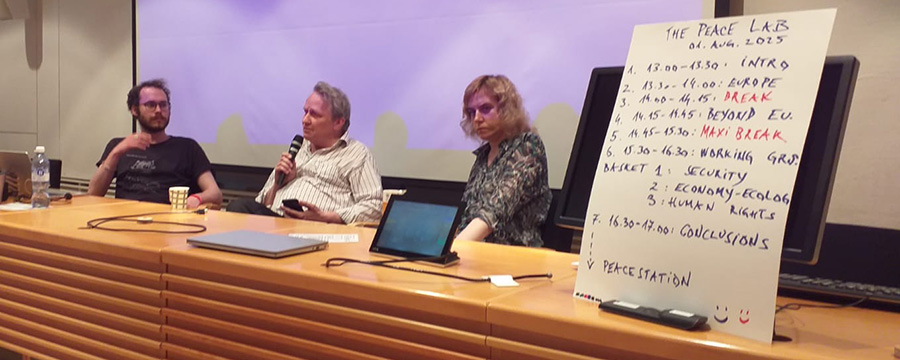
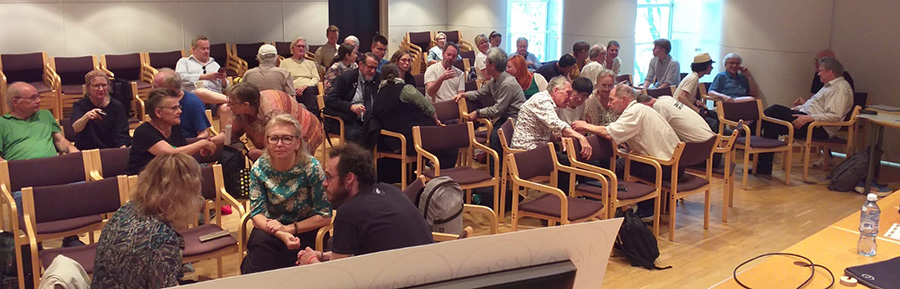
13.00-17.00: The Helsinki+50 People’s Initiative Conference, “The Helsinki spirit today -– security and cooperation from below,” addressing peace and human rights in Europe and globally, at Pasila Library, Kellosilta 9, Helsinki.
View the detailed conference agenda here and the list of speakers.
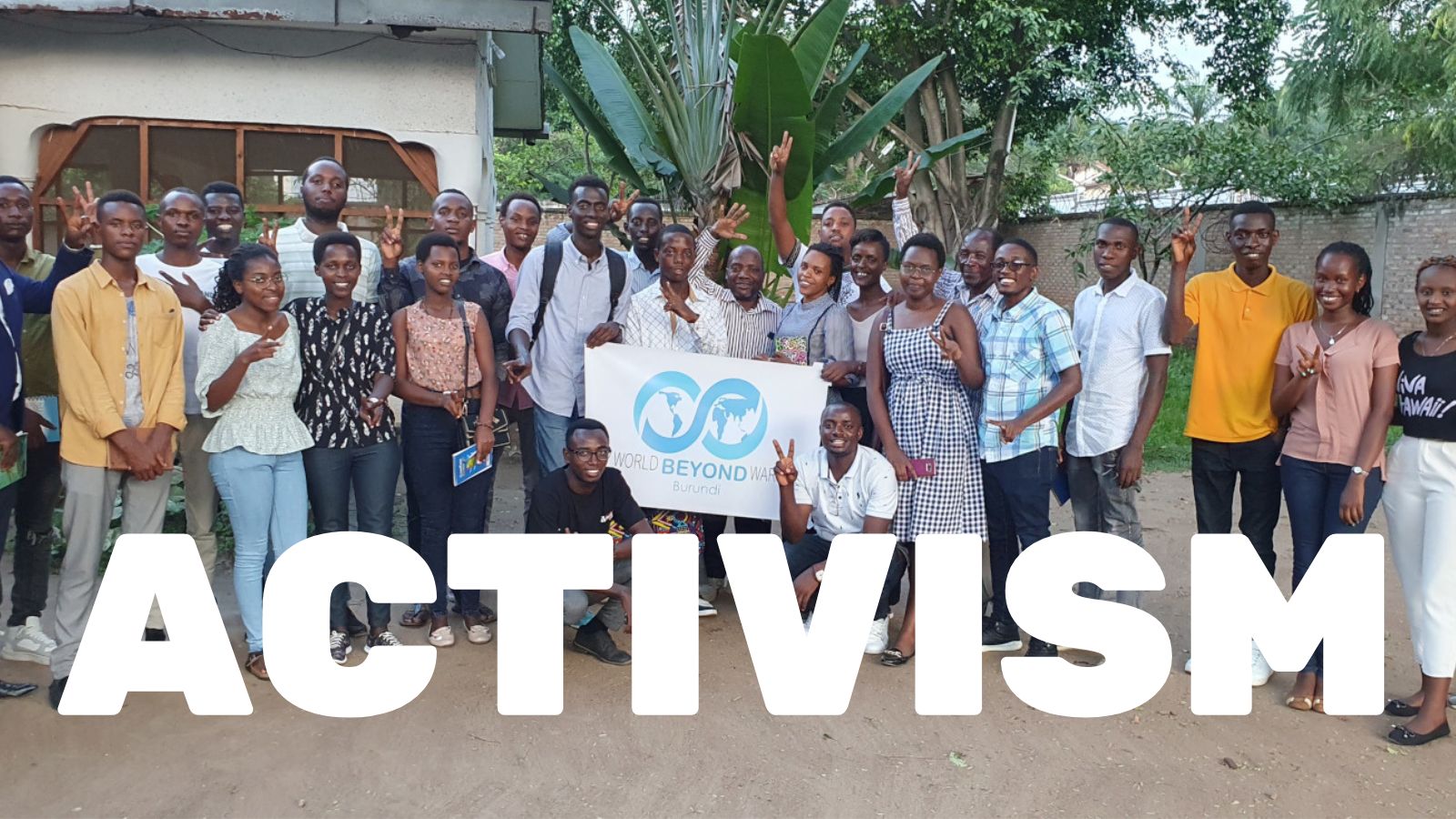
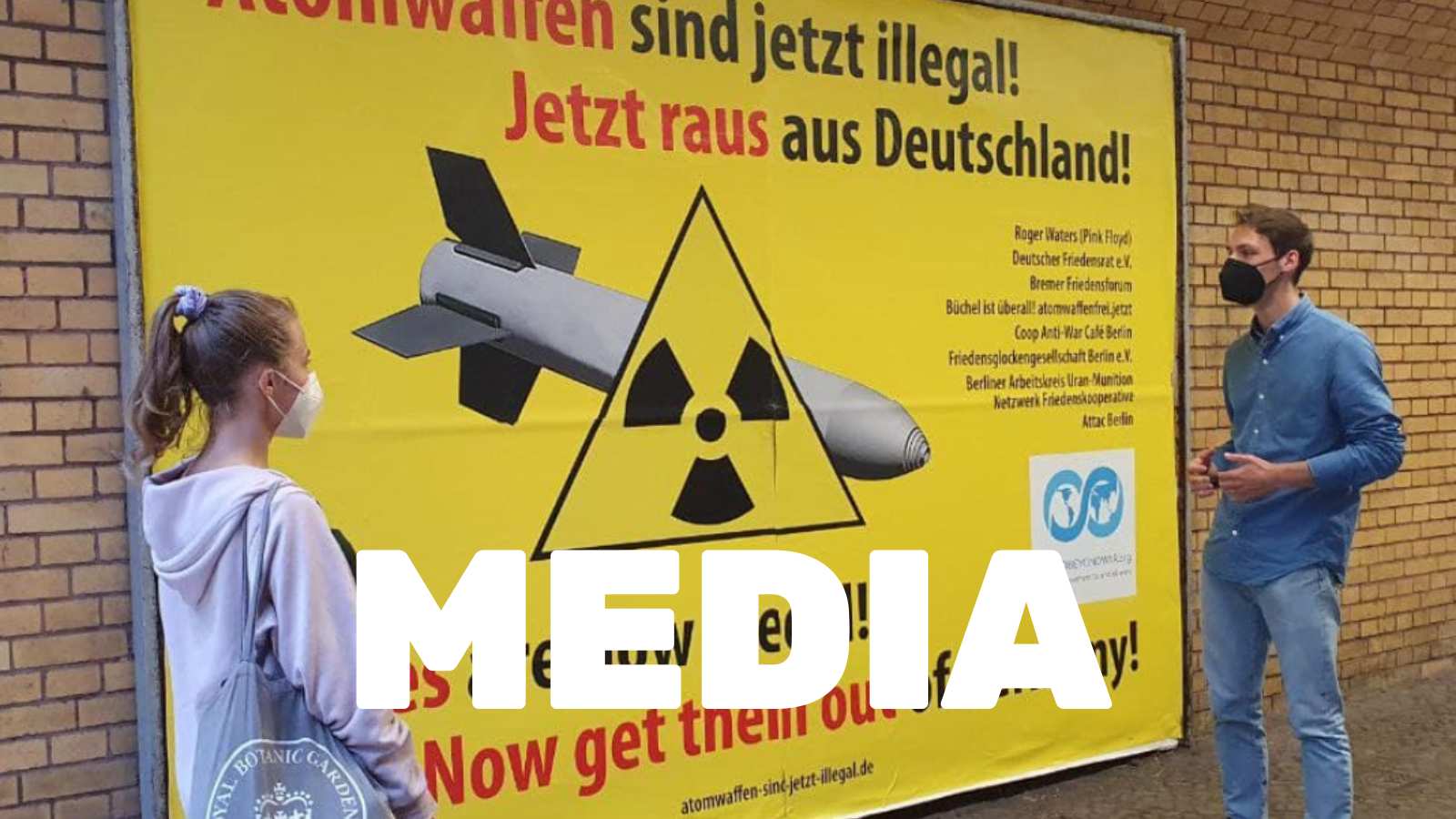
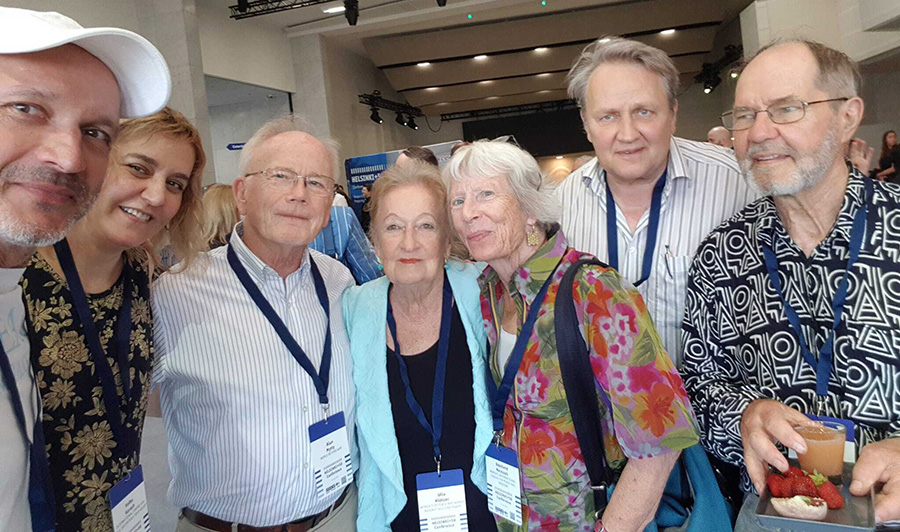
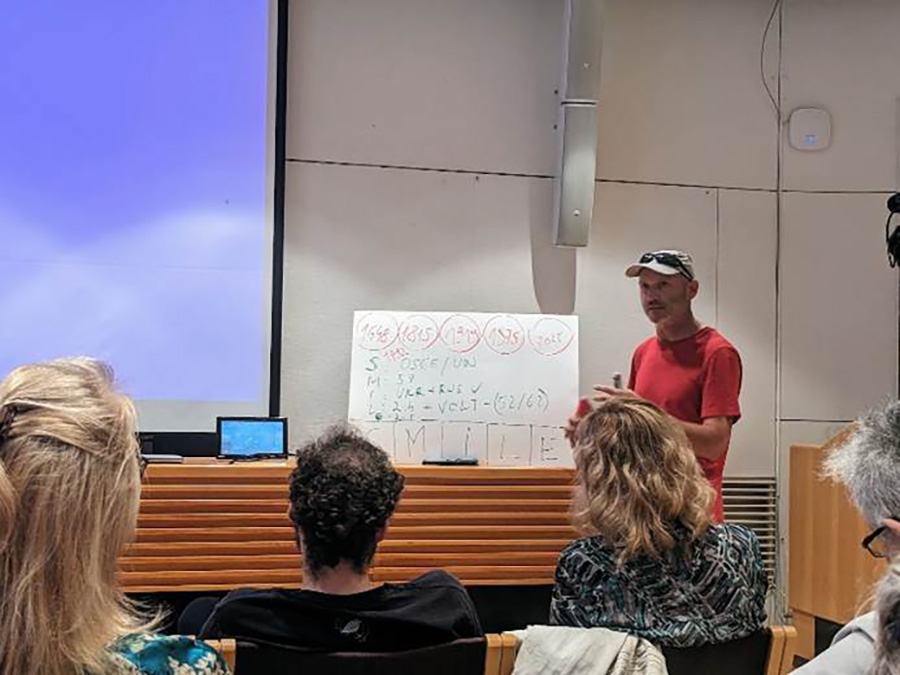
Here are photos from these activities:
Cooperation for Peace in the Joint Baltic Habitat
Oleg Bodrov, physicist, ecologist, St. Petersburg, Russia
Board member of the International Peace Bureau
Helsinki, July 30, 2025
Dear friends! Colleagues!
Unfortunately, I am not in Helsinki today.
A double iron curtain created by politicians separates us.
This iron curtain divides our common Baltic Sea.
Politicians have announced preparations for a new big war in Europe.
According to one of the scenarios published by NATO, the Russian naval base in Kaliningrad will be destroyed first. The remaining naval forces will be blocked in the St. Petersburg area.
Russian admirals also have a winning scenario in case of a conflict in the Baltic.
Thus, NATO and Russian military plan to make the Baltic Sea an arena of military operations.
There will be more than 30 nuclear reactors and thousands of tons of nuclear waste in temporary storage facilities in the theater of military operations.
In case of a big war in the Baltic, the nuclear power plants and temporary storages of the nuclear waste will be destroyed.
In this case, the consequences will be more dangerous than the explosion of an atomic bomb.
For example, the Leningrad Nuclear Power Plant with Chernobyl-type reactors produced approximately 1 billion lethal concentrations of plutonium-239 in spent nuclear fuel.
This amount of plutonium can kill 10 times more people than the number of people living in the Baltic drainage basin in 9 countries, including Russia.
Albert Einstein once expressed an idea that in the context of politics may sound like this: if there is a crisis in the political system, then it is impossible to find a way out if it is done by politicians who created this crisis.
The global political elite cannot offer us anything but war. They divide us by nationality, political characteristics, and try to make enemies of the inhabitants of the Baltic region.
We need to unite – the civil society of Russia and the countries of the Baltic Region. I think the basis for such a unification can be nature, historical and cultural values around the Baltic.
Several ideas for specific actions:
First: organize a Baltic photo exhibition of favorite places on the Baltic coast. This is a photo exhibition not of professional photographers, but of participants in environmental and peacekeeping movements of the Baltic Sea countries. This exhibition will show that our favorite places in Russia and Baltic countries are very similar.
Second: publish a catalogue of ecological, historical and cultural values on the Baltic coast. We have been publishing such a booklet on the Russian part of the Baltic coast. Let’s publish a common booklet!
Third: prepare and publish an analytical report by experts of the Baltic countries on the possible consequences after the destruction of the Baltic nuclear power plants.
Fourth: create a coalition The Baltic region is our common habitat. It is reasonable to invite to the coalition of peacekeeping, environmental, human rights organizations, as well as representatives of regional parliaments from the Baltic region.
I invite you to discuss these ideas on the international online/offline conference in St. Petersburg in November (TBA)
Thank you!