


By Marion Transetti, World BEYOND War, November 15, 2024
Français ci-dessous
On Thursday November 7, in the sumptuous conference room of the CÉAMITIC at the Université Gaston Berger in Saint-Louis, Senegal, two experts attempted to answer the delicate question about the war in Sudan: how did it come to this?
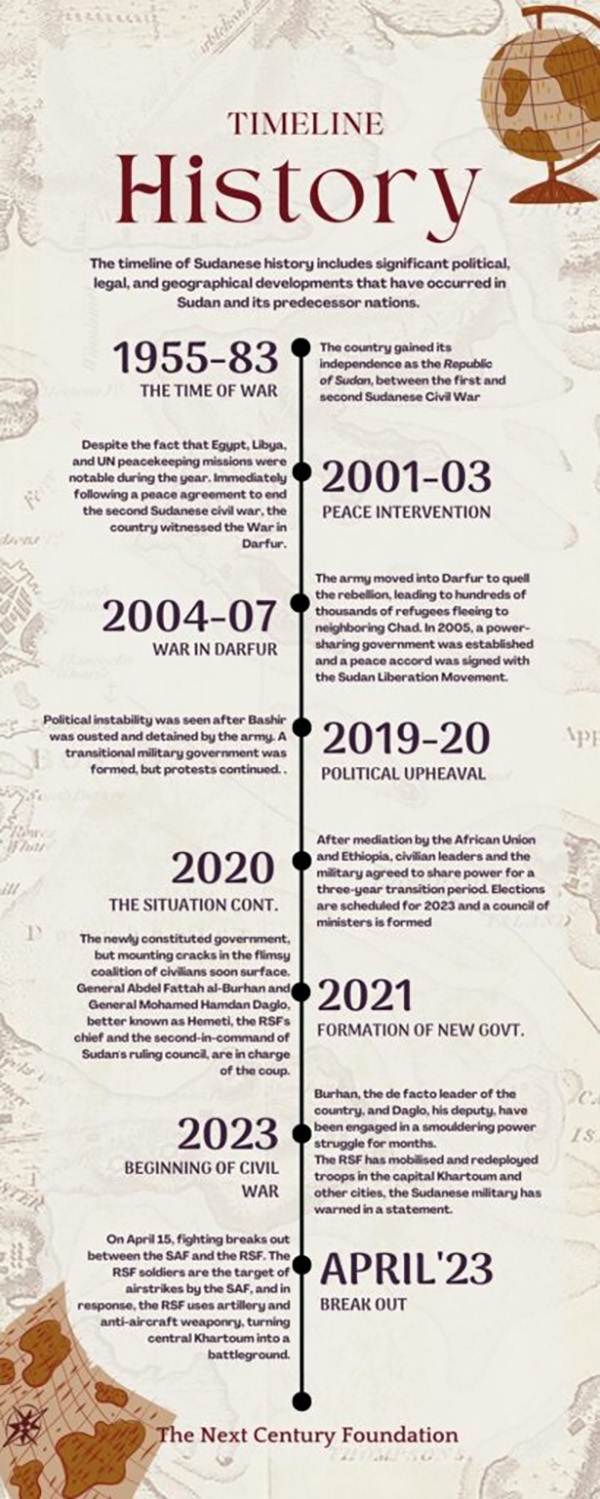
Historical overview
First, Professor Alassane Beye, lecturer at the UFR SJP and co-director of the Master’s in Peace and Security at the UGB, accompanied by Hamad Gamal, Sudanese activist exiled in France and co-founder of Sudfa-Média, spoke about the course of events in Sudan in recent years.
Also discussed was the Arab Spring, the protest movement that took place between 2010 and 2011 and in which Sudan, and Sudanese women in particular, played an active part.
In particular, Hamad Gamal supported the fact that from a mobilization focused on peace, freedom and justice, the country has moved into a devastating state of war.
The second part of the conference would therefore be devoted to determining the root causes of this turnaround.
Multiple factors
The audience at this conference, made up exclusively of Political Science and Peace and Security students, provided multiple answers to this question, suggesting numerous avenues for discussion.
These included:
► What was/is the role of Sudan’s neighboring countries?
► To what extent should the interference of foreign powers be condemned?
► What is the real weight of the UN in the Peace negotiations?
Opinions were sometimes divided, but in the end all tended towards the same consensus.
Solidarity
And so, after two hours of impassioned conversation and divided opinions, the participants parted, taking with them the conclusion that SOLIDARITY is indispensable on several levels for the resolution of this conflict and the establishment of a lasting Peace:
SOLIDARITY on the part of activists and populations around the world;
SOLIDARITY between African countries to repel imperialist assaults;
SOLIDARITY and synergy on the part of international institutions to lead an inclusive and lasting Peace process.
Soudan: Comment en est-on arrivé là ?
Le jeudi 7 novembre dernier, dans la somptueuse salle de conférence du CÉAMITIC de l’Université Gaston Berger de Saint-Louis du Sénégal, deux experts ont tenté d’apporter des éléments de réponse à cette délicate question à propos de la guerre au Soudan : comment en est-on arrivé là ?
Aperçu historique
Dans un premier temps, le professeur Alassane Beye, enseignant-chercheur à l’UFR SJP et coodinateur du Master Paix et Sécurité à l’UGB, accompagné en visoconférence de Hamad Gamal activiste soudanais exilé en France et co-fondateur de Sudfa-Média, sont revenus sur le déroulement des événements de ces dernières années au Soudan.
Le Printemps arabe fut également évoqué, ce mouvement contestataire qui s’est produit entre 2010 et 2011 et auquel le Soudan, et particulièrement les femmes Soudanaises, ont activement participé.
Hamad Gamal a notamment appuyé le fait que d’une mobilisation axée sur la paix, la liberté et la justice, le pays est passé à un état de guerre dévastateur.
La seconde partie de la conférence serait donc consacrée à déterminer les causes profondes de ce revirement de situation.
Multiples facteurs
L’audience de cette conférence composée exclusivement d’étudiants en Sciences Politiques et en Paix et Sécurité a apporté des réponses multiples à cette question en suggérant de nombreuses pistes de discussions.
Parmi celles-ci :
► Quel fût/est le rôle des pays voisins du Soudan ?
► Jusqu’à quel point devrait-on condamner l’ingérence des puissances étrangères ?
► Quel est le véritable poids de l’ONU dans les négociations de Paix ?
Les avis furent parfois partagés, mais tous tendirent finalement vers le même consensus.
Solidarité
Ainsi donc, après deux heures de conversations passionnées et d’opinions partagées, les participants se sont quittés emportant avec eux la conclusion qu’une SOLIDARITÉ est indispensable à plusieurs niveaux pour la résolution de ce conflit et l’établissement d’une Paix durable :
SOLIDARITÉ de la part des activistes et populations du monde entier autour du conflit ;
SOLIDARITÉ entre les pays d’Afrique pour repousser les assauts impérialistes ;
SOLIDARITÉ et synergie de la part des institutions internationales afin de mener un processus de Paix inclusif et pérenne.

One Response
Sudan does not deserve this. I did VSO in South Sudan many years ago and at one point my husband got shipped off to Khartoum with a sudden illness. I shall never forget how kind the locals were to this 19-year-old foreign girl left alone in a strange country. They were poor and in need themselves, but they still looked after me until he recovered and beyond. I shall always be grateful and am saddened that so many kind people are having to endure a war.