By David Swanson, World BEYOND War, June 17, 2025
The Helsinki Accords of 1975 look from the perspective of 50 years later like part of a trend away from the insanity of mass-murder and nuclear belligerence, in contrast to an opposing trend today. The war on Vietnam had given massive sadistic destruction a bad name, so bad that war promoters diagnosed society with a disease called the Vietnam Syndrome, whose only symptom was aversion to more wars — so bad that World War II became a wonderful event and the top subject of Hollywood. Opposition to wars and all sorts of other cruelty and violence and injustice and bigotry was reaching a peak in 1975 as what is often called the Sixties drew to a close in the mid-seventies. Opposition to wars was developing into strong opposition to the cold war and the arms race and the maintenance of nuclear weapons. Even if what was drawn up in Helsinki was not a treaty and could be tossed aside like the Iran Agreement that some corner of Donald Trump’s fevered brain probably wishes he hadn’t shredded, the Helsinki agreement wasn’t so easily tossed aside.
A culture grew out of it, institutions grew out of it, organizations grew out of it, new laws and treaties restricting various weapons and atrocities grew out of it, and the value of neutrality and diplomacy were strengthened. When Reagan visited Helsinki in 1988 on the way to meet with Gorbachev in Moscow, he felt compelled to pretend he cared about human rights, peace, and all sorts of leftist hogwash. Two years later, Bush the elder and Gorbachev met in Helsinki. Today such meetings would likely lead to the impeachment of a U.S. president, who would be widely understood as being in the pay of Moscow. Times have changed. Bush the younger’s slogan of with us or against us is a near-universal belief. Cooperation, as the word was used in Helsinki 50 years ago, is a forgotten concept. Even peace activists don’t cooperate with people they disagree with. In your personal online world you are either tainted by association with those you are not identical to, or you construct — with corporate assistance — a digital iron curtain to keep them out.
The current trend is moving swiftly. In 2008 a former president of Finland received the Nobel Peace Prize for — of all strange things — negotiating peace agreements. In 2023, Sweden and Finland received a peace prize from the Munich Security Conference for joining a military alliance and buying more weapons. As late as 2021 only 26% of people in Finland wanted to join NATO, a number that NATO boosters got up to 60% within weeks of the Russian invasion of Ukraine. The Secretary General of NATO at the time said it was precisely the insistence on NATO membership for Ukraine that had created the war. The government of Russia, knowing full well that invading Ukraine would boost NATO, declared that its only means of defending against NATO was to invade Ukraine. NATO now says we’ll have all-out war with Russia within a few years if we all do exactly what NATO tells us.
Jumping fully into the spirit of doing whatever doesn’t work, Finland quickly blew $10 billion on F-35 airplanes best known for crashing. While the Iron Dome is failing Israel dramatically, NATO members are searching for schools and hospitals they can defund in order to build their own domes. If new missile bases terrify the Russians too much, you can always claim, as Obama’s team did for Poland and Romania, that the missiles are defensively aimed at Iran and are just a U.S. jobs program. After all, the one bit of good news out of the U.S. government in recent days has been its embrace of recycling — it’s recycling every worn out old war lie on behalf of Israel.
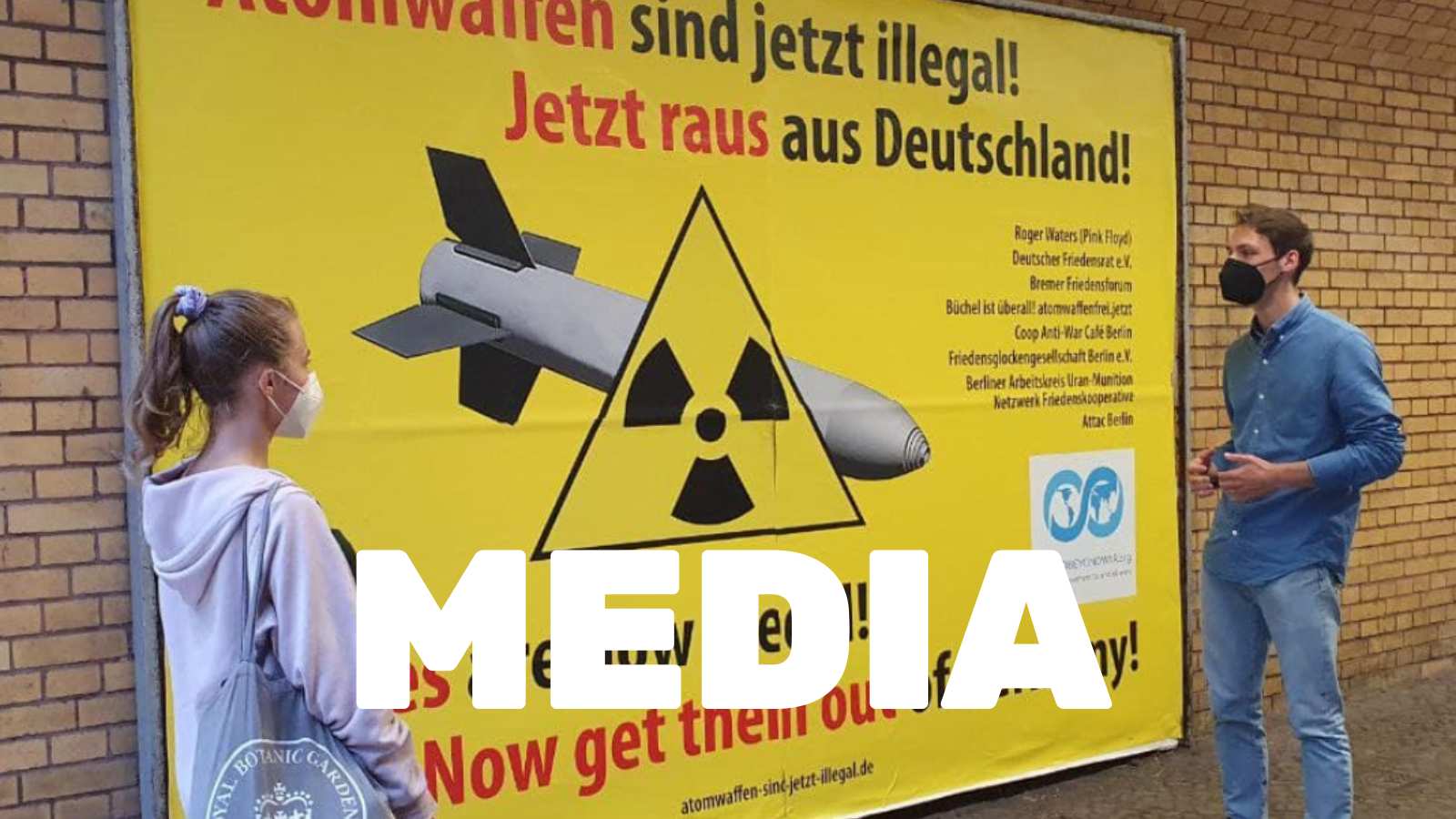
At WorldBEYONDWar.org we have a tool that displays military bases around the globe. In the past few years, the biggest change has been in Scandinavia, where the U.S. military has added dozens of bases across Finland, Sweden, and Norway. In Norway, they’ve said that U.S. troops will have the right to go anywhere. In Germany, they’ve told the locals they have no right to know what their water is being poisoned with. In Australia, they’ve told the country it has no right to know whether the United States will bring in nuclear weapons. In Okinawa, they’ve told rape victims that U.S. troops are not subject to laws. All of this is what now goes by the name freedom. You’re not occupied, you’re liberated!
If you want to join a big upcoming global action against bases on July 14, check out DayToCloseBases.org
Here we are in a section of this event with people from the Americas, but if you want to see the future of NATO’s treatment of the world, you need only look at the history of U.S. treatment of Latin America — a history that is not over. In January I visited Cuba. In June — that is, this month — a U.S. bank closed World BEYOND War’s accounts. No consorting with the enemy! Today I published a report about that at WorldBEYONDWar.org and I’ve already heard from organizations in Switzerland and Sweden with similar stories about losing bank accounts for being too peaceful.
In the coming days I’m looking forward to joining in a NATO Counter-Summit in the Hague. I’m not opposed to NATO being in the Hague, of course. I just want it to be there to stand trial. Then I’m headed to big peace events in Brussels and Geneva and a base protest in Ramstein. I hope that these events — and those being planned for Helsinki, and those rising up around the world against the wars of Israel — can be part of a new trend, a trend resembling what existed 50 years ago. If a butterfly can start a hurricane, who knows what we might start if we only try.