COPOUT 26 Left Out the Topics and People It Needed
By David Swanson, Labour Hub, November 9, 2021 I’m not sure what we should have expected from a 26th UN climate meeting after 25 previous


By David Swanson, Labour Hub, November 9, 2021 I’m not sure what we should have expected from a 26th UN climate meeting after 25 previous
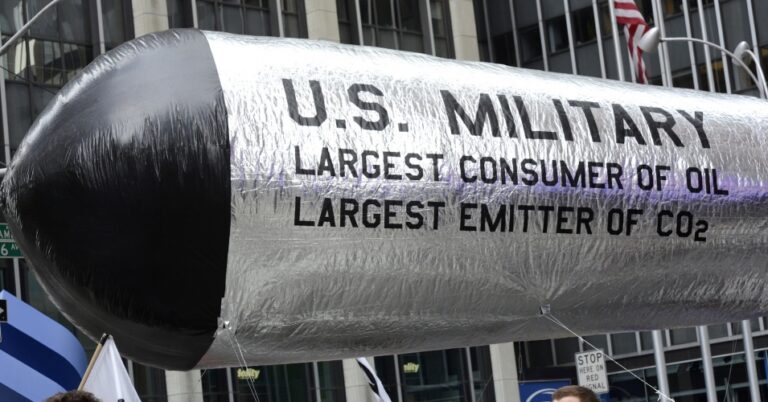
Demand militaries be included in the climate agreement.
This week on Talk World Radio, we’re going to hold a bit of a respectful and civil debate.

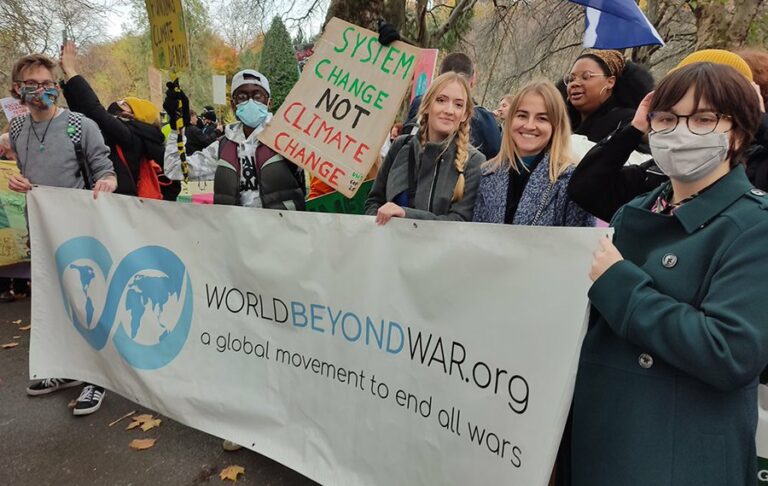
Fellow anti-militarist groups Stop the War Coalition, Veterans for Peace, World Beyond War and CODEPINK came together in an anti-war rally on the steps of the Glasgow Royal Concert Hall on 4 November, highlighting the links between militarism and the climate crisis.
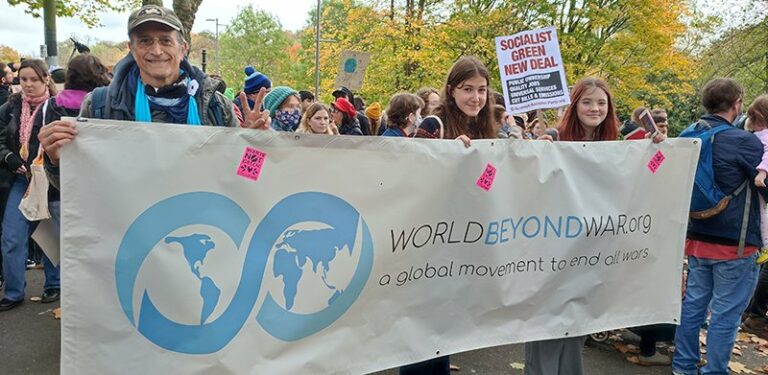
While world leaders fail to agree on meaningful change at COP26, the city of Glasgow has become a hub of protests and strikes, reports John McGrath.
An alliance of peace groups – including the Movement for the Abolition of War (MAW), Pax Christi and Christian CND – held a public meeting at the Buchanan Steps in Central Glasgow pushing for military pollution to feature in climate agreements.

COP Twenty-six! That is how many times the UN has assembled world leaders to try to tackle the climate crisis.
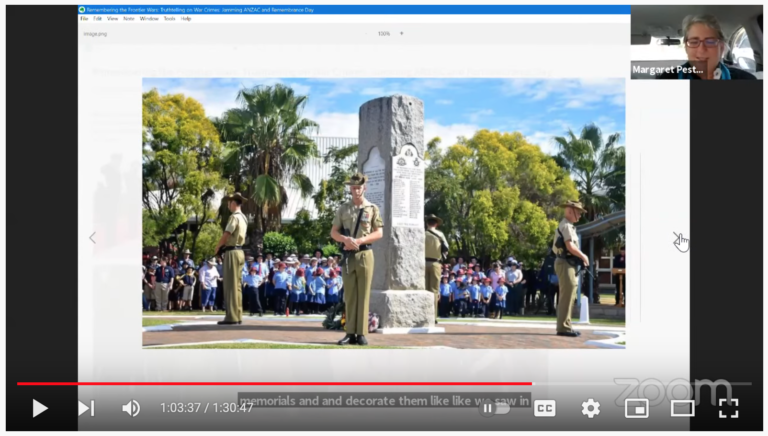
Leading Peace Activists from Around the World Discuss the Origins of Remembrance/Armistice Day and Plans for This Year’s
David Swanson spoke on November 3, 2021, with the Rotary Club of Fort Collins. The views he expressed were his, obviously, and not those of the Rotary Club of Fort Collins. But they could be yours. That’s up to you.