

Background and justification
Since 2023, World BEYOND War has organized the Africa Virtual Peace Conference, “Imagine Africa Beyond War,” a space for reflection on contemporary issues affecting Africans and threatening peace and security across the continent, which already faces significant challenges in this regard. The fourth edition taking place in 2026 addresses debates at the heart of Africa’s current situation, particularly contemporary forms of domination. While the continent continues to grapple with the impact of colonization on its economic development and with ongoing wars, an increasing number of voices are raising concerns about the possible “recolonization of Africa.”
On February 14, 2026, at the Munich Security Conference, U.S. Secretary of State Marco Rubio clearly expressed this colonialist vision of Africa. On March 25, 2026, the United Nations voted against a resolution put forward by Ghana on behalf of African states, which described the transatlantic slave trade and the enslavement of Africans as the “gravest crime against humanity.” The three countries that voted against the resolution were the United States, Israel, and Argentina. France and other European countries abstained. These positions raise concerns about relations between countries of the Global North and those of the Global South, particularly African countries.
These debates bring renewed attention to economic dependency, the exploitation of natural resources, foreign political and military influence, military bases, foreign interventions, debt mechanisms, and other forms of domination and control over African public policies. These forms of domination coexist with realities that can be considered contemporary forms of slavery, including human trafficking, irregular migration and the resulting exploitation of migrant workers, the deportation of migrants, sexual exploitation, and many others. These are all situations in which people are deprived of their rights and freedom.
However, discussing the domination of Africa cannot be limited to identifying external responsibilities. The choices made by certain governments, political elites, institutions, and African populations also shape these power relations. The fourth World BEYOND War Africa Peace Conference, “Imagine Africa Beyond War,” therefore offers a two-day space for critical reflection on these issues, without reducing the debate to an opposition between Africa and the West. It seeks to understand what forms of domination exist today, how they manifest themselves, why they persist, and how Africans can contribute to overcoming them.
Keynote lectures
This year, we have two keynote lectures:
- Continuities in power relations, from Colonization to the “Recolonization” of Africa
- Understanding the role of African leaders in the deportation of migrants: How can we take our destiny into our own hands?
Schedule
Find the event time in your time zone
- Opening
- Welcome remarks from World BEYOND War
- Growth of the WBW Movement in Africa: Launching the Chad chapter
- Keynote lecture on Continuities in power relations, from Colonization to the “Recolonization” of Africa
- Panel discussion 1 on the theme: Perspectives on Contemporary Forms of Domination
- From the transatlantic slave trade to contemporary forms of exploitation of Africans
- Foreign interventions and new geopolitical rivalries in Africa
- How the exploitation of African resources and economic dependence limit the sovereignty of African States
- Open discussion & Q&A
- Closing of day 1
Find the event time in your time zone
- Keynote lecture on Understanding the role of African leaders in the deportation of migrants: How can we take our destiny into our own hands?
Panel discussion 2 on the theme “Building African responses”
- The capacity for action of African societies: Citizen movements and nonviolent Resistance
- MAMA: An opportunity to build a force for the emergence of a more peaceful Africa
- Beyond dependence: What new forms of cooperation between Africa and the rest of the world?
- Open discussion & Q&A
Participatory discussion: On Africa’s potential to become sovereign
Closing
Speakers
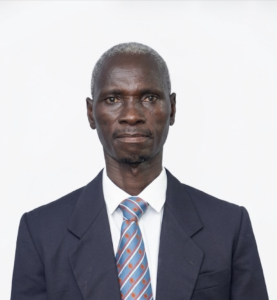
Richard Eshun
Professor Richard Eshun is an education professional based in Elmina, Ghana, where he serves as Director of the Adjaye Education Centre and Assistant School Improvement Support Officer at the Komenda-Edina-Eguafo-Abirem (KEEA) Municipal Education Directorate.
He holds a Bachelor of Science in Education from the University of Cape Coast, Ghana, and completed post-secondary education at Fosu College of Education. His academic interests include the philosophy of education, educational leadership, ethics in higher education, and social protection.
His professional and academic recognition includes awards and affiliations associated with Globethics.org, Geneva, in Ethics in Higher Education; the International Partnership of the European Union in Social Protection; the Charles Martins Institute of Management and Public Administration in Africa; and Commonwealth University and the London Graduate School of Business.
He has also been recognized as a Pan-African Peace Ambassador by the National Award House, Ministry of Foreign Affairs, Nigeria, reflecting his engagement with peace and education.
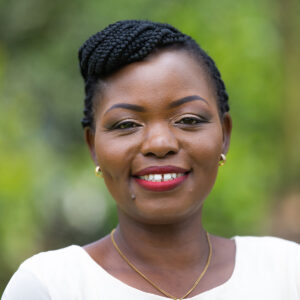
Sellah King’oro
Dr. Sellah N. King’oro is a Board Member of World BEYOND War, a peace and security specialist, trainer, and advocate of the High Court of Kenya. She received a presidential trailblazer award in women, peace, and security from the Kenyan president on 2 March 2023. In October 2023, Sellah also received a shortlisted award medal from the Women in Defence UK in the inspirational category.
Dr. Sellah King’oro is currently a post-doctoral fellow at the State University of New York, Binghamton. She has contributed to reconciliation/dialogue processes among communities in parts of East, Central, and West Africa. Dr. King’oro has been a Charles Scheidt resident practitioner at the Institute for Genocide and Mass Atrocity Prevention at Binghamton University, USA.
Dr. King’oro has a Ph.D. in Peace and Conflict Studies, an MA in International Studies, a Bachelor of Laws, and a Bachelor of Education from various Universities in Kenya and overseas. Her honorary responsibilities include a membership of the Inclusive Narratives Practice Group – IFIT (ifit-transitions.org) convened by the Institute for Integrated Transitions (IFIT). She was appointed the Global Peace Index ambassador in 2015 by the Institute for Economics and Peace, is the past president of Rotary District 9212 Alumni Association and the current Rotary Peace Fellowship Coordinator for Africa. As part of community service, Sellah mentors a pool of next-generation researchers who desire to contribute to social change.
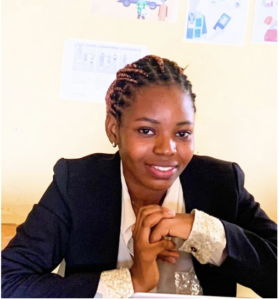
Zeynab Ndongo
Zeynab Ndongo is a 22-year-old woman from Cameroon, coordinator of the Young WILPF Cameroon program, and a project management student. Since 2022, she has been actively involved in civil society, with a focus on youth empowerment, the promotion of social cohesion, and peace. Her work centers on building the capacity of young people and promoting their active participation in building peaceful and inclusive communities. Recently, her main areas of work have included leading educational talks in schools in Bertoua on youth engagement in promoting peace, participating in social media campaigns against hate speech, and coordinating the operational unit of the Women and Youth's Early Warning Room, where she oversaw the reporting of incidents posing a risk of conflict. She also took part in the WILPF African Regional Congress, where she shared the experience of Young WILPF Cameroon and encouraged other sections to adopt an intergenerational approach in their initiatives.
Samson Koulamadji
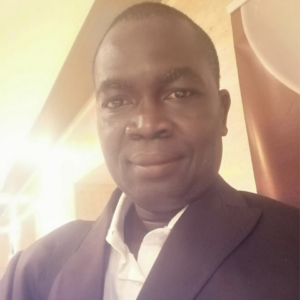
Samson KOULAMADJI is World BEYOND War's Chad chapter Coordinator. He is Chadian professional with a Master’s degree in Project Management and more than eight years of experience in project coordination, capacity building, and organizational support.
He holds several positions, including National Coordinator of the NGO ASED, International Human Rights Inspector, Consultant-Trainer, and Ph.D. candidate in humanitarian services. He also serves as Ambassador and Representative in Chad for the NGO RDDH ASBL Internationale – Justice for All.
His expertise focuses primarily on human rights, sustainable development, and humanitarian action. He supports civil society organizations, businesses, and public institutions in project design and coordination, capacity building, and the development of training modules.
In 2022, he helped organize a country dialogue in Chad with the NGO ASED, demonstrating his commitment to collaboration and dialogue among stakeholders.
Driven by a deep desire to help build a peaceful and united Chad, Samson Koulamadji is committed to conflict prevention, intercommunity dialogue, and strengthening social cohesion. He is convinced that peace education, consultation, and active community participation are essential tools for preventing violence and building lasting peace.
Through his responsibilities and commitments, he works to promote human rights, build the capacity of civil society actors, and seek sustainable solutions to social and humanitarian challenges. His vision is of a Chad where dialogue, solidarity, justice, and peaceful coexistence contribute to sustainable development for the benefit of all communities.
George Mutalemwa
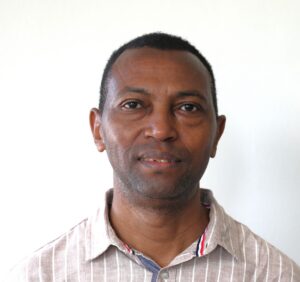
Dr. George Mutalemwa is Senior Research Fellow at St. Augustine University of Tanzania (SAUT), Chair and Co-founder of Solidarity for Peace and Development (MAMA), Director of Africa Peace and Development Network (MAMA), Leader of Peace Studies Group of the International Federation of Catholic Universities (IFCU), Co-editor of Peace Studies for Sustainable Development in Africa, Peace as Nonviolence, African Peacebuilding, and African Peace and Global Development, Coordinator and Moderator of “Global Peace Studies for Sustainable Development” a series of online weekly international conferences, and former Council Member of the International Peace Research Association (IPRA).
Khadija Khubira
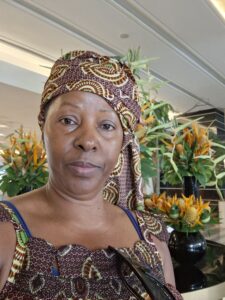
Khadija Khubira Yanni is a Sierra Leonean-American author, advocate, and community leader whose life and work are dedicated to empowering women and girls through education, leadership, and social justice. Originally from Sierra Leone and now residing in New York, she has spent decades championing opportunities for women and girls both in the United States and across Africa. As a child growing up in Sierra Leone, Khadija witnessed firsthand the barriers that many girls face, including limited access to education, gender inequality, and harmful traditional practices like Female Genital Mutilation (FGM), (Bondo).These experiences shaped her lifelong commitment to advocating for the rights, dignity, and advancement of women and girls. Khadija is the author of Zainabu's Courage: Growing Up a Girl in Sierra Leone, a powerful coming-of-age novel that follows the journey of a young girl determined to overcome cultural barriers and pursue an education. Through the story of Zainabu, Khadija seeks to inspire readers to recognize the value of every child, especially girls, and to promote dialogue about education, equality, resilience, and hope. A graduate of Stony Brook University, Khadija holds a Master's degree in Human Resources and Healthcare Management. Beyond her professional career, she has devoted her time to community service, mentoring youth, and supporting initiatives that encourage leadership and educational achievement among young people. Khadija is a co-founder of programs that support girls' leadership development and educational opportunities, including mentoring initiatives designed to help young women build confidence, pursue higher education, and become positive agents of change in their communities. She has also been actively involved in advocacy efforts addressing violence against women and girls, gender equality, and the promotion of human rights.
Her vision is to connect with schools, universities, libraries, book clubs, youth organizations, and community groups around the world to encourage meaningful conversations about the power of education, courage, and leadership. Through her writing, speaking engagements, and advocacy work, Khadija continues to inspire others to believe that one voice, one story, and one act of courage can help transform lives and communities.

Ute Kollies
Ute Kollies worked from 1999-2020 as a UN diplomat in many countries in conflict in Africa (Mali, Chad, Sudan, Côte d' Ivoire, Regional Office Senegal) and was responsible for the coordination of humanitarian assistance and protection as OCHA Head of Office /Deputy Director). Before focusing on conflict and crisis, she worked in the education sector in Zimbabwe after independence and deployed German teachers and teacher trainers to the newly independent country, managed scholarships and the return of highly qualified Zimbabweans who were trained in Germany.
Guy Feugap
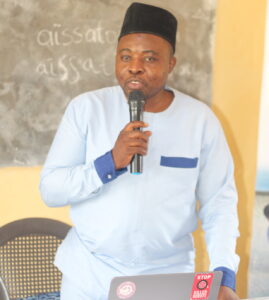
Guy Feugap is the Africa Organizer of World BEYOND War. He is a teacher, writer and peace activist based in Cameroon. His overall job is to educate youth for peace and non-violence. His work puts young girls in particular at the heart of crisis resolution, awareness raising on several issues in their communities. He joined WILPF Cameroon when it was established in 2014 and founded the Cameroon Chapter of World BEYOND War in 2020.