

The course includes two core components:
1) Six-week Online Course
Each week includes multimedia content—readings, videos, case studies, and podcasts—alongside discussion prompts and an optional assignment to deepen learning. You can complete the course at your own pace.
- Week 1: Written law – what does the law say?
Examine treaties, constitutions, and legal frameworks that define or criminalize war. Learn about the Kellogg-Briand Pact, the UN Charter, Geneva Conventions, and national constitutions—and how they are interpreted, violated, or ignored.
- Week 2: Using the law to stop war
Explore real-world efforts to hold war-makers accountable through legal action—via international courts, national legislation, truth commissions, and people-powered campaigns like BDS and universal jurisdiction.
- Week 3: The laws in which we operate
Analyze how war reshapes legal systems from within. Investigate states of emergency, repression, surveillance, and how militarism erodes rights, law, and democracy—from SOFAs to speech bans.
- Week 4: Violating the law to stop war
Examine how civil resistance, disobedience, and refusal to comply with unjust laws can prevent war and save lives. Includes case studies on whistleblowers, anti-drone protests, and resisting illegal orders.
- Week 5: The laws of a world BEYOND war
Envision legal systems grounded in peace, justice, and nonviolence. Explore proposals to outlaw war, close foreign military bases, reform the UN, embed peace rights in constitutions, and advance unarmed civilian protection.
- Week 6: Ideas for action
Put it all together. Reflect on how laws are upheld, broken, and reimagined—and develop your own strategy for using, challenging, or transforming legal tools to help move the world beyond war.
Course Certificate
Participants who complete all six weekly assignments will receive a certificate of completion from World BEYOND War, an award-winning global movement to end war and establish a just and sustainable peace.
Time Commitments and Expectations:
This course is 100% online and can be completed at your own pace. Weekly content includes a mix of text, video, images, and audio. Online discussion forums offer a space for mutual learning and exchange, where participants and facilitators raise questions, share challenges, and engage with the weekly content. Facilitators also offer feedback on submissions, including in the discussion forum and on assignments.
How much time you spend and how deeply you engage is up to you. As a general guide:
- 1–2 hours per week reviewing content
- 1–3 hours per week participating in discussion forums
- 2 additional hours per week completing assignments (required for the certificate)
Please note: All prices are in US Dollars ($). All course registrations are non-refundable. As all materials are made available upon enrollment and course planning is based on participant numbers, we are unable to offer refunds once registration is complete.
2) Three Interactive Live Sessions
Optional 1-hour Zoom calls offer real-time opportunities for connection, reflection, and support:
- Call #1 – Introductions & Intentions
Thursday, August 14, 2025 – 11:00 AM Eastern (US/Canada) - Call #2 – Mid-Course Reflections
Thursday, August 28, 2025 – 11:00 AM Eastern (US/Canada) - Call #3 – Where Do We Go From Here?
Thursday, September 11, 2025 – 11:00 AM Eastern (US/Canada)
🕒 Click here to check the time in your local time zone—just enter your city.
- Foundational insight: Explore how law acts as both a barrier to and a pathway beyond war—and how it can be applied in practical, visionary, and transformative ways.
- Core frameworks: Examine treaties, constitutions, and legal systems that define, restrict, or enable war.
- Global scope: Engage with legal traditions and case studies from across the world.
- Applied strategies: Discover how courts, truth commissions, and grassroots campaigns have used legal tools to prevent war and advance justice.
- Action planning: Learn how legal arguments, direct action, and public pressure combine to challenge militarism and drive systemic change.
- Collaborative learning: Join a diverse global community committed to nonviolence, legal accountability, and shared learning.
- Recognition: Earn a certificate from World BEYOND War upon completion of assignments and participation.
Course Hosts/Facilitators:
Week 1: Written law – what does the law say? — August 4–10
Facilitator: Yurii Sheliazhenko, PhD (Ukraine)
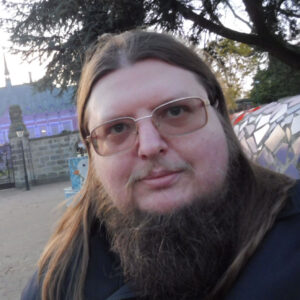 Yurii Sheliazhenko, PhD, is a Member of the Board of Directors of World BEYOND War. He is based in Ukraine. Yurii is executive secretary of the Ukrainian Pacifist Movement, a board member of the European Bureau for Conscientious Objection, and a council member of the International Peace Bureau. He obtained a Master of Mediation and Conflict Management degree in 2021 and a Master of Laws degree in 2016 at KROK University. In addition to his participation in the peace movement, he is a journalist, blogger, human rights defender, and legal scholar, an author of academic publications and a lecturer on legal theory and history. He has been a facilitator for World BEYOND War’s online courses. Yurii is a winner of the International Peace Bureau’s 2022 Sean MacBride Peace Prize.
Week 2: Using the law to stop war — August 11–17
Facilitator: Andrew Cheatham (USA)
 Andrew Cheatham, Chief Counsel and Managing Director, Pragmatic Panic Legal and Social Services
Andrew Cheatham has led initiatives on global policy and disruptive technologies at the United States Institute of Peace (USIP), and served for over a decade with the United Nations in New York, Iraq, Libya, and Tunisia, as well as with the African Union in Somalia. His research explores the implications of artificial intelligence (AI) on the law of armed conflict; institutional resilience amid a rapidly fragmenting global order; and strategic communications in active conflict settings. Andrew is the Chief Counsel and Managing Director of Pragmatic Panic Legal and Social Services, a not-for-profit organization that offers legal support to communities affected by the downstream impacts of global threats to peace and security. Andrew currently serves as Visiting Senior Research Fellow at King’s College London in the School of Security Studies and a Senior Fellow for Conflict Resolution at the Sympodium Institute in Riga, Latvia.
He holds a law degree from the City University of New York School of Law, a Bachelor’s degree in Communications from Boston University, and was awarded a Master’s in War Studies with Distinction from King’s College London.
Week 3: The laws in which we operate — August 18–24
Facilitator: Bishnu Pathak (Nepal)
Nominee for the Nobel Peace Prize from 2014 to 2019
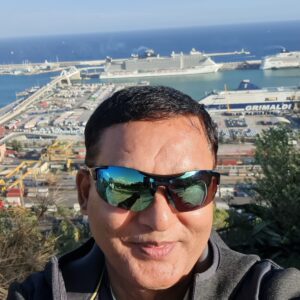 Bishnu Pathak is a transnational student specializing in peace, conflict, human rights, human security, and transitional justice studies. He has served as a board member at the world’s first online TRANSCEND Peace University for 20 years, working closely under the supervision of Professor Johan Galtung, a pioneer in peace and conflict studies worldwide. Professor Pathak’s journey to peace was mentored and inspired by Galtung, leading him to make significant contributions to conflict transformation through peaceful means. In 2004, Pathak earned a Ph.D. in interdisciplinary “Conflict Management and Human Rights” from Tribhuvan University, with support from The Danish Centre for Human Rights in Copenhagen through a DANIDA fellowship.
Despite facing challenges, Pathak has authored 150 international books and papers. Some of his notable works include “Politics of People’s War and Human Rights in Nepal” (2005), “India-Pakistan Escalation of Conflict: Promoting Positive Peace Through a Bottom -up Approach” (2025a), “Magna Carta of Peace” (2025b), “Perpetual Peace by Johan Galtung” (2024a), “Gandhian Spherons: India/Nepal Return to the Varnas Peace World Leadership” (2024b), “Generations of Transitional Justice in the World” (2019), “Nuremberg Tribunal: A Precedent for Victor’s Justice” (2021a), “The Tokyo Tribunal: Precedent for Victor’s Justice II” (2021b), “The Nepal Compact: Potential for Cold War II” (2022a), “Negotiation by Peaceful Means: Nepo-India Territorial Disputes” (2022b), and “The Arts of Eastern Philosophy” (2023). His research paper on “Nepal’s 2008 Constituent Assembly Elections: Converting Bullets to Ballots” (2008) was published by the East-West Center, USA. Pathak’s publications have been referenced in 99 countries in sixty days, from August 9 to October 8, 2022 by Academia.edu (cf. below box).
Pathak’s works are guided by the principle of “I know that I do not know,” focusing on a “do no harm” approach in win-win or lose-lose game theory, which is evident in his conflict transformative works. He employs networking tracking methods and snowball techniques to gather, review, evaluate, and analyze information.
Pathak is a dedicated advocate for peace prevailing on the earth. He has worked with the Disappearance Commission to seek truth and justice for victims and is involved in various worldwide organizations promoting respect, coexistence, harmony, and conflict resolution. Pathak believes in the power of connecting with people from all backgrounds to create positive change and inspire others to resolve conflicts by peaceful means.
Week 4: Violating the law to stop war — August 25–31
Facilitator: Hans Hedrich (Romania)
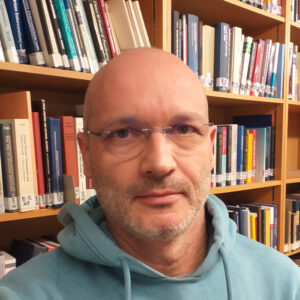 Hans Hedrich is a political scientist, environmental activist, and civil rights advocate from the multiethnic region of Transylvania, Romania, and a co-coordinator of the World BEYOND War Romania Chapter.
Week 5: The laws of a world BEYOND war — September 1–7
Facilitator: Daniel Carlsen (Bolivia / Norway)
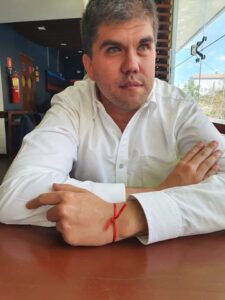 Daniel Carlsen is a Norwegian Bolivian lawyer, with a master degree in Corporate Law with a specialization in Social Responsibility of Companies. He has more than 11 years of experience in the academic fields. He has been working with Culture of Peace for more than 13 years. He was part of a peace education program with organizations such as United 4 Change, Mother Across Continent and RISE. He is a member of World BEYOND War’s Chapter in Bolivia. He has been the coordinator and facilitator for a peace education program for one of the most important universities of Bolivia and he’s working on a big peace education project that will be executed in Bolivia, Chile and Argentina.
Week 6: Ideas for action — September 8–14
Facilitator: Dr. Sellah N. King’oro, PhD (Kenya)
 Dr. Sellah N. King’oro is a Board Member of World BEYOND War, a peace and security specialist, trainer, and advocate of the High Court of Kenya. She received a presidential trailblazer award in women, peace, and security from the Kenyan president on 2 March 2023. In October 2023, Sellah also received a shortlisted award medal from the Women in Defence UK in the inspirational category. Dr. Sellah King’oro is currently a post-doctoral fellow at the State University of New York, Binghamton. She has contributed to reconciliation/ dialogue processes among communities in parts of East, Central, and West Africa. Dr. King’oro has been a Charles Scheidt resident practitioner at the Institute for Genocide and Mass Atrocity Prevention at Binghamton University, USA.
Dr. King’oro has a Ph.D. in Peace and Conflict Studies, an MA in International Studies, a Bachelor of Laws, and a Bachelor of Education from various Universities in Kenya and overseas. Her honorary responsibilities include a membership of the Inclusive Narratives Practice Group – IFIT (ifit-transitions.org) convened by the Institute for Integrated Transitions (IFIT). She was appointed the Global Peace Index ambassador in 2015 by the Institute for Economics and Peace, is the past president of Rotary District 9212 Alumni Association and the current Rotary Peace Fellowship Coordinator for Africa. As part of community service, Sellah mentors a pool of next-generation researchers who desire to contribute to social change.
This course is open to anyone interested in how law can be used, challenged, or transformed to end war and build peace. It brings together people from diverse backgrounds—across disciplines, sectors, and geographies—who engage with the law in different ways: as a tool for justice, a source of struggle, or a system to be reshaped.
It is especially suited to:
- Students, scholars, and practitioners exploring the intersections of war, peace, and law
- Educators, activists, and peacebuilders seeking legal tools to resist war and militarism
- Policymakers, legal professionals, and diplomats working on justice, human rights, or international relations
- Campaigners, movement leaders, and organizers aiming to use—or subvert—the law to prevent, expose, or end war
Participants typically come from fields such as peace and conflict studies, international law, human rights, education, journalism, diplomacy, government, and civil society.
No legal training is required—just curiosity, commitment, and a readiness to engage.