

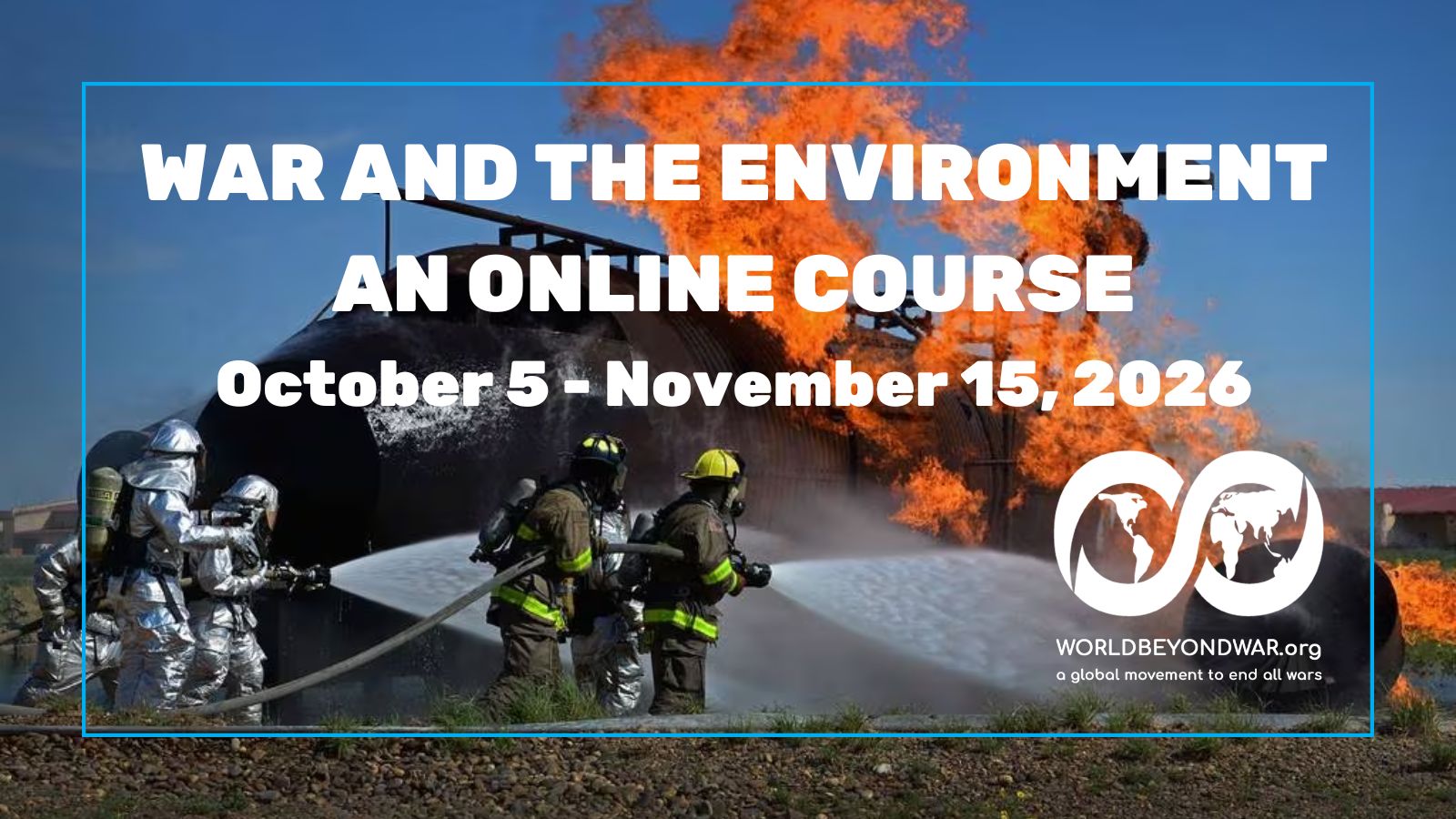
Much discussion about climate change and security asks how environmental pressures may contribute to conflict. This course looks at the relationship from another angle.
A key question running through the course:
What changes when war and militarism are understood as part of the climate and ecological problem, rather than environmental harm being treated as an unfortunate side effect of war?
Much peace and security work focuses primarily on relationships among people. The course also invites a wider, world-centred perspective on peace, asking participants to consider how war affects people, places, ecosystems, other living beings, and the wider conditions that sustain life.
This means looking beyond what happens on the battlefield. Environmental harm can begin long before fighting starts through military infrastructure, weapons production, training, extraction, and resource use. It can intensify during armed conflict and continue afterwards through contamination, unexploded weapons, destroyed infrastructure, displacement, reconstruction, and long-term ecological damage.
Throughout the course, participants are invited to ask:
- What is happening, and why?
- Who and what are affected?
- Who benefits, who bears the costs, and whose experiences are least visible?
- What ideas about peace and security are operating?
- What could prevent, reduce, repair, or transform the harm?
The course has two main components:
- Six online modules, completed at times that work for you
- Three optional live Zoom sessions for discussion, reflection, and exchange
Each week combines online materials, multimedia, examples and case studies from different parts of the world, reflective questions, peer-to-peer discussion, and an optional assignment.
Note: The course is asynchronous and flexible. There is no live session on October 5 or November 15; these are simply the opening and closing dates of the online course. The only scheduled elements are the three optional Zoom sessions listed below.
Course Modules
Setting the Scene: War, the Environment, and Climate Change
Explore where wars happen and why they happen. Examine how political, economic, strategic, environmental, and resource-related factors interact with armed conflict, and critically consider claims about the relationships between climate change, environmental pressures, resources, and war.
The Environmental Consequences of War
Examine the consequences of armed conflict for land, water, air, ecosystems, biodiversity, human health, livelihoods, and other living beings. Consider immediate destruction alongside environmental, social, and intergenerational harms that can continue long after fighting has ended.
The Environmental Costs of Preparing for War
Look beyond active war zones to examine environmental harm associated with preparing for war. Explore military bases and training, weapons production and testing, military supply chains, land use, resource and energy consumption, pollution, toxic substances, and contamination, alongside questions of environmental justice and who bears these costs.
Nuclear Weapons, People, and Planet
Explore the environmental and human consequences of nuclear weapons across their lifecycle — from uranium extraction and weapons production to testing, deployment, radioactive contamination, waste, continuing environmental legacies, and the potential consequences of future nuclear war.
Why the Environmental Costs of War and Militarism Are Hidden and Sustained
Examine why many environmental consequences of war and militarism remain poorly understood, underreported, weakly regulated, or absent from public debate. Explore military secrecy, environmental and emissions reporting, law and accountability, political and economic interests, dominant ideas about security, and the systems that allow environmental harm to continue.
Consider a wider question: what becomes invisible when security is understood mainly in military terms?
What Can Be Done: From Understanding to Action
Move from understanding to action.
Explore ways to prevent and reduce environmental harm, strengthen monitoring and accountability, support recovery, advance demilitarization and policy change, and build more peaceful and sustainable alternatives.
Consider opportunities for stronger cooperation between peace, anti-war, climate, environmental, environmental justice, and other movements, and how the learning might be applied in your own work, organization, community, or context.
Format and Time Commitment
The course is fully online, and weekly materials can be completed at times that work for you.
Estimated time commitment:
- Reviewing weekly content: approximately 1–2 hours per week
- Participating in online discussions: approximately 1–2 hours per week
- Completing optional weekly assignments: approximately 1–2 hours per week
How deeply you engage is up to you. Participants can follow the core materials or take a more active role in discussions and assignments.
Participants who wish to receive a certificate of completion will need to complete the weekly assignments.
Live Zoom Sessions
The course includes three optional live Zoom sessions of up to 90 minutes for discussion, reflection, and exchange.
Sessions usually include around 60 minutes of facilitated discussion and participant exchange, followed by up to 30 minutes for practical questions about the course, assignments, and online platform, as well as further informal conversation.
- Zoom Session 1: Introductions and opening reflections
Tuesday, 13 October 2026
2:00 pm UK / 9:00 am US Eastern / 6:00 am US Pacific
- Zoom Session 2: Special Live Q&A with Abby Martin — Earth’s Greatest Enemy
Tuesday, October 27, 2026
5:00 pm UK / 1:00 pm US Eastern / 10:00 am US PacificFilmmaker Abby Martin will join participants for an approximately 30-minute live conversation and Q&A around Earth’s Greatest Enemy and the environmental impacts of war and militarism. Participants will be encouraged to come prepared with questions arising from the film and course. The wider session will continue with facilitated participant discussion and reflection.
- Zoom Session 3: Course reflections and next steps
Tuesday, 10 November 2026
2:00 pm UK / 9:00 am US Eastern / 6:00 am US Pacific
Check the session time in your location:
https://www.timeanddate.com/worldclock/converter.html
The Zoom sessions are optional. The main course materials can be completed in your own time.
If there is sufficient interest from participants in other regions, we may also offer an additional session at a different time.
This course is designed to help you:
- Understand how war and militarism affect the environment before, during, and after armed conflict
- Examine how these impacts affect people, communities, ecosystems, other living beings, places, and future generations
- Explore connections between war, militarism, climate change, resources, colonialism, imperialism, inequality, and environmental justice
- Critically examine relationships between climate change and conflict, including how environmental challenges can become militarized
- Understand why many environmental costs of war and militarism remain hidden, underreported, weakly regulated, or normalized
- Explore responses ranging from prevention, protection, monitoring, accountability, and recovery to demilitarization, policy change, and stronger cooperation between peace and environmental movements
Participants are encouraged to connect the course with their own work, organization, community, or context.
Each module is supported by a facilitator with relevant knowledge or experience.
During their module week, facilitators engage with participants through the discussion forum and optional assignment space, responding to contributions, asking questions, drawing connections, and offering brief, constructive feedback where useful. The course is designed as a shared learning space rather than a formally assessed university course. Depending on participant numbers, facilitators may not be able to respond individually to every contribution.
We are currently confirming the 2026 facilitator team. Names and biographies will be added here as they are confirmed.
Date: 5–11 October 2026 Host/Facilitator: Dr. Rey Ty Dr. Rey Ty is a scholar-practitioner, educator, and expert in peacebuilding, human rights, and social justice. He teaches M.A. in Peace Studies and Ph.D. in Peacebuilding in the Department of Peace Studies at the International College of Payap University in Thailand. He teaches research methodology, human rights, political science, and cultural dimensions of peacebuilding. His work bridges academic theory with grassroots activism. Over several decades, Rey has built an international reputation for training peace activists, navigating interfaith dialogue, and advocating for marginalized communities. Dr. Rey Ty’s life work underscores the belief that sustainable peace cannot be engineered top-down. Ending war by itself is necessary but insufficient. It requires understanding and eliminating the causes of war, empowering individuals through critical thinking, media literacy, and localized, intersectional community and global action. His research and publication focus on the challenges, contradictions, and historical changes in the political economy of societies and of the world. |
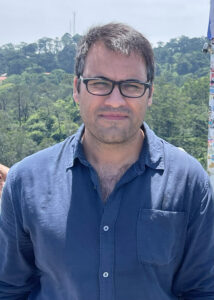
Date: 12–18 October 2026 Dr Mujib Abid, a member of the Board of World BEYOND War, is an Australia-based scholar-activist and community peacebuilder whose work bridges grassroots community organising, dialogue, and decolonial research. He is a Postdoctoral Research Fellow at the University of Melbourne’s Initiative for Peacebuilding, where his research explores decolonial approaches to peace, conflict, and political change. Beyond academia, Mujib has facilitated dialogue initiatives within the Afghan diaspora and works alongside diverse faith and diaspora community groups to foster social change, solidarity, and nonviolent responses to conflict. He is passionate about amplifying voices from the Global South and building peace through everyday acts of resistance, dialogue, and collective action. |
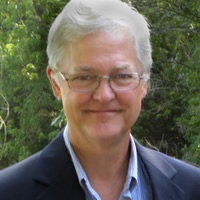
Date: 19–25 October 2026 Pat Elder is a member of World BEYOND War’s Board of Directors and is known for his work on per- and polyfluoroalkyl substances (PFAS). He has written extensively on PFAS and military contamination, with much of his work available through Military Poisons. Since 2019, Pat has focused particularly on the understudied role of PFAS exposure from food, arguing that too much attention is placed on drinking water while exposure through food, particularly seafood, receives too little attention. Pat and his associates have tested surface waters flowing from 50 U.S. military bases worldwide and reported dangerous levels of PFAS contamination. He has also tested seawater, crabs, oysters, and fish, examining how these persistent compounds bioaccumulate in aquatic life and enter the food chain. His work examines the environmental and public health consequences of military PFAS use and disposal, as well as questions of military accountability and environmental policy. |
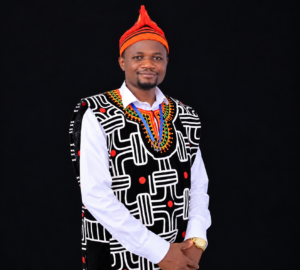
Date: 26 October–1 November 2026 Julius Meleng Ntang is a Peace and Development Practitioner from Cameroon with over 10 years of experience working at the intersection of peacebuilding, environmental sustainability, climate action, and community resilience in conflict-affected communities. He currently serves as Senior Programs Manager at Itaka Escolapios Foundation – Central Africa, where he leads peace education initiatives. He previously served as Country Programs Manager at Community Vision Group, where he led climate-smart school feeding and agriculture training for smallholder farmers. He also served as a Consultant with Heart of Hope Cameroon on the Digitalise Youth Project, funded by the European Partnership for Democracy (EPD). |
Date: 2–8 November 2026 Tamara Lorincz, PhD, Balsillie School for International Affairs at Wilfrid Laurier University. Her research is on the climate and environmental impacts of the military and she has written extensively on this topic. The title of her dissertation is “In the Line of Fire: Military Emissions, the National Security Exemption and NATO Expansion in Climate Governance.” Tamara has a Law degree and MBA specializing in environmental law and management from Dalhousie University. She’s a former Executive Director of the Nova Scotia Environmental Network and co-founded the East Coast Environmental Law Association. She’s a senior researcher with the Canadian Voice of Women for Peace and a member of the Women’s International League for Peace and Freedom. She’s a fellow with the Canadian Foreign Policy Institute. Her profile is here: https://balsillieschool.ca/people/tamara-lorincz/ |
Date: 9–15 November 2026 Dr. Alicia Cabezudo is a Board Member of World BEYOND War and Professor Emeritus at the School of Education, University of Rosario, Argentina, and at the UNESCO Chair on Culture of Peace and Human Rights at the University of Buenos Aires. She is a member of the Global Education Expertise Group and a Consultant on Global Education and Citizenship Education with the North-South Centre in Lisbon. She is also an Education Consultant to the International Peace Bureau and Latin America Representative and Organizer of the Global Alliance of Ministries and Infrastructures for Peace (GAMIP). Alicia has extensive teaching experience in Latin American and European universities in peace education, culture of peace, democracy, citizenship, intercultural dialogue, and human rights. She currently lives in Colombia, where she works as an education expert and consultant on post-conflict education, pedagogy, training, and peace studies following the Havana Peace Agreements Process. |



This course is for people who want to better understand the connections between war, militarism, climate change, environmental destruction, peace, and sustainability — and what can be done about them.
It is especially relevant for:
- Peace and anti-war organizers interested in the environmental dimensions of war and militarism
- Climate and environmental activists interested in connecting environmental work with questions of war, peace, security, and demilitarization
- Educators and facilitators looking for perspectives, examples, and resources they can bring into their work
- Campaigners, advocates, and communicators working on peace, climate, environmental justice, sustainable development, or related issues
- Researchers, students, practitioners, and policymakers interested in war, peace, security, climate change, environmental protection, or sustainability
- Civil society organizations, grassroots movements, and engaged citizens working toward more peaceful, just, and sustainable societies
No prior specialist knowledge is required.
Whether you are new to these issues or already active in the field, the course offers opportunities to deepen your understanding, encounter perspectives from different parts of the world, make connections across fields, and connect learning with action.
How to Register
You can register for the course using the registration form below.
To register by check:
- Email education@worldbeyondwar.org and say you would like to register for War and the Environment.
- Make the check out to World BEYOND War and send it to:
World BEYOND War
513 E Main St #1484
Charlottesville, VA 22902
USA
Accessing the Course
Before the course begins, registered participants will receive instructions on how to access the online course platform.
Weekly materials can be completed at times that work for you, and participation in the three live Zoom sessions is optional.
Certificate
Participants who complete the weekly assignments will receive a certificate of completion. The assignments are optional for participants who do not require a certificate.
Further information about assignments, facilitator engagement, and certificates will be provided in the course Welcome module.
Cost
Standard fee: $100. Sliding-scale places start at $25 according to ability to pay.
Those able to contribute more are welcome to do so, helping support access for participants who would otherwise be unable to attend.
Registrations are non-refundable.
Questions
Contact education@worldbeyondwar.org.