

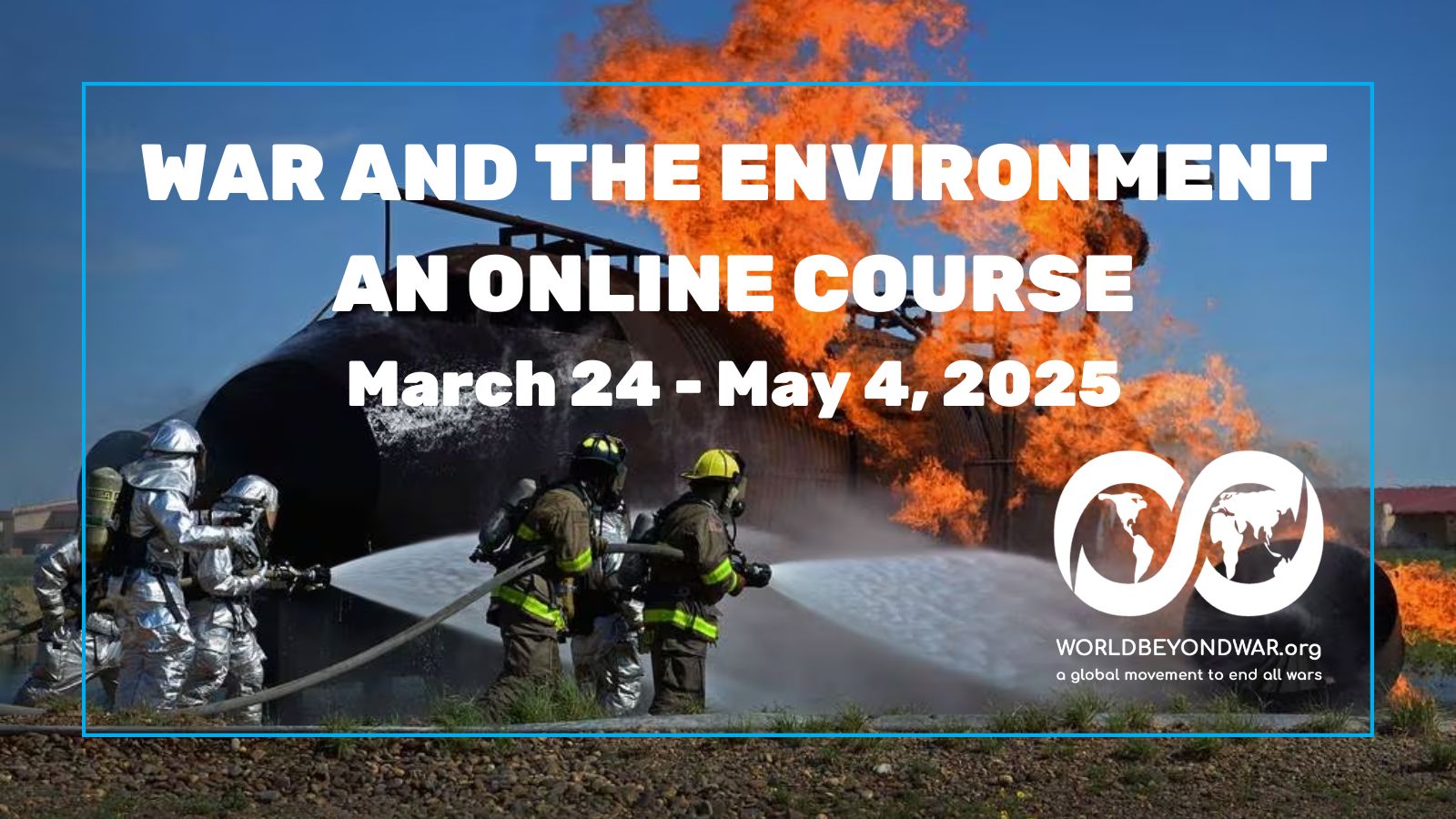
War and the Environment is a 100% online, six-week course that includes: (1) six engaging course modules and (2) three interactive Zoom sessions.
1) Course Modules
Throughout the six-week online course, you will explore the following topics:
Week 1: Where Wars Happen and Why
Identify the underlying causes of war by comparing official narratives with hidden motives for waging war. Explore connections between war, population density, resource scarcity, and oil.
Week 2: What Wars Do to the Earth
Examine the environmental and humanitarian costs of war. Key themes explored include refugee crises, chemical weapons, oil spills, water pollution, air pollution, deforestation, wildlife disruption, landmines, cluster bombs, herbicides, and depleted uranium.
Week 3: What Imperial Militaries Do to the Earth Back Home
Explore the environmental impact of military operations beyond war zones. Topics include weapons production, mismanagement of ammunition, toxic waste, fortifications, military exercises, and the U.S. military’s use of PFAS and its long-term effects.
Week 4: What Nuclear Weapons Have Done and Could Do
Gain insights into the origins and consequences of nuclear weapons, including their historical use, industry expansion, and associated health effects such as cancer. Key areas of focus include nuclear testing, experimentation, and their links to racism and patriarchy.
Week 5: How This Horror Is Hidden and Maintained
Understand how the environmental destruction caused by war is concealed. Discover how military secrecy, regulatory exemptions, reporting loopholes for carbon emissions, and social structures—such as patriarchy, patriotism, and education systems—contribute to perpetuating and sustaining war.
Week 6: What Can Be Done
Reflect on your role in addressing these issues. Explore practical strategies and tangible opportunities to engage further in the global movement to end all wars through education and activism.
How you Learn?
This course is 100% online, and interactions are not live or scheduled, so you can participate at your convenience. Each week’s content includes a mix of text, images, video, and audio. Instructors and students engage through online discussion forums to review content and provide feedback in both discussion forums and optional assignment submission sections.
Time Commitment and Expectations
How much time you spend and how deeply you engage is up to you. At a minimum, you can expect to spend 1-2 hours per week reviewing the weekly content (text and videos). However, we encourage active participation in the online dialogue with peers and experts—where meaningful learning happens—exploring new ideas, strategies, and visions for building a more peaceful world. Depending on your engagement level, this may add another 1-3 hours per week.
Participants who choose to complete the optional assignments (required to earn a certificate) can expect an additional 2 hours per week, applying the course concepts to practical possibilities.
Course Access
Prior to the start date, you will be sent instructions on how to access the course.
2) Interactive Zoom Sessions.
The three optional 1.5-hour Zoom calls are designed to facilitate a more interactive and real-time learning experience:
- Zoom Call #1: Introductions
Tuesday, April 1 at 9 EDT AM (USA)
- Zoom Call #2: Reflections on the course thus far
Tuesday, April 15 at 9 EDT AM (USA)
- Zoom Call #3: Course Reflections. What next?
Tuesday, April 29 at 9 EDT AM (USA)
Earn a Certificate
To earn a certificate, participants must complete all six optional weekly written assignments. Instructors will review the assignment and provide feedback. Submissions and feedback can be shared with everyone taking the course or kept private between a student and the instructor, at the student’s choice. Submissions must be completed by the conclusion of the course.
Questions?
Contact: Phill Gittins at education@worldbeyondwar.org
To Register by Check:
- Email Phill Gittins and tell him.
- Make the check out to World BEYOND War and send it to World BEYOND War 513 E Main St #1484 Charlottesville VA 22902 USA.
Course Fees
The course fee is offered on a sliding scale from $25 to $100 or more if you are able to contribute additional support.
A maximum of 150 participants will be accepted.
Registrations are non-refundable.
This section provides an overview of what you will gain from the course, why it was developed, and why World BEYOND War is uniquely positioned to develop such a course.
This online course is designed to connect and support individuals and organizations working at the intersection of peace and climate change movements. By understanding the far-reaching costs of war—on humanity, the environment, and the global economy—participants will gain new insights, tools, and connections to collaborate more effectively across these two mutually reinforcing global movements.
1) What You Will Gain from This Course
- Flexible and Accessible Learning: Study at your own pace, from anywhere in the world, with 24/7 access to course materials.
- Expert Guidance: Engage with leading educators, academics, and practitioners at the forefront of peace and climate justice movements; ask questions and gain valuable insights.
- Collaborative Engagement: Participate in meaningful dialogues and strategic discussions with like-minded peers.
- Global Community: Join and network with a vibrant, growing global movement dedicated to ending war and establishing a just and sustainable peace.
- Practical Resources: Access over 1,000 curated resources, tools, and case studies that you can apply immediately.
- Recognition of Achievement: Receive a certificate to showcase your commitment and expertise.
- A Systems Perspective: Understand how and why abolishing the war system is essential to achieving the UN Sustainable Development Goals and fulfilling commitments to the right to peace and a healthy environment.
- Interdisciplinary Approach: Explore peace and climate change from multiple interconnected angles – including policy, theory, research, scholarship, and practice.
- Strategic Insights: Identify key challenges and opportunities for collaboration between the peace and climate justice movements.
- Deeper Understanding: Examine the complex links between war, militarism, climate change, colonialism, imperialism, patriarchy, nationalism, and other related global challenges.
By the end of this course, you will have gained: New knowledge, new connections, new dialogues, and new tools to enhance your learning and practice, and to contribute to the education and action of others.
2) Why This Course? Why World BEYOND War?
Why this course?
Too often, those working on peace and climate change issues are not fully aware of the role and impact of war and preparations for war. This gap exists in part because much of the focus has been on how climate-related challenges contribute to conflict and war, while less attention has been given to how and why war and militarism are major contributors to the climate crisis.
This course addresses this gap, explores why it is often overlooked, and makes the case for how and why the peace and climate justice movements can work together more effectively to advance shared goals of ensuring the survival and well-being of humanity and the planet.
By doing so, the course also addresses three interconnected existential threats: war, nuclear apocalypse, and environmental catastrophe.
Why World BEYOND War?
This online course is developed by World BEYOND War (WBW) staff and board members, with contributions from experienced professionals in the field who bring their insights and expertise to enhance the course.
WBW is a globally recognized, multi-award-winning organization at the forefront of the peace and anti-war movement. Since our founding in 2014, we have been committed to promoting pro-peace and anti-war education and to making and supporting impactful contributions through our extensive global network of dedicated chapters, affiliates, and partners.
Our core mission is to abolish the war system—a goal that has never been more urgent amidst escalating wars, growing militarization, soaring military expenditures, and a simultaneous decline in peace, security, and prosperity, at global, regional, national, and local levels.
We provide and support a wide range of initiatives in education, activism, media and communications to empower individuals and organizations to actively contribute to the global movement to end all wars and establish a just and sustainable peace.
Meet your hosts/facilitators:
Module 1: Where wars happen and why, March 24-30, 2025
Facilitator: Dr. Oseremen F. IRENE
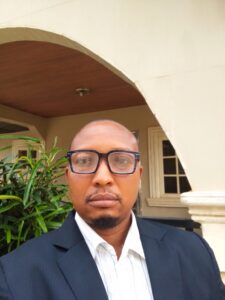
Dr. Oseremen F. IRENE is a member of the Board of World Beyond War (WBW), and the Global Alliance for Ministries & Infrastructures for Peace (GAMIP). He is a professor, trainer, researcher, public administrator, practical peacebuilding practitioner, and an expert in Peace and Conflict Studies. He attended the University of Ibadan, Nigeria, where he obtained a B.Sc (Hons) degree in Geography, and a Master’s degree in Peace and Conflict Studies. He obtained a PhD degree in Peace Studies/Public Management from Durban University of Technology, Durban, South Africa.
Ose is a faculty member and Head, Department of Peace and Conflict Studies, Federal University Oye-Ekiti, Nigeria (www.fuoye.edu.ng). He is a research Associate at the Centre for Global Nonkilling, Honololu, Hawaii, and a member of the Nonkilling Political Science Research Committee. Ose has several articles in published many peer-reviewed journals, and serves as external examiner (Masters and PhD programs) in some universities including the Durban University of Technology, Durban, South Africa were he obtained is PhD
Module 2: What wars do to the earth. March 31 – April 6, 2025
Facilitator: Kathi Futornick
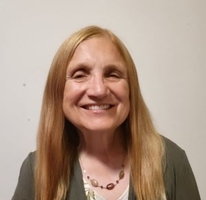
Kathi Futornick is currently a co-producer on webinars on climate change, renewable energy, and the electric power grid as well as a researcher on the contributors to greenhouse gas emissions (GHG) and climate change including the role of the global military. During her nearly 40 years of experience in the environmental field, she has worked as an environmental specialist for regulatory agencies, as an environmental consultant with a broad range of industries, and as an instructor on environmental compliance, climate science and renewable energy.
She has spoken at technical conferences on the environment and authored a number of papers on environment and sustainability. She has also been part of a team of experts to identify sustainability standards under NIST (National Institute of Science and Technology). She served as a contributing expert to NIST on sustainable manufacturing during its Indo-US workshops, and a contributing author to the textbook, Pollution Prevention Handbook (edited by Thomas Higgins, 1995).
She is also a member of the Rotary Action Group for Peace (RAGFP) and the Environmental Sustainability Rotary Action Group (ESRAG). She has been part of the interview team for Rotary Peace Fellows and together with a peace fellow applicant, has spearheaded the development of a curriculum on Peace Journalism. She received her degree B.S. from the Massachusetts Institute of Technology (1971) and her B. Arch. From the University of Oregon (1973).
Module 3: What imperial militaries do to the earth back home. April 7-13, 2025
Facilitator: Pat Elder
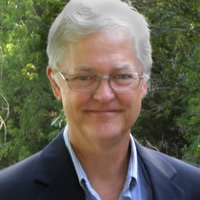
Pat Elder is a member of World BEYOND War’s Board of Directors.
Pat Elder (pelder@militarypoisons.org) is known for his work on per-and poly fluoroalkyl substances, (PFAS). He has written 300 articles on PFAS. Many may be found at www.militarypoisons.org
Since 2019, Pat has been focused on the understudied role of PFAS exposure from food. He believes there is too much emphasis on PFAS levels in drinking water, with too limited a focus on PFAS exposure from food, particularly seafood.
Elder and his associates have tested surface waters flowing from 50 U.S. military bases worldwide and have reported dangerous levels of the toxins in the rivers. PFAS is used in hundreds of products and applications by the military and is recklessly discarded into the environment without oversight.
Pat has tested seawater, crabs, oysters, and fish and found levels of the carcinogenic compounds that are orders of magnitude greater than the levels allowed in drinking water. The compounds bio accumulate in aquatic life, poisoning the food chain. They do not break down in nature.
Elder argues that the DOD dictates environmental policy in the United States and around the world while relying on a robust propaganda campaign to dispel resistance and avoid staggering financial liability for its ongoing environmental crimes.
Module 4: What nuclear weapons have done and could do to people and the planet. April 14-20, 2025
Facilitator: Bronwyn Blockley

Bronwyn Blockley is a guest lecturer in the course. Bronwyn has
over 20 years experience working in the social and environmental justice field, and teaching and lecturing at schools and universities. Originally, in the 1990s, they resettled refugees from the former Yugoslavia and were involved in coordinating people released from immigration detention. They have volunteered and worked for numerous organisations assisting refugees, including ASeTTS, which champions the cause of torture and trauma survivors. In more recent times they have been working on ethical AI, in order to prevent future genocide, and have a team of coders who are helping to this end. They have also done work in the environmental and climate change arenas. Bronwyn has predominantly lived and worked in Australia and the United Kingdom, with periods of time in developing countries. They have degrees in literature, education, policy studies, international development and counselling, including two Masters degrees, and have run their own successful business for over 15 years. In their spare time they are studying German, enjoy literature and current affairs, and immerse themselves in nature and spirituality when they are able
Module 5: How this horror is hidden and maintained. April 21-27, 2025
Facilitator: Marko A. Carrasco Lundgren
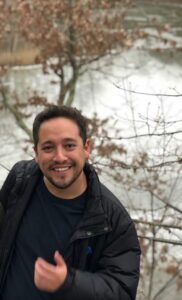
Marko A. Carrasco Lundgren is a researcher and practitioner in the field of Peacebuilding and Conflict Transformation, with 15 years of experience. Currently, with Fundación Avina, he leads the climate justice project Voices for Just Climate Action (VCA), implemented in Bolivia and Paraguay. Simultaneously, he coordinates Avina’s exploratory mission on lithium and critical minerals in the “Lithium Triangle” (Bolivia, Chile, Argentina), focusing on fostering regional collaboration experiences in the Global South within the context of the global debate on a Just Energy Transition.
In the past, he has worked on training journalists and human rights defenders in Mexico in collaboration with organizations such as Article 19, as well as on restorative justice initiatives with urban communities in New York, USA. Academically, his recent work has focused on promoting discussions about the effects of political violence on people’s health, particularly in cases where such violence is linked to socio-environmental conflicts.
His personal interests include social psychology, interfaith dialogue, and neuroscience.
Module 6: What can be done. April 28 – May 4, 2025
Facilitator: Dr Phill Gittins
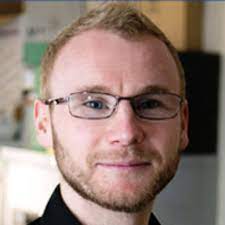
Dr Phill Gittins is World BEYOND War’s Education Director. Phill has over 20 years of leadership, programming, and analysis experience in the areas of peace, education, psychology, youth, and community development. He has lived, worked, and travelled in over 60 countries across 6 continents; taught in schools, colleges, and universities around the world; and trained thousands on peace and social change-related issues. Other experience includes work in youth offending prisons; developing, launching, and overseeing a wide range of large and small-scale programmes and projects; as well as consultancy assignments for public, private, and non-profit organisations. Phill has received multiple awards for his work, including a Rotary Peace Fellowship, KAICIID Fellowship, and Kathryn Davis Fellow for Peace. He is also a Positive Peace Activator and Global Peace Index Ambassador for the Institute for Economics and Peace. He earned his PhD in International Conflict Analysis, MA in Education, and BA in Youth and Community Studies. He also holds postgraduate qualifications in Peace and Conflict Studies, Education and Training, and Teaching in Higher Education, and is a qualified counsellor and psychotherapist as well as a certified Neuro-Linguistic Programming Practitioner and project manager. Phill sits on board for the Journal of Peace Education.
Phill can be reached at phill@worldbeyondwar.org
The course is for you if you wish to better understand the connections between peace, climate, conflict, security, war, sustainability, ecology, international relations, energy, water, food, and related issues. Whether you are new to these topics or looking to deepen your expertise, this course provides the knowledge, resources, and tools to enhance your understanding and practice.
The course is particularly ideal for:
- Policymakers, researchers, and academics looking for evidence-based solutions and strategies to address climate risks and opportunities through the lens of peace and anti-war efforts.
- Educators and students eager to develop and apply knowledge on the interconnected relationships between war, militarism, and the environment in their teaching and learning.
- Advocates and activists engaged in the peace and climate justice movements, seeking to improve their practice, deepen their understanding of their practice, and reflect on how and why they could further enhance their work.
- Civil society organizations and grassroots movements working to promote peace, sustainability, and challenge militarism and war.
- Concerned individuals who want to learn more about the ways in which war and militarism negatively impact the prospects for both human and ecological survival and well-being, and how ordinary people can—and are—responding.
The growing recognition of the need to (re)imagine more sustainable ways of living together makes this course relevant across various sectors, including climate, peace, and security policy; science; education; activism; media and communications; and more. If you share our vision and are committed to contributing to a global movement to end all wars and establish a just and sustainable peace, this course is for you.