


Course Syllabus/Process:
1) Six-week Online Course:
The course consists of six core modules:
Module 1: Unarmed Civilian Defense: What is it?
Explore the foundations, features, and benefits of UCD, and question dominant assumptions about security — including the belief that militaries are essential for peace. Reflect on the nature of power and how to move from the traditional practices of “power over” towards more collaborative approaches of “power with” in building cooperative, people-centered defense.
Module 2: What Has UCD done thus far, and what potential does it have?
Examine the growing body of evidence showing how UCD has worked — from preventing coups in Asia to resisting occupation in Europe, achieving reforms in Latin America, and toppling dictatorships in Africa. Analyze what made these movements effective and what lessons can inform today’s conflicts, including in places such as Ukraine, Palestine, and beyond. Understand the conditions under which civilian resistance can protect lives, defend democracy, and transform societies.
Module 3: What can individuals and organizations do?
Reflect on your journey toward being and becoming a peacebuilder. Explore practical frameworks for planning, implementing, and evaluating UCD interventions. Gain tools for effective nonviolent strategy, from community organizing to monitoring and assessing impact, and consider how individuals and groups can act decisively in times of crisis.
Module 4: What can governments do?
Explore how some governments — including Costa Rica and Iceland, which maintain peace without militaries, and the Baltic states, which developed unarmed defense plans after Soviet occupation — have advanced UCD principles in practice. Examine how governments can enable, invest in, and collaborate on nonviolent strategies for national defense. For balance, analyze shifting neutrality in countries such as Sweden and Finland, and consider how public pressure and civic engagement can counter trends toward re-militarization.
Module 5: What is the role of communications and media in effective UCD?
Examine how communications and media shape public understanding of war and peace, exposing common myths such as the idea that military alliances or armed strength make us secure. Gain tools and strategies for effective storytelling, writing, digital engagement, and public advocacy. Learn how to counter propaganda, convey complex information clearly, and amplify peace-focused narratives that engage and inspire diverse audiences.
Module 6: Putting it all together
Review the ideas and insights from across the course and plan next steps for applying UCD principles in your context. Consider the future of nonviolent defense, and explore ways to sustain and strengthen your engagement in the global movement to end all wars, after the course finishes.
Format and Time Commitment
This course is 100% online, and interactions are not live or scheduled, so you can take part whenever it works for you. Weekly content includes a mix of text, images, video, and audio. Online discussion forums provide spaces for mutual learning and exchange, where facilitators and participants can ask questions, share challenges, and explore issues relevant to the weekly content. Facilitators also provide feedback on optional assignment submissions.
Time commitment/expectations: How much time you spend and how deeply you engage is up to you, but as a guide:
– Reviewing weekly content only: approximately 1–2 hours per week
– Participating in online discussions: an additional 1–3 hours per week
– Completing optional weekly assignments (required for a certificate): approximately 2 hours per week
These assignments provide an opportunity to further engage with and apply the ideas explored each week.
2) Three Interactive Live Sessions:
The three 1-hour optional Zoom calls are designed to facilitate a more interactive and real-time learning experience:
· Zoom Call #1: Introductions
Thursday, February 12 at 10:00 am ET / 3:00 pm UK
· Zoom Call #2: Reflections on the course thus far
Thursday, February 26 at 10:00 am ET / 3:00 pm UK
· Zoom Call #3: Course Reflections. What next?
Thursday, March 12 at 10:00 am ET / 2:00 pm UK
👉 Please use a time zone converter to check the equivalent time in your country:
https://www.timeanddate.com/worldclock/converter.html
3) End-of-Course Strategy Game
Apply your learning in an immersive three-hour online strategy simulation. Working in small groups representing key societal actors — from governments and media to unions, educators, and UCD forces — you will navigate a crisis scenario and test nonviolent defense strategies in real time. This interactive exercise is designed to explore and apply a range of pro-peace and anti-war skills, including active listening, teamwork, strategic planning, problem-solving, negotiation, and conflict transformation.
Access, Certificates, and Cost
Accessing the course:
Prior to the start date, you will be sent instructions on how to access the course.
Earn a certificate:
To earn a certificate, participants must complete the optional weekly written assignments. Instructors will review assignments and provide feedback. Submissions and feedback can be shared with everyone taking the course or kept private between a student and the instructor, at the student’s choice. All submissions must be completed by the conclusion of the course.
Cost:
The cost of the course is the same for someone completing all, some, or none of the assignments.
Questions? Contact: Phill Gittins at education@worldbeyondwar.org
To register by check:
1. Email Phill Gittins and tell him.
2. Make the check out to World BEYOND War and send it to World BEYOND War 513 E Main St #1484 Charlottesville VA 22902 USA.
Registrations are not refundable.
We designed the course to help you:
Understand unarmed civilian defense. Build a clear foundation in how UCD works, why it is effective, and the conditions under which it succeeds.
Learn from real-world evidence. Explore global case studies, rigorous research, and lived experiences of civilian resistance and nonviolent protection.
Build practical skills. Practice tools and methods through activities, scenarios, and exercises that connect learning directly to action.
Strengthen strategic thinking. Use practical frameworks to plan, assess, and sustain nonviolent defense in different contexts.
Engage in global dialogue. Connect with a diverse international cohort working on issues of peace, justice, and security.
Communicate for peace. Develop writing, media, and storytelling skills to inform, influence, and inspire public understanding.
Join a global network. Become part of a 3,000+ alumni community committed to advancing peace through shared learning and collaboration.
Deepen your peacebuilder identity. Use reflective tools to clarify your role, purpose, and development.
Earn recognition. Receive a certificate of completion from an award-winning global peace organization.
Continue your journey. Access resources, networks, and opportunities across World BEYOND War’s chapters and affiliates.
Course Hosts/Facilitators:
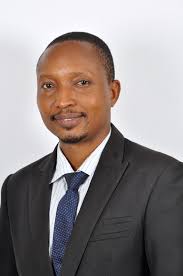 | Module 1: Unarmed Civilian Defense: What is it? February 2 – 8 Facilitator: Dr. Oseremen IRENE (Nigeria) Dr. Oseremen IRENE is a member of the Board of World BEYOND War. He is a professor, trainer, researcher, public administrator, practical peacebuilding practitioner, and an expert in peace and conflict studies. He attended the University of Ibadan, Nigeria, where he obtained a B.Sc (Hons) degree in Geography, and a Master’s degree in Peace and Conflict Studies. He obtained a PhD degree in Peace Studies/Public Management from Durban University of Technology, Durban, South Africa. Dr. Irene is a Lecturer in the Department of Peace and Conflict Studies at the Federal University Oye-Ekiti, Nigeria. He is a research Associate at the Centre for Global Nonkilling, Honololu, Hawaii, and a member of the Nonkilling Political Science Research Committee. He has about 30 publications in peer-reviewed journals. Dr. Irene is an external examiner (postgraduate), Durban University of Technology, Durban, South Africa. |
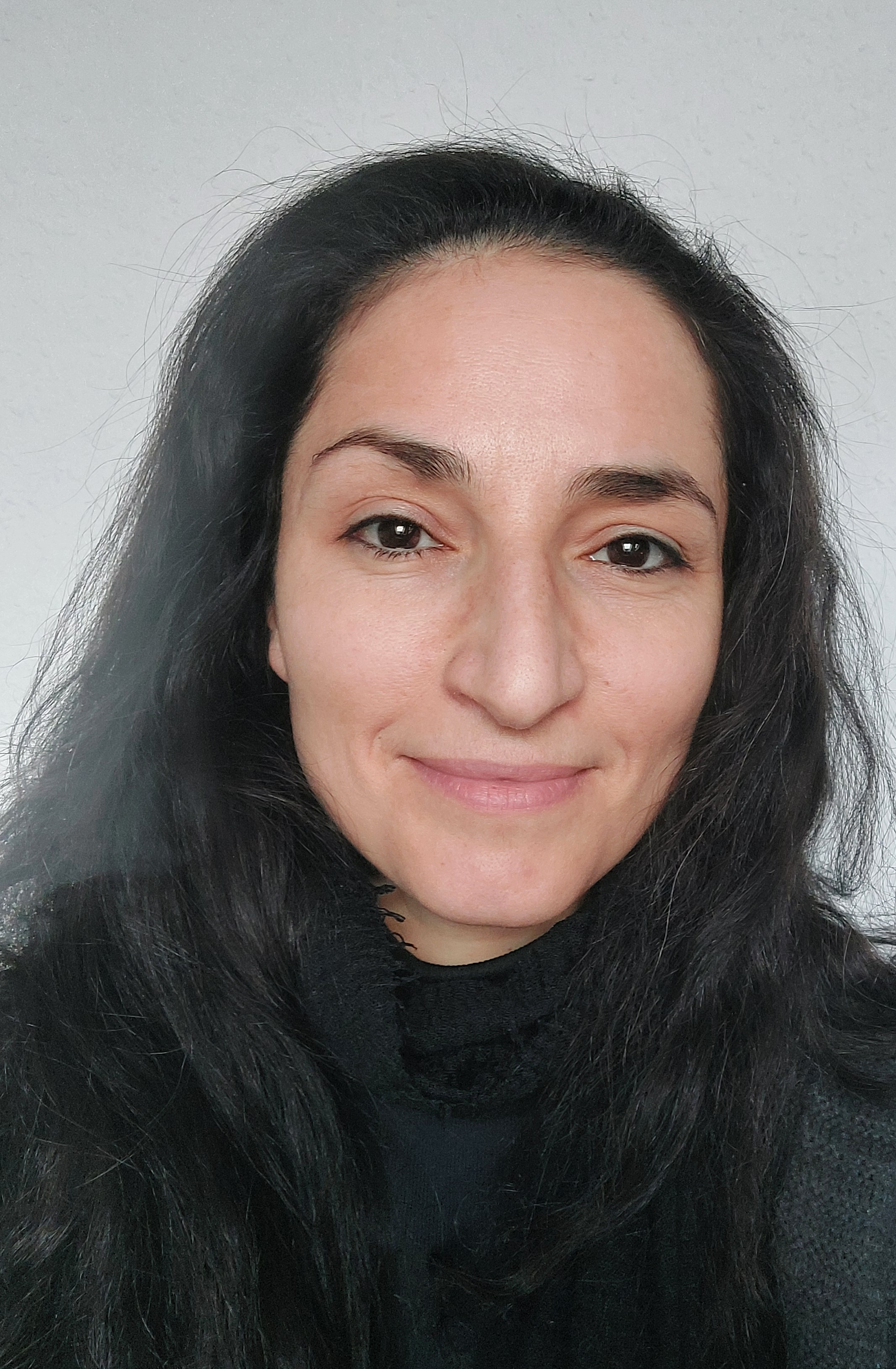 | Module 2: What Has UCD done thus far, and what potential does it have? February 9 – 15 Facilitator: Dr. Dalilah A. Shemia-Goeke (Germany) Dr. Dalilah A. Shemia-Goeke completed her PhD supervised by Prof. Brian Martin on strategies of nonviolent resistance to curtail power of transnational corporations (published by Palgrave Macmillan, Springer Nature). She was a peace and conflict consultant at Pro Peace (German civil peace service) in Jerusalem, where she worked with nonviolent movements. She is also a trainer, seminar leader, and podcaster (Tee & Taktik in German) on research and practice in nonviolent resistance. She is particularly interested in raising awareness of the effectiveness and strategic approaches of nonviolent movements and social defense beyond the circles of the peace movement. |
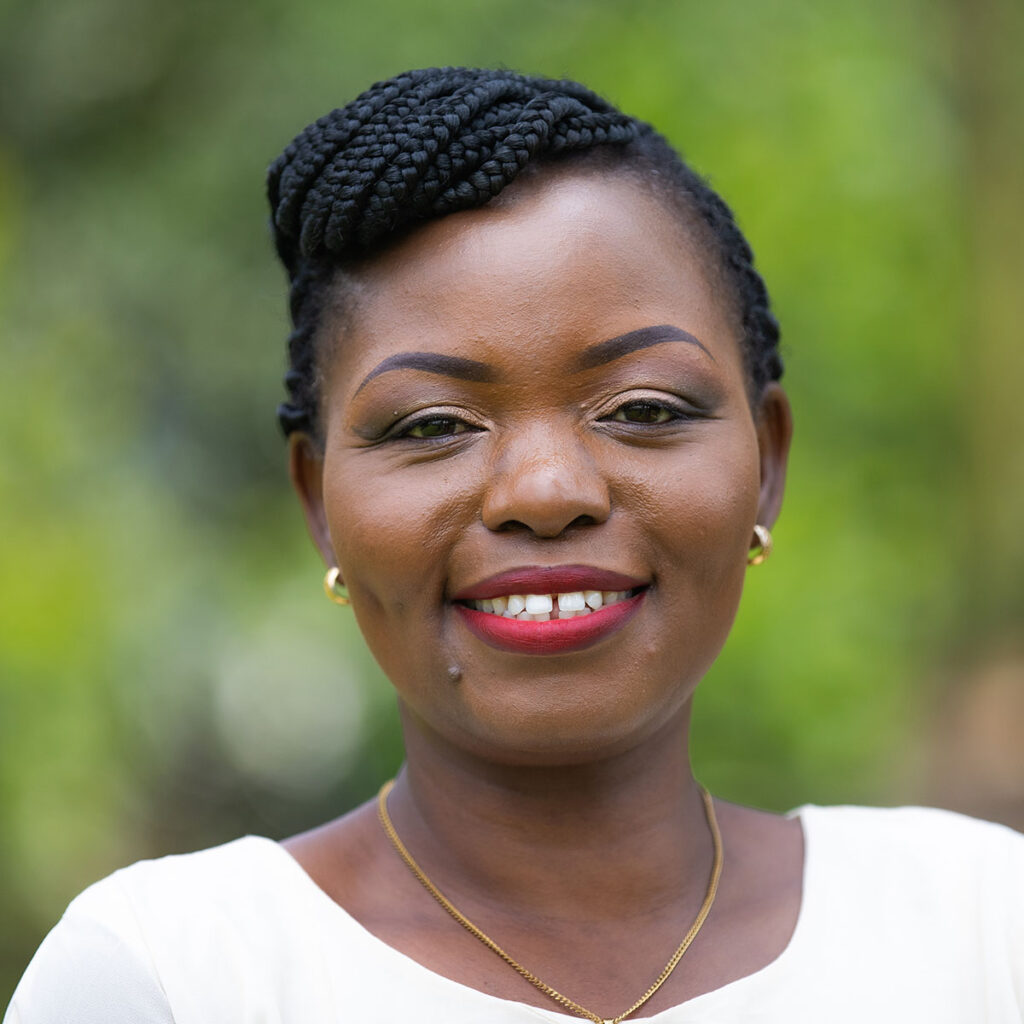 | Module 3: What can individuals and organizations do? February 16 – 22 Facilitator: Dr. Sellah N. King’oro (Kenya) Dr. Sellah N. King’oro is a Board Member of World BEYOND War, a peace and security specialist, trainer, and advocate of the High Court of Kenya. She received a presidential trailblazer award in women, peace, and security from the Kenyan president on 2 March 2023. In October 2023, Sellah also received a shortlisted award medal from the Women in Defence UK in the inspirational category. Dr. Sellah King’oro is currently a post-doctoral fellow at the State University of New York, Binghamton. She has contributed to reconciliation/ dialogue processes among communities in parts of East, Central, and West Africa. Dr. King’oro has been a Charles Scheidt resident practitioner at the Institute for Genocide and Mass Atrocity Prevention at Binghamton University, USA. Dr. King’oro has a Ph.D. in Peace and Conflict Studies, an MA in International Studies, a Bachelor of Laws, and a Bachelor of Education from various Universities in Kenya and overseas. Her honorary responsibilities include a membership of the Inclusive Narratives Practice Group – IFIT (ifit-transitions.org) convened by the Institute for Integrated Transitions (IFIT). She was appointed the Global Peace Index ambassador in 2015 by the Institute for Economics and Peace, is the past president of Rotary District 9212 Alumni Association and the current Rotary Peace Fellowship Coordinator for Africa. As part of community service, Sellah mentors a pool of next-generation researchers who desire to contribute to social change. |
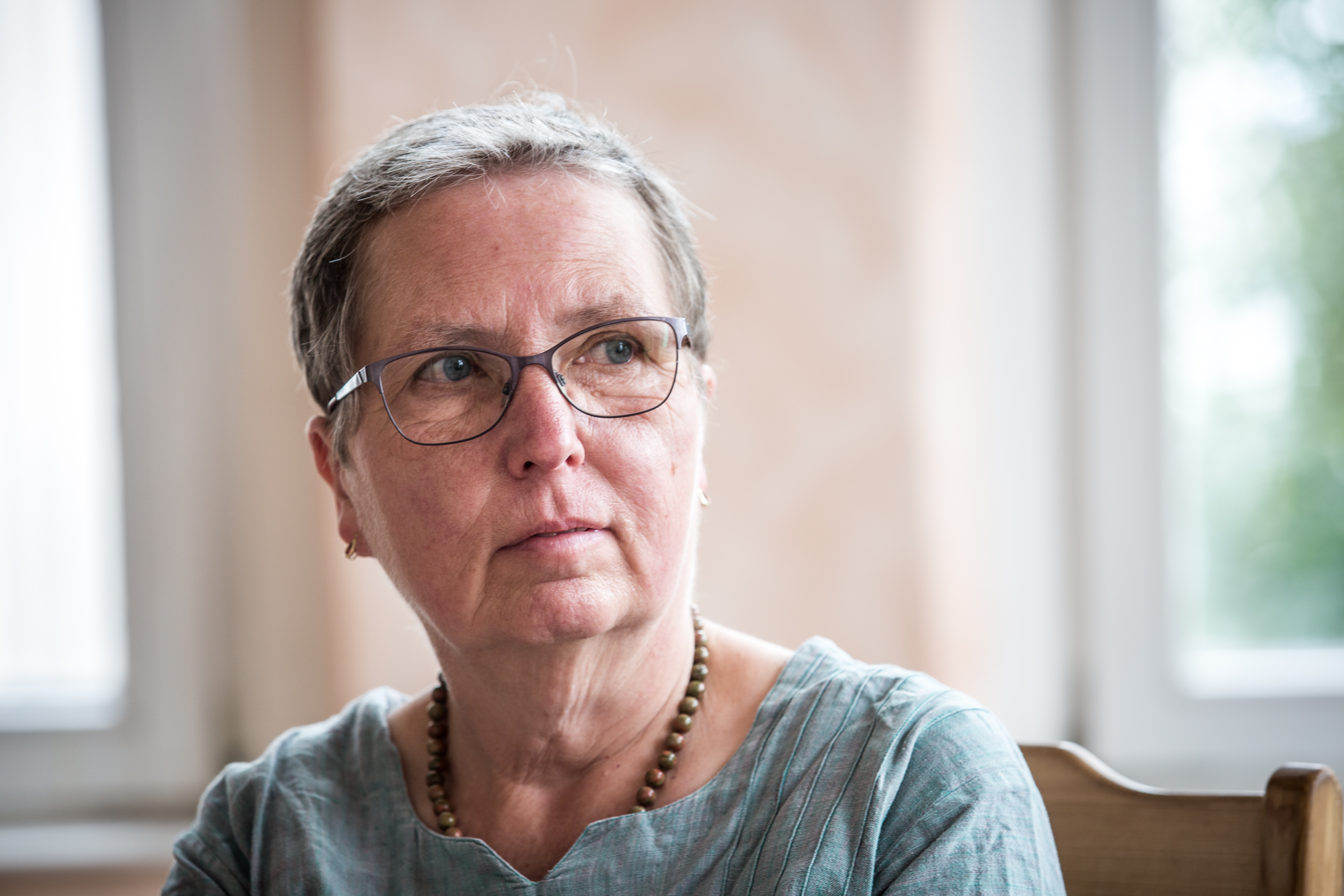 | Module 4: What can governments do? February 23 – March 1 Facilitator: Dr. Christine Schweitzer (Germany) Dr. Christine Schweitzer Ph.D., *1959, has spent most of her professional life working in nonviolence and peace movements. Currently, she is a researcher at the “Institute for Peace Work and Nonviolent Conflict Transformation” (IFGK, www.ifgk.de) which she co-founded, , and co-editor of the bi-monthly magazine “Peace Forum” (www.friedenskooperative.de). Until retirement in March 2025, she was Executive Secretary of the German organisation “Federation for Social Defence” (www.soziale-verteidigung.de). Current topic-related projects and initiatives
Events The Federation for Social Defence will hold a conference on concepts of protection in April 2026. (But in German and probably no possibility of hybrid participation): https://soziale-verteidigung.de/termin/save-the-date-jahrestagung-2026/ Recent Publications (2025) Der Vorrang und die Potenziale Ziviler Konfliktbearbeitung in Zeiten der ‚Kriegstüchtigkeit“. In: Schell, Maximilian; Reiner Anselm und Friederike Kippner (Hrsg.) (2025): Gerechter Friede auf dem Prüfstand. Ein Lesebuch zu gegenwärtigen Suchprozessen evangelischer Friedensethik. Leipzig: Evangelische Verlagsanstalt, S. 235-246 (2025) Unarmed Civilian Protection. Lessons for Planning for Social Defence, AP 29, February 2025, und die deutsche Fassung: (2025) (Hrsg.) ‚Civilian-based Defence Put to the Test. Current Issues and Practical Challenges, Documentation of an Online-Conference September 6-7, 2024’, Bund für Soziale Verteidigung, HuD 87, Februar (2025) Soziale Verteidigung‘, In: Stiftung die schwelle (Hrsg.): Friedenslogische Perspektiven in Zeiten des Krieges, Bremen: Donat Verlag, S. 40-51 (2025) ,Ohne Waffen, aber nicht wehrlos? Gewaltfrei Sicherheit schaffen‘, in: Wintersteiner, Werner (Hrsg.) (2025): „Mehr Sicherheit ohne Waffen“. Zur Aktualität von Hans Thirrings Friedensplan, Wien:Promedia, S. 181-196 (2024) ‚Social Defence Revisited‘, in: Brown, Craig S. (ed.) (2024): Gene Sharp. A Life Devoted to Exploring Nonviolent Actions, Irene Publishing, S. 33-53 |
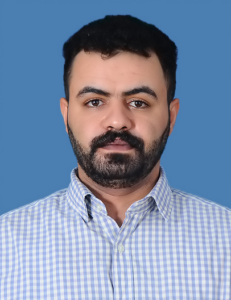 | Module 5: What is the role of communications and media in effective UCD? March 2 – 8 Facilitator: Mohammed M. A. Abunahel (Palestine) Mohammed M. A. Abunahel is a Palestinian journalist, researcher, and peace activist currently based in India, where he is pursuing his Ph.D. in Mass Communication and Journalism. His academic and professional work lies at the intersection of media, conflict, and nonviolent resistance, with a particular focus on how communication practices shape public awareness, mobilization, and power relations in contexts of occupation and militarism. |
 | Module 6: Putting it all together March 9 – 15 Facilitator: Dr. Phill Gittins (United Kingdom) Dr. Phill Gittins, PhD, is Education Director at World BEYOND War. He is an educator, practitioner, researcher, and author with over 20 years’ leadership, programming, and analysis experience in the areas of peace, education, psychology, youth, and community development. He has lived, worked, studied, and travelled in over 60 countries, taught in schools, colleges, and universities around the world, and trained thousands of practitioners and activists on peace, security, and social change-related issues. Phill has led and supported a wide range of education programmes, research initiatives, and multi-stakeholder collaborations across civil society, public institutions, and international networks. He is a Rotary Peace Fellow, Kathryn Davis Fellow for Peace, and Positive Peace Activator and Global Peace Index Ambassador for the Institute for Economics and Peace. Phill holds a PhD in International Conflict Analysis, an MA in Education, and a BA (Hons) in Youth and Community Studies, and serves on the editorial board of the Journal of Peace Education. |
This course is designed for anyone interested in how unarmed civilian defense can advance a more peaceful, secure, and just world. It is ideal for:
- Educators teaching about peace, nonviolence, and alternatives to war and militarism.
- Activists and organizers leading or supporting civil resistance movements.
- Researchers and scholars studying the theory, philosophy, or evidence of nonviolent action.
- Consultants and practitioners advising on peacebuilding, disarmament, or human security.
- Communicators and creatives producing content that informs and inspires change.
- Students and citizens exploring whether a nonviolent, less self-destructive world is achievable.
Whether you are new to peace and anti-war work or seeking to deepen your expertise, you will leave the course with new insights, practical tools, and global connections to advance your work.