


By Marc Eliot Stein, World BEYOND War, June 28, 2025
This is a complete transcript of episode 73 of the World BEYOND War podcast.
Welcome to episode 73 of the World Beyond War podcast. I’m Marc Eliot Stein, technology director of the grassroots worldwide nonprofit organization World Beyond War, speaking to you from New York City, and it’s June 2025. I want to talk about what it is like to try to keep our balance during a month like we’re having now – and I’m speaking from the perspective of a person who’s been concerned about war all my life and directly involved in antiwar protest movements for about the past 14 years, roughly since the Occupy movement in New York City drew me in.
14 years at this doesn’t make me an old-timer in the antiwar movement. I work with people who’ve been protesting and organizing for 50 years. Or 30 years, or 1 year. No matter how seasoned we are at this – and also, no matter how level-headed or naturally calm any of us might be, I think every single person on earth who plays any role in any forward-thinking progressive protest movement must be struggling in some way right now to keep their balance, here in the month of June 2025. Because if we don’t keep our balance, if we don’t adjust our mindsets to reflect all that’s changing around us, we aren’t going to be able to do the work we need to do to keep our movements alive and growing. Let’s talk about all the different crisis points we are dealing with at one time here.
In the USA where I have no choice but to live, we’ve been closely watching a courageous and inspiring protest movement in Los Angeles, California, right downtown. Brave people are blocking ICE goons from carrying out gestapo operations against harmless immigrant families. My own heart goes out to these protestors – I think they are doing some of the hardest work around, because for many people in LA the vulnerability is real, the people they are protecting are facing frightening choices, so protesters may be standing up for their own close family members, simply protesting for the right to be left alone, to be allowed to work and raise families and contribute productively to society as all immigrant populations do, without being harassed and preyed upon by a corrupt federal government on a rampage. This federal government has gone beyond calling the National Guard without the Governor of California’s permission to do so, and has even called in the US military, the Marines with all their tools of violence, to threaten actual military operations against human beings who live and work and pay taxes peacefully in Los Angeles. It’s absolutely sick. It’s terrifying to watch.
Not only in California but all over this broken country, people are being disappeared – literally snatched away by hordes of ICE police wearing helmets and masks obscuring their faces, carrying weapons of war, literally disappearing people. We don’t even know how bad this disease has gotten since the fascist Trump took office for the second time, because the Trump administration is also using the gestapo tactics of harassing and accusing and threatening the family members and loved ones of the innocent people they take away, denying them due process and the most basic information about what rights they may have. This is what USA has sunk to. A tiny fraction of the many cases have become well known, like the cruel case of Kilmar Abrego Garcia of Maryland, who was apparently included in a mass deportation for no reason other than his looks and his ethnicity. Of course, immigrants who dare to use free speech to criticize the US government are also being disappeared, like the Columbia University graduate student and young father Mahmoud Khalil. We don’t know how many people are being snatched by ICE every day and for what reasons, and we don’t know how much this activity is increasing. I did just watch a video of a shiny new concentration camp in Florida that Governor DeSantis is showing off on Fox News, so we have some idea what horrors are being planned for us by the architects of all this state violence, the Steven Millers and Donald Trumps and Pam Bondis in Washington DC.
Arresting immigrant students for criticizing the government is on the same spectrum of fascism as killing journalists, and we need to pay much more attention to the new trend of murdering journalists – often by drone attack, or by bombing the buildings they live in, and also by theatrically chopping their bodies up in embassies to show off impunity and scare other journalists as Saudi Arabia did with Jamal Khashoggi. Saudi Arabia got a lot of attention when they did this a few years ago, demonstrating that an oil-rich country can murder a Washington Post journalist and still be embraced by the President of the United States – oh, and the Presidents I’m referring to in this case includes both Joe Biden and Donald Trump.
Assassinating journalists is a growing trend because drone technology makes it possible. Saudi Arabia and Russia kill journalists the old-fashioned way – poison, strangulation. But Israel has innovated a ghastly new trend: using drones to indiscriminately murder journalists in their own homes and workplaces – and also to murder writers, and poets, and teenage social media influencers who dare to be Palestinian and have a voice. It’s horrifying to realize how many people around the world are managing to stay ignorant about Israel’s unbelievably evil war crimes in Gaza only because Israel has succeeded in murdering the Palestinian journalists who’ve been trying so hard to report what Israel is doing.
Let’s take a moment to respect the bravery of all journalists – a huge contrast from the shameful cowardice of military personnel who gather in large numbers behind head-to-toe military gear to attack unarmed victims with overwhelming force, protecting themselves while inflicting state violence on others.
Some members and friends of World Beyond War are fasting for Gaza along with other groups like Veterans for Peace, putting their own health at risk, and some of them in New York City right now, demonstrating outside the UN as they fast in sympathy with the population that Israel is slowly starving to death. Let’s take a moment to respect their bravery and spirit too.
In Europe, meanwhile, NATO is having a meeting and World Beyond War folks are there right now as we speak, joining a bunch of mass demonstrations against NATO. The proxy war between NATO and Russia is continuing to destroy poor Ukraine, and our friends there send poignant reports of exhausted privation and bitter demoralization. It’s weird how, 3 years ago when the Ukraine proxy war was still new, USA’s mainstream media from CNN to MSNBC to Fox to New York Times to Washington Post to Wall Street Journal all confidently projected that Putin’s government was about to fall, that USA’s participation in the war would pay off in every every way from regime change to weapons industry swelling. The only part of it they were right about was the weapons industry swelling.
Along with all this, in the past week the United States of America suddenly committed to join Israel’s side in a new war – not a cold war but a hot war – with Iran. The Trump administration blew up Iran’s underground nuclear equipment, and has been congratulating itself for the past few days for “obliterating Iran’s nuclear program” even though we all know this attack will only escalate Iran’s nuclear weapons program, as it also escalates fears and paranoia everywhere on earth.
The incompetence of the Trump regime is beyond words, and it gets even worse, much worse, if you subject yourself to the misery of listening to Trump’s minions like Pete Hesgeth or Marco Rubio or JD Vance bullying reporters at White House press conferences. Toxic masculinity on steroids from anger management training rejects like Pete Hesgeth is quite disturbing to look at. That’s what the US military is serving up in its press conferences lately.
Still, as much as we despise the war-drunk Trump regime, USA antiwar activists like me don’t have an opposition party we can support. The so-called alternative to the Republican party, hah, the Democratic party, is just as pro-war, just as bought and sold by corporate donors, as Trump’s Republicans. Chuck Schumer and Hakeem Jeffries can’t even get it together to condemn Trump for joining Israel’s war on Iran. They can’t even seem to decide if they should be cheering Trump on. Well, that’s who AIPAC pays to be our leadership.
It felt like we had some really hopeful news in New York City this week when a young candidate named Zohran Mamdani beat the despicable Andrew Cuomo in a Democratic party primary election for mayor. What was most remarkable about Mamdani’s successful campaign – and several things were remarkable in this campaign – is that he is AIPAC-free and managed to break through to voters while also telling the truth about Israel’s genocide and apartheid.
This was a truly surprising positive development in New York City politics, and many people around me are expressing a new sense of joy and hope. Myself, I feel more muted, because I remember how I believed in the power of the Squad a few years ago. I still admire Ocasio-Cortez and Jayapal and Pressley and Omar, these are great progressive politicians, but they have also seemed to succumb to power as often as they have managed to affect a change. I expect that Mamdani’s career will go a long way and I think it’s a good bet he’ll have a similar middle-ground progressive arc to AOC. Zohran Mamdani is a Muslim, so he’s already being hit with a shitload of Islamophobia and racism. I think he must be bracing himself for a lot of hate speech to come.
This is where we are in the hot summer of 2025: Proxy wars in Europe, horrific genocide and starvation in Gaza, a new war with Iran, India and Pakistan also at war, wars and crises in Africa, and half the Trump regime also wants to start a war with China. And whenever half the US government wants to start a war and the smarter half doesn’t, the dumber half often wins, so we could soon be running separate wars against Russia, Iran and China at the same time. Awesome job keeping the peace.
You know, most of my life people in USA talked about a scary crisis that happened when I was less than a year old, in October 1962. What I’ve heard is that the whole world stood by in fear for a couple of days and nights as USA and Russia threatened each other with nuclear weapons. Until the Trump era began in 2016, people like me had the luxury, though we didn’t know it was a luxury at the time, of hearing about October 1962 and believing that we had made progress since then, that we would not have to be frightened like that again.
What we can’t even stand to admit to ourselves today in 2025, and you won’t hear this anywhere else but here because it’s such a depressing truth, is that we are walking around every single day now with the real risk of nuclear war suddenly breaking out, like today. Let’s stop kidding ourselves: the conditions are here. International aggression is playing out in real time, threats flying back and forth, and no peace negotiation process anywhere in sight. Every day in 2025 is like the worst day of October 1962. We are living at that level of risk permanently. And we’re supposed to smile and not talk about it, and pretend things are okay.
What I want to ask is – and if you’re listening to this I’m asking you too, because your state of mind matters as much as anybody else’s – how are we keeping our balance, keeping our composure, keeping our priorities straight and our feet on the ground within the peace movement, so that we can continue doing the work we’ve always done during a time when there is so much to do, and so much we need to do that we can’t do, that everything can seem futile.
How are we keeping our balance so that we can continue to stand firmly and confidently against war, like we always have? We are facing new levels of fear, new levels of hostility, new forms of direct attack. The peace organizations we belong to and work with will be directly attacked, and the individual people who work for these organizations will also be attacked, probably at the same time. The rights of antiwar organizations to exist at all will be questioned as we sink more into war culture. The more war there is, the more our work is needed – but we cannot kid ourselves that we don’t risk being deplatformed at many levels, and this would be likely to happen when we are most needed.
I know of some things we can do to help keep our healthy balance as things get worse. We can diversify our roots, spread our reach, make sure we have solid connections so we will be part of a support system if things get worse. And we can intensify our thinking, gather the courage to welcome change even when we are afraid of change, and gather the courage to actually see the problems happening right now – the deaths, the starvation, the drone assassinations of helpless individuals, the brutal invasions of private homes to take family members away where they may never be heard from again. We need to gather our courage in every sense right now, so we can strengthen our personal commitments to living with empathy, sacrifice, humility, trust and generosity.
Now that the pretense of normalcy and sanity with the status quo on earth is gone, now when we wake up every morning with the fear of October 1962 permanently shredding whatever sense of calm we had once enjoyed, maybe this is the time when we can finally make a huge leap towards a personal understanding of the freedom that should belong to all of us. Maybe this is the era in which people will finally declare that they are anational – that they don’t belong to any nation at all.
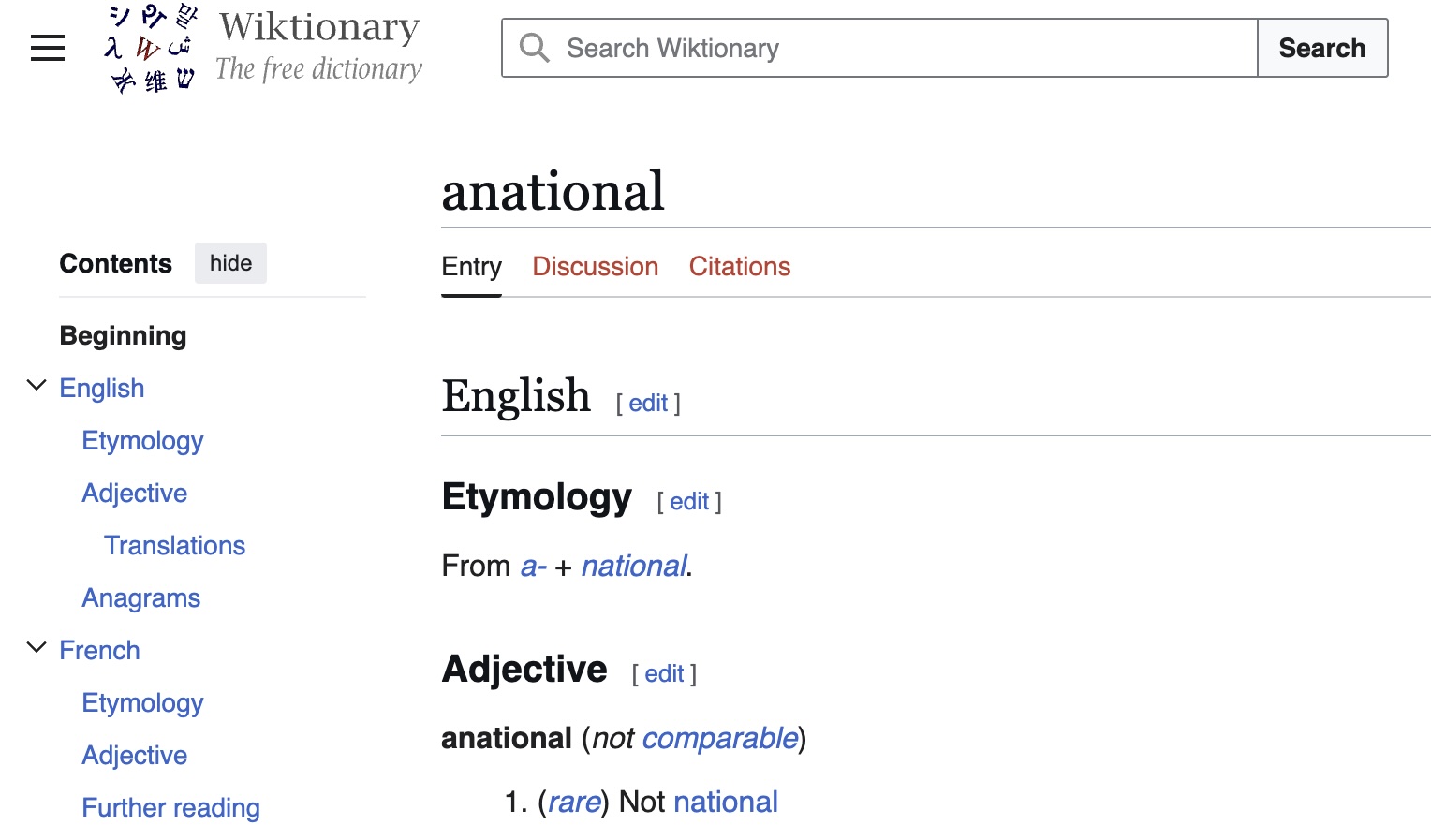
It’s weird that the word “anational” isn’t widely used. A person can decide that they are an atheist, that they reject any concept of theism or religion. A person may be asexual. Plenty of people I know are ahistorical. But even though you can find the word “anational” in a dictionary, the usage of this particular “a”-word is “rare”, as you see in a page from Wiktionary that I’m pasting in the show notes. Hey, maybe it’s time for the word “anational” to stop being rare.
I’ve been thinking about this more and more, and I even went down a rabbit hole when I discovered that there was a time a few generations ago when the word “atheist” was generally considered strange and unwelcome here in USA, as the word “anational” is today.
That we’re free to be outspoken atheists owes a lot to the work of a unique woman named Madalyn Murray O’Hair. Born in 1919 in Pittsburgh Pennsylvania, she made it her life’s mission to encourage atheists to come out of hiding and declare their disdain for religion publicly and proudly, and to force society to admit that atheism was a valid and morally acceptable point of view. She founded a nonprofit organization called American Atheists in 1963 – an organization that’s still around today.
I definitely fell into a big Madalyn Murray O’Hair rabbit hole as I researched this episode. This woman had a rough life – breaking the stranglehold of polite fake religion in American society took a toll on her for sure. She was widely mocked and insulted. At one point Newsweek magazine called her the most hated woman in America. Her name became a punchline. The saddest thing about her life story is that she was eventually murdered along with two other members of her family by an estranged member of the organization scheming to steal money. I also find it sad that Madalyn Murray O’Hair became estranged from one of her sons after he rejected her influence, embraced religion and became a Baptist minister. I don’t find it sad that her son found religion, but I do find it sad that a parent would ever denounce a child for exercising their free choice. I’m not an atheist myself, though I do have tons of friends who are atheist and very passionate about it. I do recognize that the right to be an atheist is fundamental to freedom.
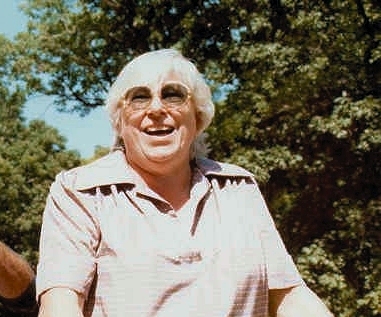
The reason we’re talking about Madalyn Murray O’Hair is that she made it her life’s work to raise the public profile of a single important word – “atheist” – and made it easier for anybody who wants to live openly as an atheist to do so. I believe we need the same kind of attention to the word “anational”.
I’ve been declaring myself anational for a while. You should see me at a baseball game when everybody else stands up to salute the American flag. My body language is usually pretty easy to read at moments like this, though I try not to give the flag the finger if children are around. But I will never salute or respect an American flag, and I do not believe the Constitution written by southern slaveholders and northern slavery profiteers in 1789 is any kind of worthy document. I do not call myself an American citizen by choice though I am forced to acknowledge and admit that the legal condition of citizenship which has been forced upon me since my birth keeps me safe from the kind of direct harassment that non-citizens like Mahmoud Khalil have to endure in my own city.
I’ve spoken before on this podcast about why I believe nationhood and national citizenship and closed borders are dinosaur concepts. Nationhood is top-down government, whether it takes the form of monarchy or democracy or military dictatorship or oligarchy or kakistocracy, no matter what form it takes we know that top-down governments have made important achievements such as running hospitals, building roads and bridges, running schools, maintaining an economy. It wasn’t really until the advent of the widely-used Internet – a revolution that hit its first peak around 1995 – that people all over the world could look around at each for the first time and say, hey, hello, we can communicate directly, and pretty easily and instantly, and we can get a lot done with simple direct communication. In 1985, it was widely accepted and undeniably true that national government was necessary for the practical functions of everyday life. By 2005, national government had become a mostly useless appendage that caused problems more often than it solved them. By 2025 national government has revealed itself as both virulently toxic and hilariously useless, since we can easily run hospitals and build roads and run schools and maintain an economy without a national government.
Unfortunately, even as this subtle but powerful change occurred in the relationship between people and their governments between the 1980s and the 2000s, we were not able to shed our stupid governments as we wanted to because of all the crises our governments had gotten us into, especially the endless wars. This is one of the best reasons why we should all consider declaring ourselves to be anational. If we don’t belong to nation A, nation B can’t be our national enemy. Fuck em both, both A and B.
If we refuse to believe that people in other nations who we’ve never met are our bitter enemies, we can start blocking our incompetent governments from destroying our planet with the same endless wars. Nations need wars – people don’t. We don’t need them at all, and they sure as hell aren’t helping us. And I’m not necessarily talking about, say, breaking USA up into 50 states, because that would just be 50 nations. I’m saying that the concept of nationhood is fast becoming obsolete, as well as toxic. We can peacefully coexist all over the world within voluntary associations.
So this is sort of the tech-utopian argument for becoming anational, and I am sort of saying this sarcastically because, maybe I used to be a little bit of a tech utopian and my friends make fun of me for this, but I’m really not a tech utopian anymore, not today in the era when Peter Thiel and Elon Musk are constructing Bavarian-inspired fantasy fortresses and pleasure domes for white people guarded by robotic police while the masses starve outside. No, I’m not a tech utopian anymore.
But when I say that technology has rendered national governments like the United States, or for that matter Russia or Iran obsolete, I’m not being a tech utopian at all. I’m being tech realistic. This is how progress moves: when new technologies render old top-down structures obsolete, one way or another, the old structures lose their mandatory position. USA serves no purpose other than the continuation of war and war profiteering. There is nothing good that the USA does that can’t be done just as well by smaller, less corrupt, less wasteful and voluntary rather than mandatory organizations.
The funny thing is that the anational vision is similar in some ways to small-government conservatism, even though small-government conservatism has always been a cynical fraud in USA. American conservatives like to talk about small government, but as long as they’re beholden to war profiteering, there’s nothing small-government about war. War is big government. War is the ultimate in big, top-down government.
Bottom-up and middle-out is healthier than top-down. Especially when top-down means endless trickle-down economics, white supremacy and nepotism, like it does here in Useless USA.
So that’s the tech argument. There’s also the historical argument for the end of nationhood, which emphasizes that there’s nothing natural or intrinsic in the idea of a world divided into warring nations. The concept of a modern nation emerged in Europe as part of the French Revolution, which was followed by Napoleon Bonaparte’s conquest of Europe during the first decade of the 19th century.
Before the French and Austrian and Prussian and Russian and English armies swarmed back and forth over Europe from 1803 to 1815 flopping back and forth through one regime change operation after another, Europe was a land of kingdoms and fiefdoms and church holdings and variously overlapping and warring empires like the Holy Roman Empire, Prussian Empire, Polish-Lithuanian Commonwealth and Habsburg Empire.
The concept of a “nation” as it spread with Bonaparte’s conquests was then part of a wave of liberalism, a realization of human rights, because a “nation” belonged to all its citizens and promised some sense of equal rights under a people’s government, in contrast to the rigid caste structure of royal family, privileged nobility and serfdom. All of this can be seen on a similar timeline as the timeline of the slave trade, and it’s interesting to note coincidences like the fact that Imperial Russia ended the practice of serfdom in 1861, two years ahead of the supposedly less autocratic USA.
Reading about Napoleon Bonaparte is really eye-opening if you are interested in the history of top-down government. Tolstoy’s great novel “War and Peace” is a classic that celebrates Napoleon’s defeat in Russia, but a nuanced look at this book also shows that the novel’s Russian intellectual hero Pierre Bezukhov also has great appreciation for the revolution that Bonaparte brought to Europe. Similarly, we know of Ludwig van Beethoven’s ambivalence about Napoleon. The fact that Napoleon eventually betrayed egalitarian ideals when he married into a royal family shows how leaders often fall short of ideals. Still, it’s a fact that the European ideal of nationhood which still dominates the planet today is a relic of the Napoleonic Wars. It’s literally two centuries out of date.
To be anational is to imagine a world in which every person on earth is free to choose their own associations. Many of our associations are with our families and friends, and many are with our neighbors or co-workers, or with like-minded people in virtual societies of any kind. But we don’t need to organize our lives around mandatory, monolithic associations that come with obligation to see other populations as enemies. That is a miserable way to live together on a planet. We can do better. We will do better.
It feels good to just say these words: I am anational. Maybe you’ll feel inspired to try it too. It sounds trivial, but once you say these words out loud you start feeling more free virtually immediately.
The power of this word makes me think of something the great philosopher and novelist Iris Murdoch said: “We need a new vocabulary of attention.”
Attention is a very important word in the philosophy of Iris Murdoch, which is an interesting fact since it’s also an important word in artificial intelligence. I want to dive into what she means by attention, but first I just want to talk a little about the overall ethical philosophy of Iris Murdoch, a philosophy that points towards generosity and “unselfing” – seeking truth beyond the delusions that commonly bedevil us – and since Iris Murdoch is also an author of popular novels she often finds much comedy and psychological insight in the ways the delusions of different characters often crash together.

It happens that I mentioned Iris Murdoch when I interviewed peace activist Brian Terrell a few months ago and he said he’d read her books too. I wonder if many peace activists find her as interesting as I do. Iris Murdoch was born in Ireland in 1919 and mostly lived in Oxford or London, where many of her witty and bawdy novels took place. Despite being very popular as a novelist, she worked incessantly as a teacher and a philosopher, stitching together ideas from Simone Weil, Jean-Paul Sartre, Jacques Derrida and others to form a unique ethical outlook focused on the notion that we become moral by choosing to pay attention to others around us. That means, among other things, that we have the ability to make ourselves better, to make ourselves more moral, by the simple choices we make. The word “attention” is key here.
Who do we pay attention to?
Who do we pay attention to, in our everyday lives, wherever on earth we live? I keep coming back to the first thing I’ve been talking about on this podcast – to the protests and the police state reaction to the protests in Los Angeles, a crisis that is still going on right now because at the heart of it, what is happening is that the fascist government in Washington DC is instructing ICE to use gestapo tactics to frighten the public and cause a crisis which will give them an excuse to turn the US military against the people. At the core of this crisis are the human beings, who may be undocumented or whose family members and loved ones and friends and co-workers may be undocumented, who are now facing an incredible crisis as state violence is inflicted upon them.
And this makes me realize that all my life, when I’ve lived in New York City, or on Long Island, or upstate in Albany, or down in Northern Virginia, wherever in USA I’ve lived, I’ve lived within a privileged strata of mostly white people who call themselves “citizens”. And all this time there’s been another strata of people who have to work harder for less pay, who have fewer rights, who may not be able to vote, who may not be able to go to the doctor the way I can, who may now face new dangers I would consider unthinkable. These people are a key part of our economy, upholding many different entire industries, and I’ve been oblivious to this unjust class structure all my life. I didn’t pay attention.
Now, when I see ICE terrorizing citizens, I realize how wrong I’ve been every time I didn’t pay attention. And since I guess I’m a professional peace activist, I mean I do website development for World Beyond War as my main gig, I really should explicitly pledge that I am anational, that I want to pay attention to every population on earth with equal regard, and that I reject caste structures that give some people more rights than others. I am anational. Are you anational?
The World BEYOND War Podcast page is here. All episodes are free and permanently available. Please subscribe and give us a good rating at any of the services below:
World BEYOND War Podcast on iTunes
World BEYOND War Podcast on Spotify
World BEYOND War Podcast RSS Feed

One Response
absolutely.