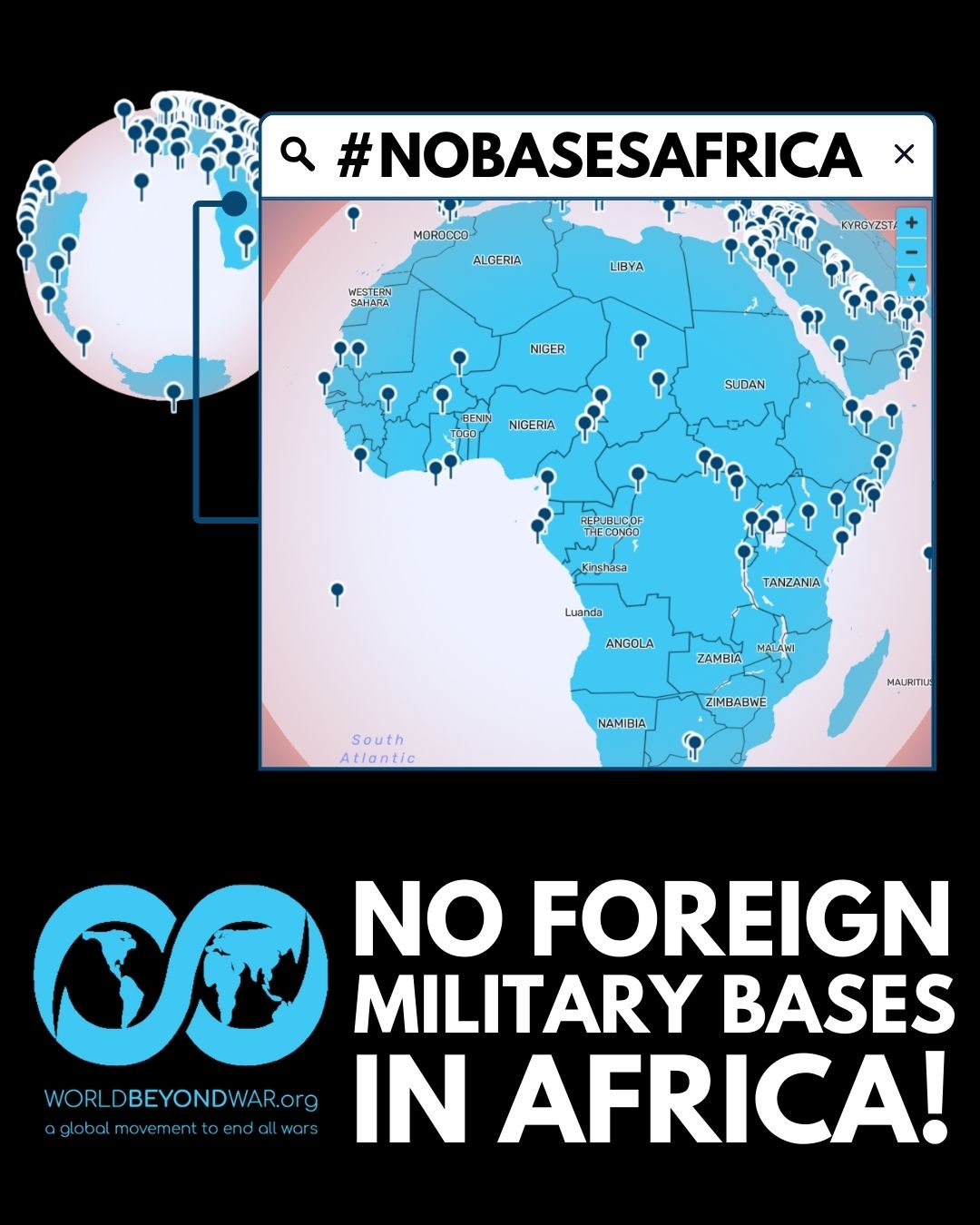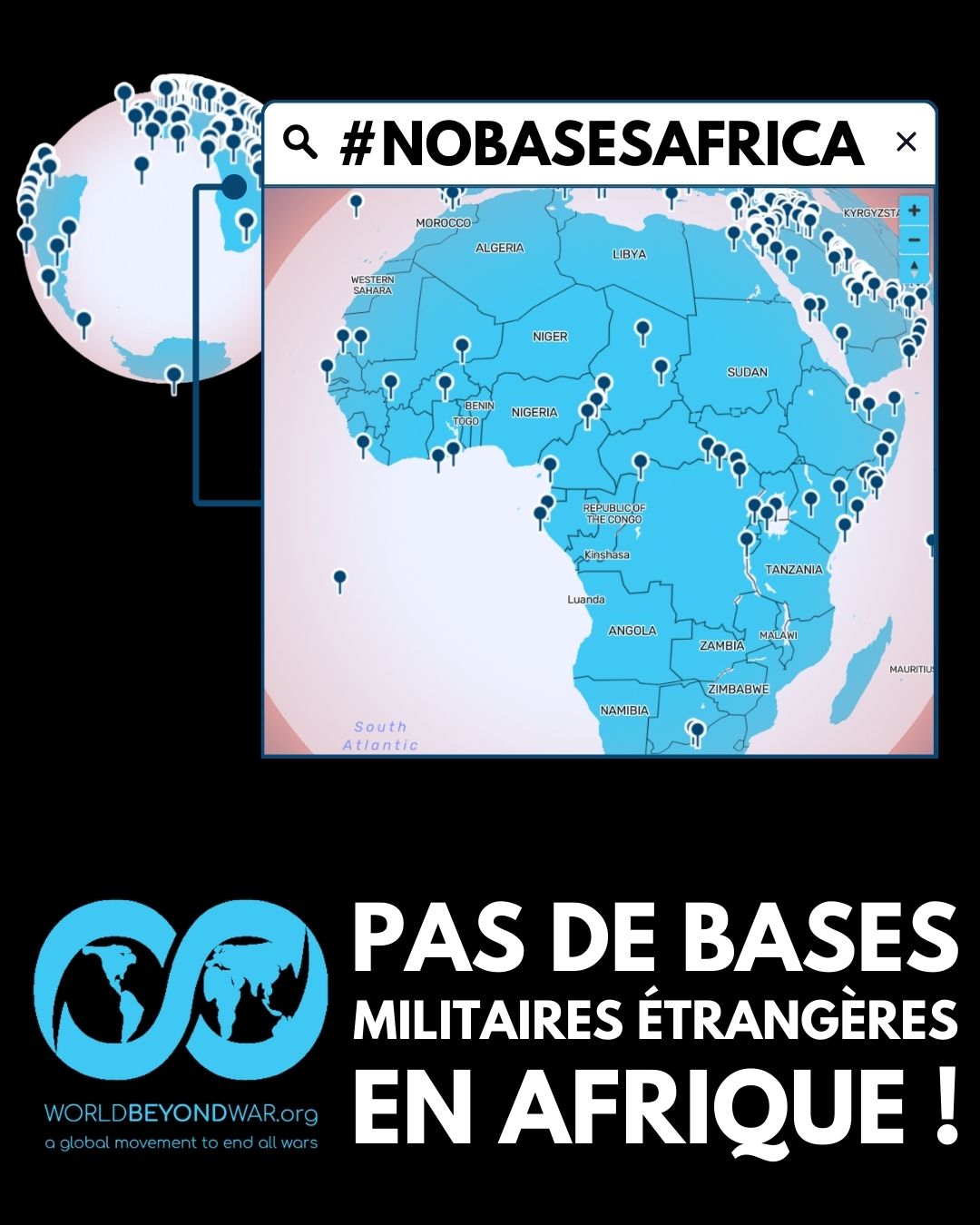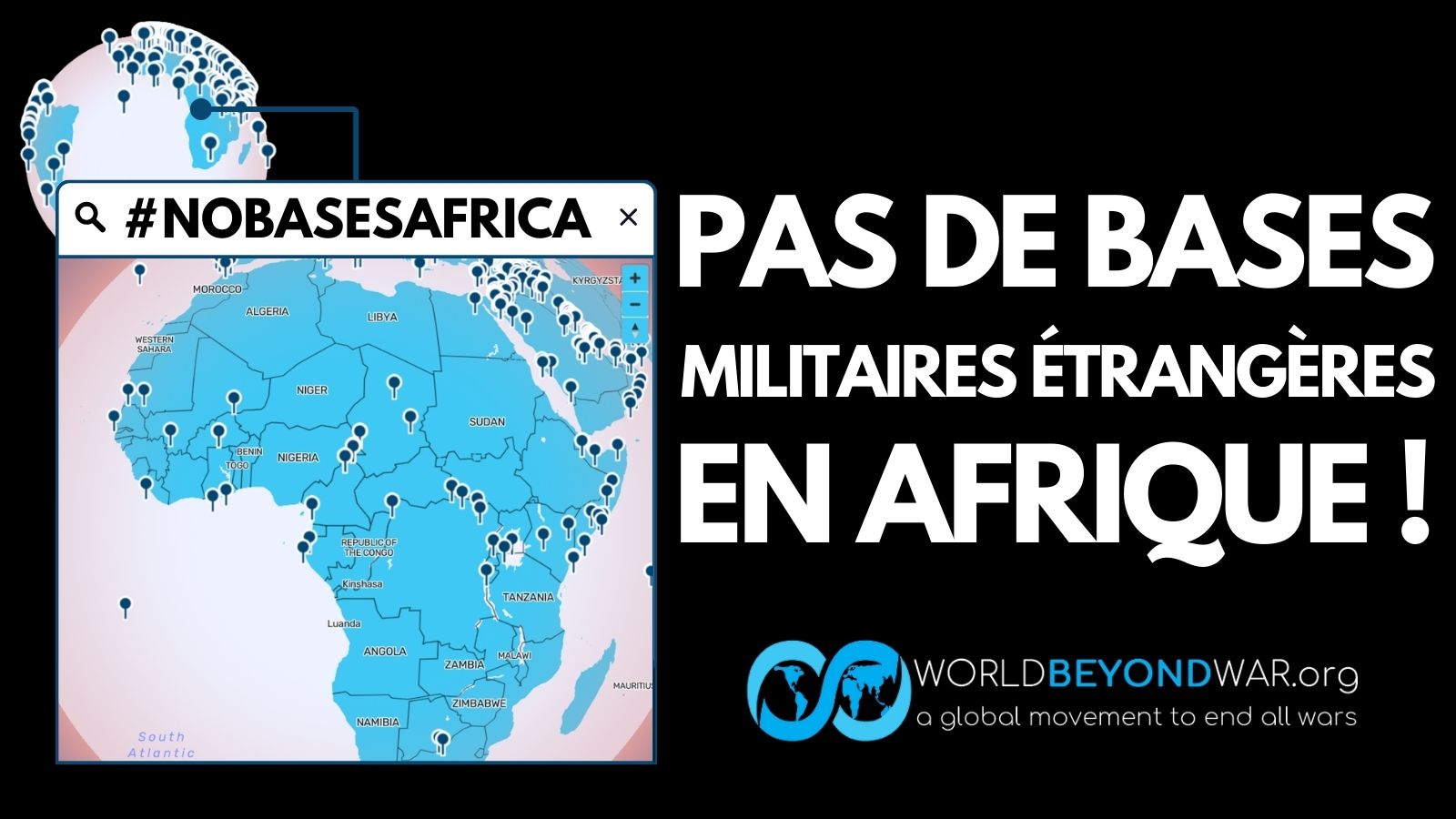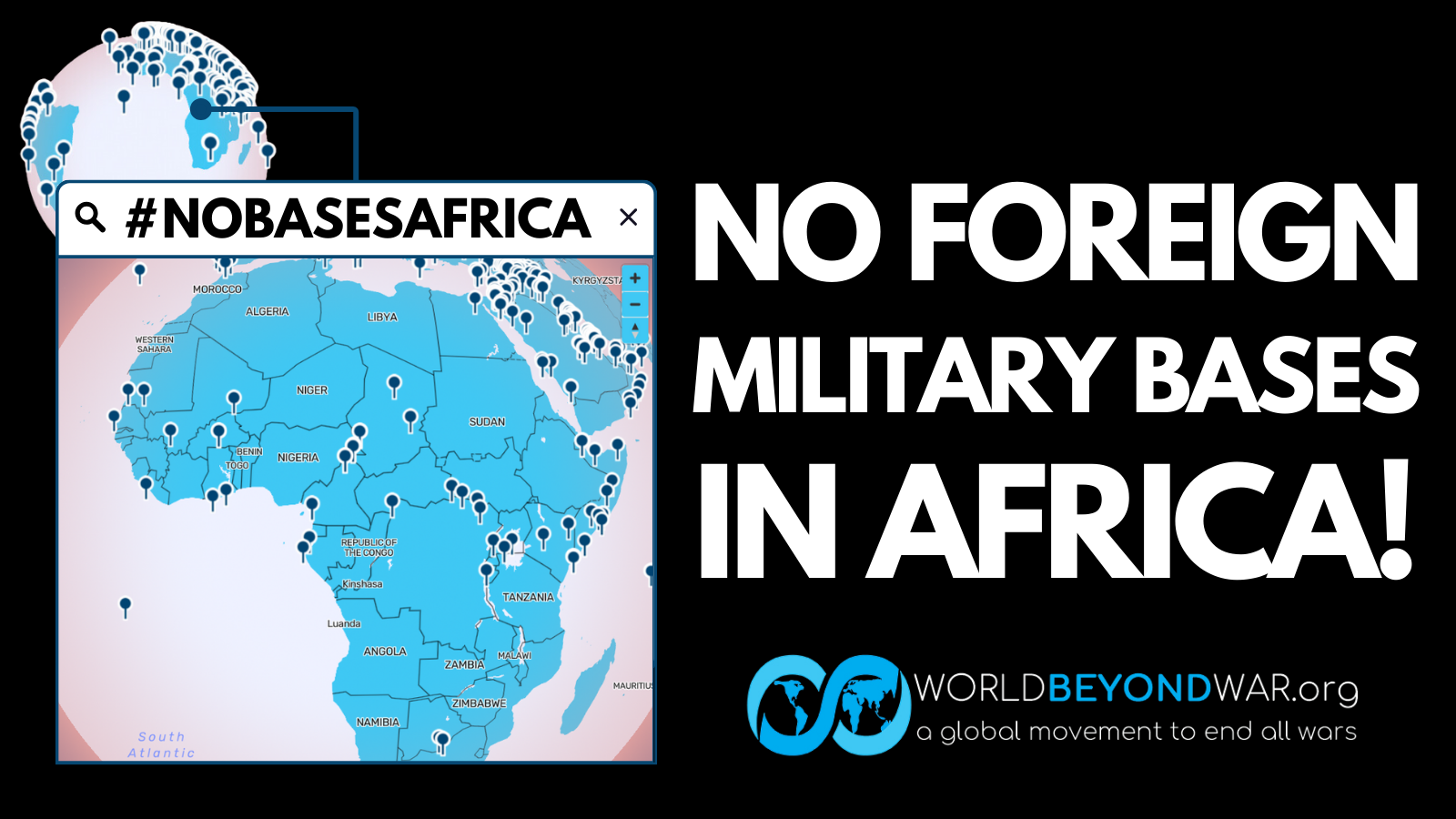
Foreign military bases in Africa contribute to rising militarization and tension across the continent. They undermine national sovereignty and weaken democratic accountability, while exposing surrounding communities to environmental degradation, insecurity, and social disruption. Security in Africa must not be defined by foreign military presence, but by international cooperation and diplomatic engagement. A world without war depends on non-violent approaches to security rather than militarized solutions.
World BEYOND War is calling on African governments hosting foreign military bases, and Foreign governments operating military bases on African soil, to Close Foreign Military Bases in Africa. We want them to commit to closing the bases immediately with the objective of transitioning toward demilitarized security solutions. The signatures collected through this petition will support African chapters and others around the world in carrying out targeted advocacy actions directed at their respective governments.
Sign the petition below!
#NoBasesAfrica
The campaign for the closing of foreign military bases in Africa is grounded in the conviction that they do not promote peace, security or stability, but instead deepen militarization, tensions, and dependency. Across the continent, these bases facilitate military interventions, fuel arms races, strengthen authoritarian regimes, and weaken democratic accountability, often while operating with limited transparency and public oversight. They also generate serious environmental consequences, as bases cause severe damage through land appropriation, pollution, and resource depletion like in Djibouti, where large volumes of groundwater are extracted from multiple wells to supply military bases in a semi-desert country that receives less than 200 mm of rain per year, putting extra stress on already scarce water resources. Bases divert attention and resources away from education, healthcare, development, and human security. For the African chapters of World BEYOND War, closing foreign military bases is a necessary step toward sovereignty, demilitarization, environmental protection and sustainable peace in Africa.
Several global powers maintain foreign military bases and military facilities across Africa, officially justified as necessary for counterterrorism, peacekeeping, maritime security or military cooperation. In reality, these bases reflect broader geopolitical and strategic interests that extend far beyond the security needs of African populations. The United States maintains the largest foreign military footprint on the continent, with 49 bases representing more than 60% of all known foreign bases in Africa, coordinated through AFRICOM and spread across key regions including the Sahel and the Horn of Africa. Other countries with military bases or facilities in Africa include France, the United Kingdom, China, the United Arab Emirates, Türkiye, Italy, Japan, India, Canada, Germany, Spain, and Singapore, while Russia is expanding its military influence through security agreements and plans for future bases. These military installations are concentrated in strategic areas such as Djibouti, Somalia, Kenya, and the Sahel, turning parts of Africa into zones of geopolitical competition and increasing militarization rather than promoting lasting peace and stability.
For an overview of foreign military bases worldwide, including Africa, see: https://worldbeyondwar.org/bases
Military bases in Africa often intensify conflict dynamics. In countries such as Cameroon, Egypt, Gabon, Sudan, and Uganda, foreign military cooperation has frequently strengthened ruling elites and security forces accused of repression and human rights abuses. These bases also perpetuate neocolonial power relations by allowing external powers to influence African political and security decisions, fueling growing anti-imperialist sentiment in countries such as Mali, Burkina Faso, Niger, Senegal, and Chad, where foreign military presence has increasingly been rejected by both governments and populations. Despite decades of military intervention and the expansion of foreign bases, Africa continues to experience devastating armed conflicts in Sudan, the Democratic Republic of Congo, Somalia, Libya, Mali, Burkina Faso, and elsewhere. According to the Africa Center for Strategic Studies, terrorism-related deaths in Africa reached a record 23,322 fatalities in 2023, with more than 150,000 deaths linked to militant Islamist violence over the past decade, particularly in the Sahel and the Horn of Africa where foreign military operations are heavily concentrated. These figures challenge the claim that foreign military bases improve security and instead suggest that they contribute to militarization, geopolitical rivalries, and prolonged instability across the continent.
Efforts to close foreign military bases in Africa are growing despite political sensitivities and limited transparency surrounding military agreements. In many countries, decisions about hosting foreign troops are treated as matters of national security, restricting public debate and making civil society advocacy difficult. Nevertheless, resistance to foreign military presence has intensified, particularly in the Sahel, where demands for sovereignty and decolonization have contributed to the withdrawal of foreign forces in countries such as Niger, Mali, Burkina Faso, and Chad. Civil society movements including Niger’s M62 Movement, Burkina Faso’s Balai Citoyen, and the French organization Survie have played an important role in mobilizing public opinion against foreign military influence. At the same time, World BEYOND War chapters in Senegal, Mali, Togo, Côte d’Ivoire, The Gambia, and Cameroon are raising awareness through education, advocacy, public engagement, and the #NoBasesAfrica campaign. Organized civic action and growing public pressure have helped challenge militarization and advance demands for sovereignty and nonviolent approaches to security in Africa.
The #NoBasesAfrica campaign seeks to raise public awareness about the dangers and consequences of foreign military bases in Africa while building civic and political pressure for their closure. Through educational activities, public discussions, advocacy, and nonviolent actions, the campaign aims to encourage transparency, democratic oversight, and dialogue on alternatives to militarized security. It also seeks to expose the environmental, social, and economic costs of military bases and promote the conversion of military infrastructures into projects that support sustainable development, human security, and peacebuilding. In the long term, #NoBasesAfrica envisions an Africa where security is based on diplomacy, cooperation, sovereignty, and nonviolent approaches to conflict resolution rather than foreign military presence.
Despite often being justified as support for security and counter-terrorism, foreign bases in Africa carry significant dangers and risks for host nations and the continent as a whole. First, they deepen dependency and erode sovereignty, especially when agreements are negotiated without democratic transparency or local consent, leading to decisions that prioritize foreign interests over African autonomy. Second, these bases can become flashpoints for conflict and extremism in Africa already threatened by terrorism. Third, the opacity of basing agreements can benefit elites and foreign contractors and therefore reinforce inequalities, while offering limited economic development for local populations.
For these reasons, the African chapters of World BEYOND War call on the African Governments who allow the bases and the Foreign Governments who use the pretext of the bases to plunder Africa’s resources, to close them immediately.
Sign the campaign petition here! The signatures collected through this petition will support African chapters and others around the world in carrying out targeted advocacy actions directed at their respective governments.
For more information on the campaign background, read our report here.
For more information on the Global Days of Action to #CloseBases, see https://daytoclosebases.org
Click the images below to view and download sharable graphics, available in the formats for X (Twitter)/Facebook & Instagram.
This webinar explains why the Djibouti bases should be closed.
Discussion between members of the Cameroon chapter and students on February 23, 2025, as part of the “Global Day of Action to Close Military Bases,” with the Africa Organizer of World BEYOND War. Some members of the Stop Killer Robots Campaign took part in the event to highlight the challenges of banning autonomous weapons systems, which pose a security threat just as significant as foreign military bases.