By Gloria Esther Castillo, World BEYOND War, June 16, 2025
Español Abajo
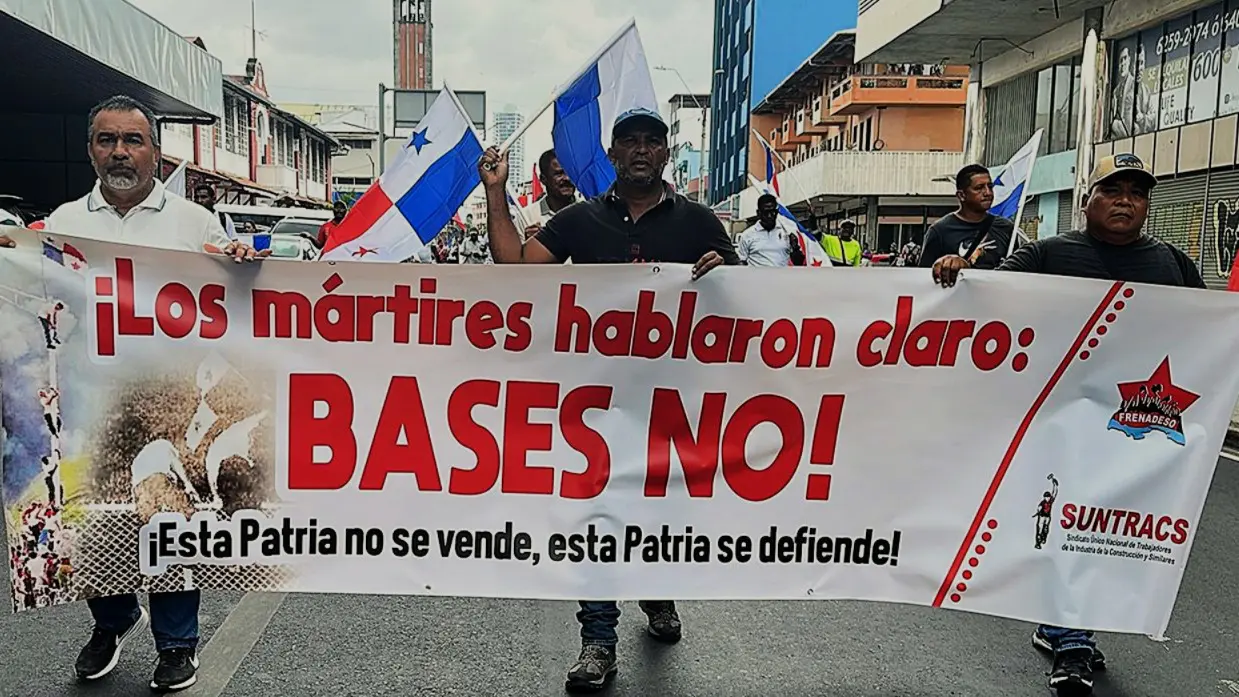
The Panamanian people are, by nature, humble, peaceful, hardworking, supportive, nationalist, and humanitarian. Throughout their history, they have peacefully exercised their constitutional right to protest against laws or decrees that violate national sovereignty or affect the majority. However, Panama bears the burden of having been a country occupied by the United States military for almost a century, and, sadly, invaded in 1989.
Panama and the United States Strengthen Bilateral Ties Amid Canal Disputes
In a context of growing cooperation, but also of persistent historical tensions and new controversies, Panama and the United States formalized a Memorandum of Understanding (MOU) in April 2025. This agreement seeks to strengthen collaboration in crucial areas such as security, economy and trade, governance and transparency, and migration issues. The MOU underscores the intention of both nations to deepen their strategic relationship, seeking mutual benefits in stability, development, and regional security.
Donald Trump’s Controversial Statements on the Panama Canal and the Military Threat of the Use of Force
In parallel with this strengthening of ties, U.S. President Donald Trump has unleashed a wave of opposition by reiterating his desire for the United States to regain control of the Panama Canal, which was handed over to Panama in 1999 following the Torrijos-Carter Treaties. His arguments are based on claims that have been roundly denied:
* “Chinese control” of the Canal: Trump claims that China operates the Canal, a claim that the Panamanian government and experts have categorically denied. Although a Hong Kong company manages two adjacent ports, this does not give it control over the Panama Canal Authority, which is a Panamanian entity.
* “Silly gift” and “takeback” plans: He has called the handover of the Canal a “silly gift” and insinuated that Panama has managed it poorly, declaring his intention to “take it back” or warning that “something very powerful is going to happen.”
* U.S. economic and national security: Trump considers the Canal vital to the US economy and security, citing its use by 40% of the country’s container transport and mentioning the presence of Chinese ships in the region.
* Alleged excessive charges: He alleges that US ships are unfairly “overcharged,” despite the neutrality treaty requiring equal rates for all countries.
The Panamanian government, including President José Raúl Mulino, has rejected these claims. Lacking character and firmness, the majority of Panamanians have been left with a sour taste in their mouths, submissive in the face of Trump’s statements, reiterating that “The Canal is Panamanian” and denying any Chinese interference. Experts have also refuted his claims and underscored the legal and political impossibility of a US “recovery” due to the international treaty governing the Canal.

A Look at the Intricate History of Panama-United States Relations
The relationship between Panama and the United States has been intrinsically linked to the construction and control of the Panama Canal, marked by moments of cooperation and tension.
In 1903, the Hay-Bunau Varilla Treaty granted the United States control of the canal and a 10-mile-wide zone. While this spurred development in the region, it also generated dependence and criticism regarding Panamanian sovereignty.
A moment of great tension was the 1989 U.S. invasion, an event that left thousands of deaths and significant damage, and installed a new government.
Subsequently, the Torrijos-Carter Treaties of 1977 represented a milestone by establishing the gradual transfer of the canal to Panama, culminating in 2000 and returning full sovereignty to the Central American country.
Currently, tensions persist related to canal tolls and China’s growing influence, and even to recurring US threats to retake control, underscoring the complexity and deep shared history of this bilateral relationship.
This panorama highlights the changing dynamics of the relationship between Panama and the United States, where strategic cooperation is intertwined with historical sensitivities and new political disputes surrounding a globally important asset such as the Canal.
Panama: Repression Grows in the Face of Popular Discontent
The start of Mulino’s presidency in July 2024 marked a turning point for Panama. His inaugural address was not only perceived as contemptuous and hateful toward the people, but also laid the groundwork for a series of decisions that have ignited social discontent.
From the outset, Mulino designated the province of Darién, bordering Colombia, as the “southern border of the United States,” a statement that generated national alarm. His legislative priorities, announced with equal haste, included reforms to social security pensions and, even more provocatively, the reactivation of open-pit mining. This came despite the massive popular mobilizations in 2023 that emphatically rejected this activity.
Treason and Violation of Sovereignty
The situation is worsening with President Mulino’s actions, which, according to various sectors, betray the homeland and violate the Constitution and the Neutrality Treaty. The transfer of territories to the United States for military bases and the free transit of US warships represent a direct affront to Panamanian sovereignty and raise alarm bells about the government’s true agenda.
The Resistance Unites: Strikes and National Mobilizations
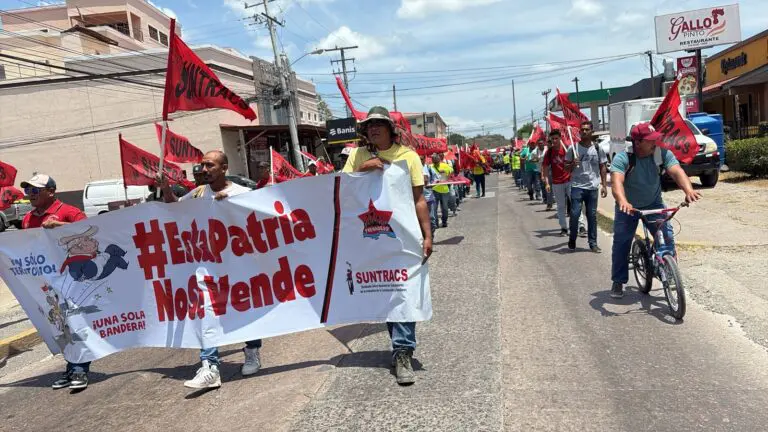
All these intertwined issues have unleashed a new wave of large-scale mobilizations throughout the country. The popular response has not been long in coming:
* Teachers declared a national strike starting April 23.
* Construction workers (SUNTRACS) began an indefinite national strike on April 28, along with banana workers affiliated with SITRAIBANA.
These struggles are being led by the United People for Life Alliance, which has managed to unite a wide range of sectors: workers, teachers, students, professionals, farmers, women, indigenous peoples, and organized communities, among others. As of today, the strikes and demonstrations have been going on for 40 uninterrupted days.
An Urgent Call for International Solidarity
We make an urgent call for international solidarity to learn about what is happening in Panama, to widely disseminate this situation, and to denounce the flagrant human rights violations suffered by all Panamanian people.
Militarización, Represión, Persecución Política, Dictadura Empresarial Y Corrupción En Panamá
Por: Gloria Esther Castillo, Un Mundo Más Allá de la Guerra, 13 d Junio 2025.
El pueblo panameño es, por naturaleza, humilde, pacífico, trabajador, solidario, nacionalista y humanitario. A lo largo de su historia, ha ejercido pacíficamente su derecho constitucional a la protesta contra leyes o decretos que atentan contra la soberanía nacional o afectan a la mayoría. No obstante, Panamá carga con el peso de haber sido un país ocupado por el ejército de Estados Unidos durante casi un siglo, y lamentablemente, invadido en 1989.
Panamá y EE. UU. Fortalecen Lazo Bilateral en Medio de Controversias por el Canal
En un contexto de creciente cooperación, pero también de persistentes tensiones históricas y nuevas controversias, Panamá y Estados Unidos han formalizado un Memorando de Entendimiento (MDE) en abril de 2025. Este acuerdo busca robustecer la colaboración en áreas cruciales como la seguridad, la economía y comercio, la gobernanza y transparencia, y los asuntos migratorios. El MDE subraya la intención de ambas naciones de profundizar su relación estratégica, buscando beneficios mutuos en estabilidad, desarrollo y seguridad regional.
Las Controversiales Declaraciones de Donald Trump sobre el Canal de Panamá y la amenaza militar del uso de la fuerza
Paralelamente a este fortalecimiento de lazos, el presidente estadounidense Donald Trump ha desatado una ola de rechazo al reiterar su deseo de que Estados Unidos retome el control del Canal de Panamá, entregado a Panamá en 1999 tras los Tratados Torrijos-Carter. Sus argumentos se basan en afirmaciones que han sido rotundamente desmentidas:
* “Control chino” del Canal: Trump asegura que China opera el Canal, una afirmación que el gobierno panameño y expertos han desmentido categóricamente. Aunque una empresa de Hong Kong gestiona dos puertos adyacentes, esto no le confiere control sobre la Autoridad del Canal de Panamá, que es una entidad panameña.
* “Regalo tonto” y planes de “recuperación”: Ha calificado la entrega del Canal como un “regalo tonto” y ha insinuado que Panamá lo ha gestionado de forma deficiente, declarando su intención de “recuperarlo” o advirtiendo que “algo muy poderoso va a suceder”.
* Seguridad económica y nacional de EE. UU.: Trump considera el Canal vital para la economía y seguridad de Estados Unidos, citando su uso por el 40% del transporte de contenedores del país y mencionando la presencia de barcos chinos en la región.
* Supuestos cobros excesivos: Alega que los barcos estadounidenses son “sobrecargados” injustamente, a pesar de que el tratado de neutralidad exige tarifas iguales para todos los países.
El gobierno panameño, incluyendo al presidente José Raúl Mulino, las ha rechazado. Al faltarle caracter y firmesa el grueso de los panameños han quedado con un mal sabor entregista y sumiso ante las declaraciones de Trump, reiterando que “El Canal es panameño” y negando cualquier interferencia china. Expertos también han desmentido sus afirmaciones y subrayado la imposibilidad legal y política de una “recuperación” estadounidense debido al tratado internacional que rige el Canal.
Una Mirada a la Intrincada Historia de las Relaciones Panamá-Estados Unidos
La relación entre Panamá y Estados Unidos ha estado intrínsecamente ligada a la construcción y el control del Canal de Panamá, marcada por momentos de cooperación y tensión.
En 1903, el Tratado Hay-Bunau Varilla otorgó a EE. UU. el control del canal y una zona de 10 millas de ancho. Si bien esto impulsó el desarrollo en la región, también generó una dependencia y críticas en torno a la soberanía panameña.
Un momento de gran tensión fue la invasión estadounidense de 1989, un evento que dejó miles de muertes y daños significativos, e instaló un nuevo gobierno.
Posteriormente, los Tratados Torrijos-Carter de 1977 representaron un hito al establecer la entrega gradual del canal a Panamá, culminando en el año 2000 y devolviendo la soberanía plena al país centroamericano.
Actualmente, persisten tensiones relacionadas con los peajes del canal y la creciente influencia de China, e incluso con las recurrentes amenazas por parte de EE. UU. de retomar el control, lo que subraya la complejidad y la profunda historia compartida de esta relación bilateral.
Este panorama evidencia la dinámica cambiante de la relación entre Panamá y Estados Unidos, donde la cooperación estratégica se entrelaza con las sensibilidades históricas y las nuevas disputas políticas en torno a un activo de importancia global como el Cana
Panamá: La Represión Crece Ante el Descontento Popular
El inicio de la presidencia de Mulino en julio de 2024 marcó un punto de inflexión para Panamá. Su discurso inaugural no solo fue percibido como despectivo y lleno de odio hacia el pueblo, sino que también sentó las bases para una serie de decisiones que han encendido la mecha del descontento social.
Desde el primer momento, Mulino señaló la provincia de Darién, colindante con Colombia, como la “frontera sur de los Estados Unidos”, una declaración que generó alarma nacional. Sus prioridades legislativas, anunciadas con la misma celeridad, incluían reformas a las pensiones de la seguridad social y, de manera aún más provocadora, la reactivación del tema de la minería a cielo abierto. Esto último, a pesar de las masivas movilizaciones populares de 2023 que rechazaron enfáticamente esta actividad.
Traición a la Patria y Violación de la Soberanía
La situación se agrava con las acciones del presidente Mulino que, según denuncian diversos sectores, traicionan la patria y violan la Constitución y el Tratado de Neutralidad. La entrega de territorios a Estados Unidos para bases militares y el tránsito gratuito de buques de guerra estadounidenses representan una afrenta directa a la soberanía panameña y encienden las alarmas sobre la verdadera agenda del gobierno.
La Resistencia se Articula: Huelgas y Movilizaciones Nacionales
Todos estos problemas, entrelazados, han desencadenado una nueva ola de grandes movilizaciones en todo el país. La respuesta popular no se ha hecho esperar:
* Docentes declararon huelga nacional a partir del 23 de abril.
* Obreros de la Construcción (SUNTRACS) iniciaron una huelga nacional indefinida el 28 de abril, junto con los trabajadores bananeros afiliados a SITRAIBANA.
Estas luchas están siendo lideradas por la Alianza Pueblo Unido por la Vida, que ha logrado articular a un amplio abanico de sectores: obreros, docentes, estudiantes, profesionales, campesinos, mujeres, pueblos originarios y comunidades organizadas, entre otros. Al día de hoy, las huelgas y movilizaciones cumplen 40 días ininterrumpidos.
Un Llamado Urgente a la Solidaridad Internacional
Hacemos un llamado urgente a la solidaridad internacional para informarse de lo que acontece en Panamá, difundir ampliamente esta situación y denunciar las flagrantes vulneraciones a los derechos humanos que sufre todo el pueblo panameño.