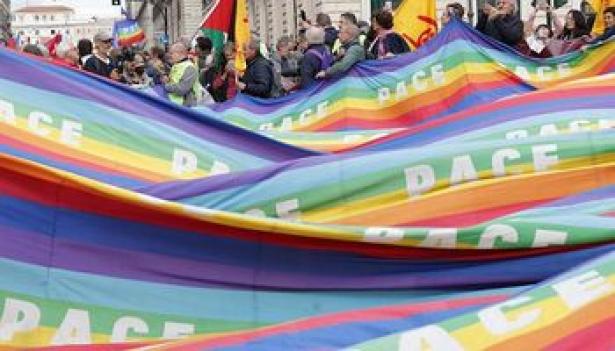
By Karin Utas Carlsson, PhD peace education, peace activist in Sweden, July 7, 2025
We are living in a militarized, violent society at all times threatened by nuclear weapons. Terrible things would happen if these were to be used. Imagine, a lot of nuclear bombs fired over big cities. In such a case soot would cover the sun to cause famine. The survivors would experience enormous suffering from lack of food and water, cancer, burn and crush injuries not getting medical help.
One example: treating badly burnt injuries are among the most demanding forms of care that exist. In Sweden during normal conditions around twenty badly burnt patients may be treated simultaneously. In Europe maybe a few hundreds. Hospitals with staff will be eradicated in case of a nuclear attack. It is calculated that in Nagasaki 95% out of all injured died from burns, in Hiroshima 60% (https://laromkarnvapen.se).
This needs to be said because respect for the effect of one single atom bomb, even worse a nuclear war, has fallen into oblivion. The risk of nuclear winter is not mentioned, neither the risk of nuclear war by mistake. If one nuclear bomb is detonated retaliation will most probably follow, a doomsday machine targeting the big cities…. Everything is planned with intention of deterring attacks.
This creates horror and need for protection. The unprovoked attack by Israel on Iran´s nuclear facilities and researchers was caused by the idea that Iran is about to reach nuclear ability to build nuclear weapons and needs to be stopped in time, that means a pre-emptive attack. This, of cause, is completely against international law, as illegal as the Russian annexation of Crimea in 2014 and later the attack on Ukraine in 2022 in order to prevent NATO/US from establishing themselves in the country with their nuclear weapons. Thus, in some cases, already the fear of nuclear weapons gives rise to war. It is much more difficult to end a war than to start it. We have in our vicinity a clear example of that, the Ukraine war. What happens in the wake of the now flaring up hostilities against Iran remains to be seen.
So, what shall we do to prevent war and build peace, the human and good society?
A big problem is how we divide the world between evil and good where we are on the side of the good ones who need to protect ourselves against the evil ones, in our case especially Russia but also China and Iran. Our protection requires us to use violence and war “as long as it takes” to exhaust our enemies and in some cases make them change leaders (read Saddam Hussein, Muammar al-Gaddafi, Bashar al-Assad). To choose enemies without figuring out reasons why they act as they do makes the basis for what is not wanted; fear and lack of understanding. See an interesting title in our influential magazine Dagens Nyheter in December 2021: “Do not try to “understand” Putin – listen to his opponents” (my translation from Swedish).
This is how you create war. It also says something of the function of the media to incite the war which with force for three years has hit Ukraine, the rest of Europe and the world. On the contrary, it is by creating understanding, such as taking to heart the argumentation, needs and feelings of the other side that war can be prevented and peace created. To understand is not equal to approve or defend. To have insight and understanding means greater opportunities to act in the best possible way to reach long-term goals.
Our current path is extremely dangerous. What is expected to protect us, the arming and alliances (NATO membership and the with USA bilateral Defence Cooperation Agreement), is what threatens the other party which we have chosen as enemy. This makes us vulnerable. The countries that not long ago were non-aligned, Sweden and Finland, now have a ruling elite who naively opens up for allowing nuclear weapons on their territory. Now a nuclear umbrella is regarded as protection! The politicians over and over talk about the insecure and tense political situation in the world but do not seem to realise that they themselves are creating this by membership in alliances and treaties targeting a chosen enemy. We contribute to the insecurity by perpetual war exercises and increased armour. We are told that we are not at war but also not at peace and that we should prepare for war. History shows that this creates war. It would be better to prepare for peace and prevent war.
There is only one way of protection against nuclear weapons: not to use them. Means are to prevent nuclear war, create peace and disarm, sign and ratify the UN Treaty on the Prohibition of Nuclear Weapons and utilise it, pressuring the nuclear powers to disarm. Through the Defence Cooperation Agreement we have given USA opportunity to put their nuclear weapons on our soil. We do not know whether they will transport them here for storage and threat against Russia. One thing is sure: Russia will regard the situation as a threat. This will make us a bomb target. We and all Europe need to change strategy and for this we have to think in a new way. One cannot bomb countries to be democracies. It will create resistance.
The security dilemma means that one party of a conflict sees itself as being in defence looking upon the opposing party as violent and aggressive. That party thinks the same, but reverse: he defends himself and sees the opponent as aggressive.
Now, the traditional way of thinking is to deter the opponent from attacking. In order to deter, your deterrence has to be trustworthy. Therefore one needs to arm more, increasing the threat. Since the opponent thinks exactly the same he also arms, and we find ourselves in an arms race, actually a game of chicken since we now have nuclear weapons which can destroy us if the deterrence should fail.
We in the peace movement see the obvious risk that nuclear war might occur by accident or because tension and distrust grow. Incidents when a nuclear catastrophe almost happened has occurred several times during the short period those weapons have existed on earth. So far we have been lucky, but for how long? The problem is denial by those in charge and the media. They say: “ It won´t happen” and continue as before. Sweden has not signed the Treaty on the Prohibition of Nuclear Weapons. This in spite of the fact that Sweden took part in negotiating the agreement. It is a shame.
We can work to transform the hypothesis of military deterrence into the idea of common security where human needs are satisfied to a greater degree. Common security means that no-one is secure if not everyone is. Therefore one country cannot strengthen its security at the expense of some other country. The UN report “Common security” 1982 by Olof Palme commission enlightened the world about this. It has been reiterated in treaties (the Charter of Paris 1990, the declarations of Istanbul 1999 and Astana 2010). This needs to sink in as the basis for security policy and replace the notion of the benefit of deterrence. These ways of thinking – deterrence and common security – are polar opposites of each other. One is about trust in threat and violence and the other one trust in people as co-partners to solve problems and meet human needs.
The peace researcher John W. Burton, the founder of Human Needs Theory, says that deterrence does not deter in conditions when basic human needs are frustrated. He refers to deep-rooted conflicts. People feeling threatened in their basic needs will use violence regardless of circumstances and consequences when they see no peaceful alternative. Deterrence theory, the very basis of our international strategic policies, is undermined because deterrence cannot deter in situations in which human needs are frustrated, he continues. This is exactly what we see in the Ukraine war. More resistance, violence, hatred, bad reputation, and sanctions by the West will not put an end to the war because Russia feels an existential threat (like of course Ukraine does). Thus violence breeds violence in a deadly spiral. President Putin and his minister of foreign affairs Lavrov have multiple times – also during the weeks before the attack on Ukraine in February 2022 – expressed their concern about the existential threat through the expansion by NATO right up to the Russian western border. This was not taken seriously by the West. Had it been, I believe the war could have been avoided.
The belief in deterrence as means to avoid attack leads to more countries wanting to have nuclear weapons. North Korea experiences need for nuclear weapons not to be attacked and wiped out. Iran gets increased reason to pursue nuclear weapons production program when they get attacked by Israel in order not to have time to acquire knowledge to produce the weapons. The Nuclear Non-Proliferation Treaty (NPT) is getting eroded.
In order to reach long-term solutions we need to analyse conflicts for causes as well as regarding the consequences of our actions. Or lack of actions.
We need to prevent distrust, revenge, and hatred and build peace which means good social relations where human needs are satisfied. Burton invented the word provention which means a combination of prevention and promotion. Prevent enemy image, violence, and promote the society we want to live in, the common good. Burton’s best-known book is called “Conflict: Resolution and Provention”. Resolution differs from settlement where causes and underlying assumptions, feelings, and needs are not sought. Basic needs are security, belonging, identity and autonomy among others. These can be existential and defended through violence OR nonviolence. The latter needs to be taught, practiced and experienced.
We are longing for a culture of peace where we build a harmonious society meeting basic human needs preventing violence: physical, psychological, cultural, and structural as well as threats of violence.
Right from the -60ies Burton expressed the similarities between conflicts at all levels, locally and globally. He compared the power paradigm with an alternative built on nonviolent thinking and methods of solving conflicts.
The alternative is within reach: provention, dialogue, constructive conflict resolution, mediation, and diplomacy which needs to be changed into caring for the globe and humans everywhere. Much is known how this can be done. We have the behaviour sciences, practiced by psychologists, social workers, and diplomats among others. Use this wealth of knowledge and experience dealing with international politics!
Conflict resolution and provention in Burton’s sense goes extremely well with modern knowledge of conflict and it’s resolution. This should be taught at all levels at schools and universities. For this, teacher training is important, the basis. Much needs to be done here. It is urgent! There is now a proposal for continuing education programmes to professionals.
The current belief in deterrence, with all its risks and drawbacks – especially in the nuclear weapon era – can be replaced by diplomacy, negotiations, cooperation, and conflict resolution. Threats of violence must be avoided. Conflicts at the micro and macro levels are similar, and we can benefit from the level we know the best, the personal one. A new way of thinking, in which human needs and security make the basis of handling conflicts, is necessary to avoid the catastrophes following militarisation. This will give resources to address the UN sustainable development goals. We must stop thinking in terms of the good ones and the evil, creating enemies. Today we judge differently our side and that of the opponent. The yardstick is different.
The state of affairs serves only the military, industrial, academic, and media complex MIMAK (Jan Öberg, transnational.live). Unfortunately, many groups are provided for by armour, military research, and war. Too many are afraid of losing their income. Others fear reduced profits and abundance. It takes courage to resist the prevailing way of thinking.
A different world is possible: one where human security goes with common security, a world meeting the needs of every human being, one that does not build on deterrence theory but gives hope for a more just future. We have to return to a more ethical way of living: What has happened to us that without intervening we see the Palestinians in Gaza, trapped behind walls, being bombed to extinction and starving children and adults shot while queuing for food and water? Change does not require armies and weapons, but the opposite: nonviolent peaceful means.