


By Bogota Chapter of World BEYOND War, December 1, 2024
Español Abajo.
“False positives” in Colombia constitute one of the darkest chapters of the country’s armed conflict. This term refers to the murders of civilians perpetrated by members of the Army, who presented the victims as guerrillas killed in combat in order to inflate operational results. These extrajudicial executions reached their peak between 2002 and 2008, within the framework of the “democratic security policy,” and left a devastating toll of thousands of victims, mostly young people of limited means.
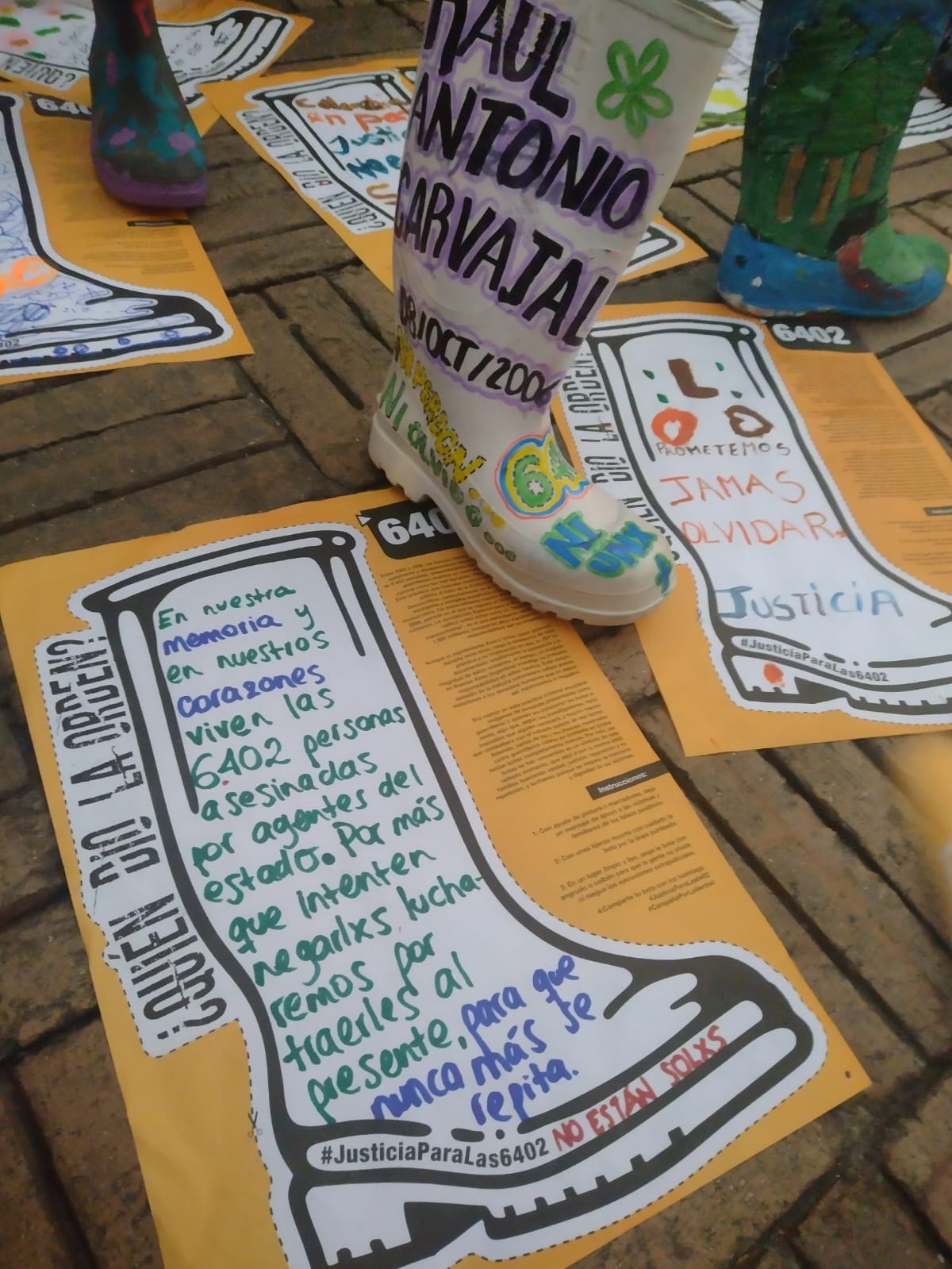
Memory and truth as acts of resistance
In the face of this horror, the Mothers of Soacha have emerged as a symbol of the struggle for truth and justice. These women, whose children were victims of false positives, have transcended their individual pain to become human rights defenders and builders of memory. In a country with high rates of impunity, their actions represent a constant effort to preserve the truth in the face of denial and silence.
The weaving of memory from peace that they carry out involves telling their stories from a place of active resistance, transforming mourning into a platform for denunciation. Through marches, community meetings, art exhibitions and other forms of activism, they have managed to make these atrocities visible both in Colombia and internationally. For them, memory is not only a reminder of injustice, but an instrument to prevent the repetition of violence.
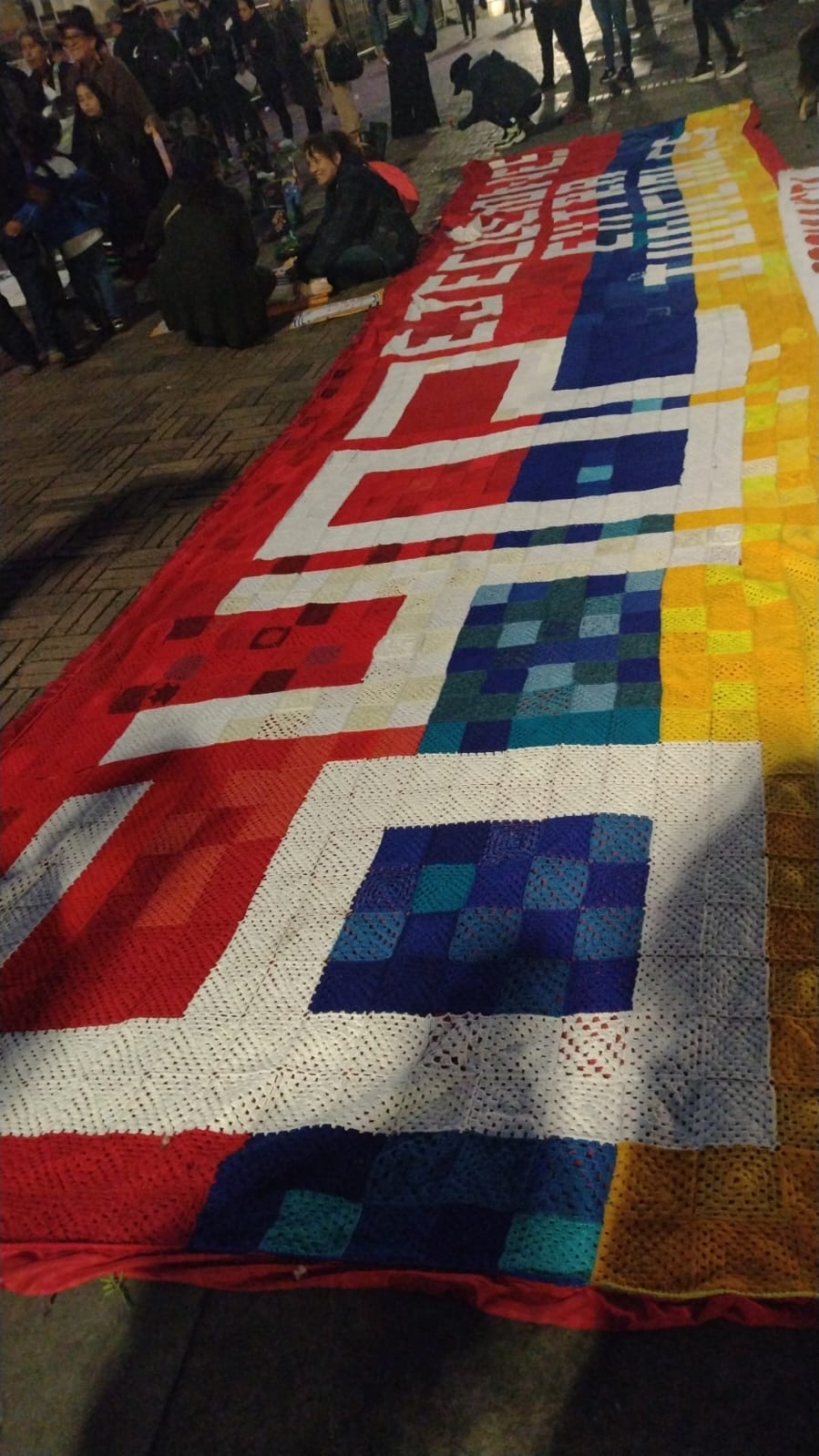
Building peace from memory
The act of weaving memory has profound implications for the Colombian peace process. Memory is fundamental for reconciliation, as it recognizes the suffering of victims and gives them a legitimate place in the historical narrative. Without truth, it is not possible to build trust or lay the foundations for lasting peace. The Mothers of Soacha, with their tireless struggle, open space for victims to be heard and dignified.
These women have demanded that truth be a central axis in transitional justice mechanisms, such as the Special Jurisdiction for Peace (JEP) and the Truth Commission. Their demand seeks not only to hold perpetrators accountable, but also to reveal the structural dynamics that allowed these atrocities to occur.
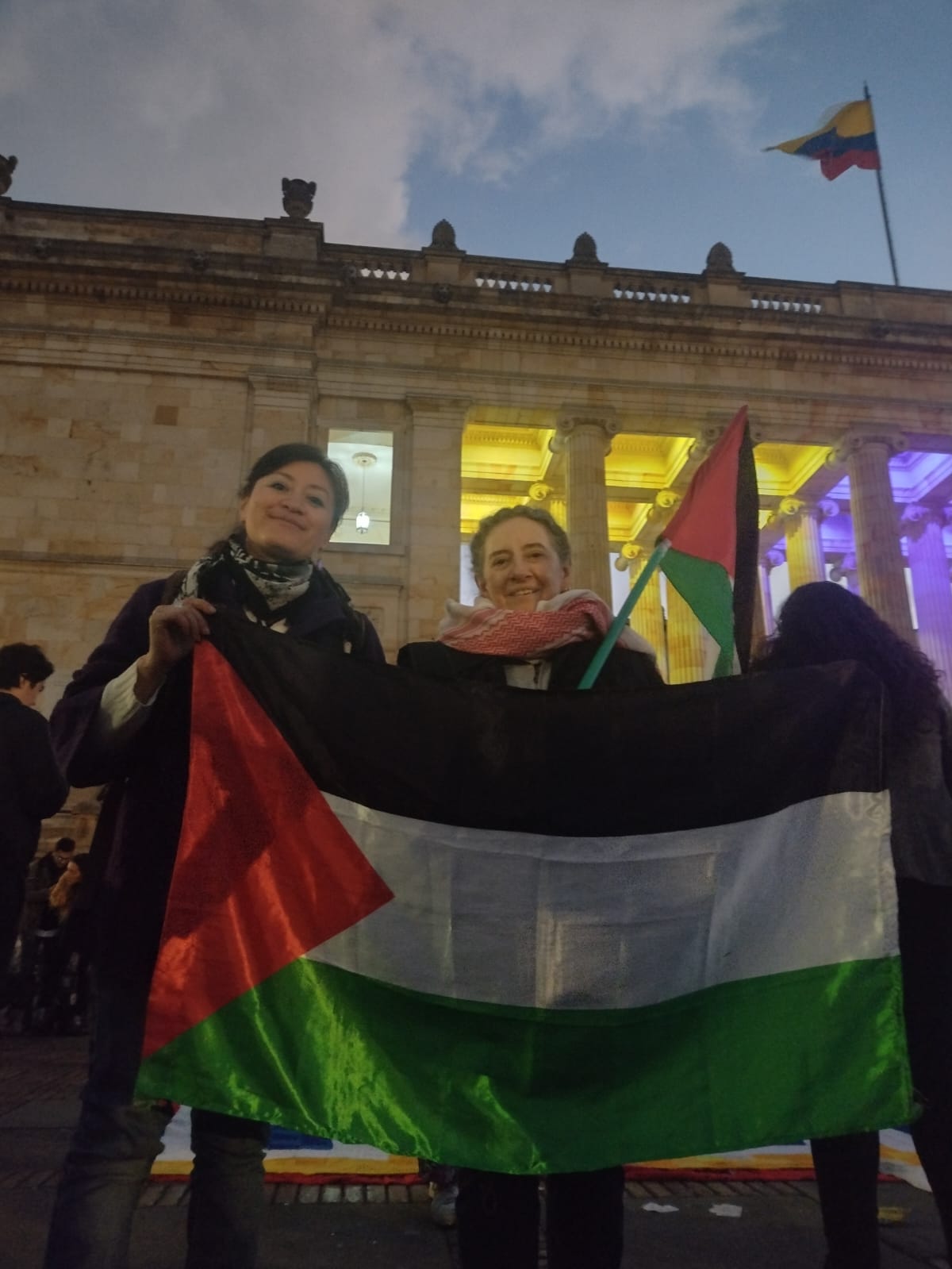
Weaving memory as a symbol of resistance
The literal act of weaving, which many of these women have adopted in their meetings, is deeply symbolic. Threads and needles have become metaphors for the collective work to rebuild what is broken: their families, their communities, and the social fabric of a wounded country. Each stitch is an act of healing and a cry of resistance against oblivion.
The work of the Mothers of Soacha is a powerful example of how memory and truth can be transformative tools in peacebuilding. Their struggle is a reminder that, although the wounds of the armed conflict are deep, the collective weaving of truth and justice can heal and prevent new violence. It is an undeniable truth and a coined phrase to say that in this country there will only be a future if there is TRUTH.
Capítulo En Bogotá Participa en Acción Por La Paz y La Memoria.
Por: Capítulo Bogotá, World BEYOND War, 29 de Noviembre de 2024.
Los falsos positivos constituyen uno de los capítulos más oscuros del conflicto armado en Colombia. Este término se refiere a los asesinatos de civiles perpetrados por miembros del Ejército, quienes presentaron a las víctimas como guerrilleros muertos en combate con el fin de inflar los resultados operacionales. Estas ejecuciones extrajudiciales alcanzaron su pico máximo entre 2002 y 2008, en el marco de la política de seguridad democrática, y dejaron un saldo devastador de miles de víctimas, en su mayoría jóvenes de escasos recursos, manipulados u obligados bajo falsas excusas.
Memoria y verdad como actos de resistencia
Frente a este horror, las Madres de Soacha emergen como un símbolo de lucha por la verdad y la justicia. Estas mujeres, cuyos hijos fueron víctimas de los falsos positivos, han trascendido su dolor individual para convertirse en defensoras de derechos humanos y constructoras de memoria. En un país con altos índices de impunidad, sus acciones representan un esfuerzo constante por preservar la verdad frente a la negación y el silencio.
El tejido de memoria desde la paz que llevan a cabo implica narrar sus historias desde un lugar de resistencia activa, transformando el duelo en una plataforma de denuncia. A través de marchas, encuentros comunitarios, exposiciones artísticas y otras formas de activismo, han logrado visibilizar estas atrocidades tanto en Colombia como en el ámbito internacional. Para ellas, la memoria no es solo un recordatorio de la injusticia, sino un instrumento para evitar la repetición de la violencia.
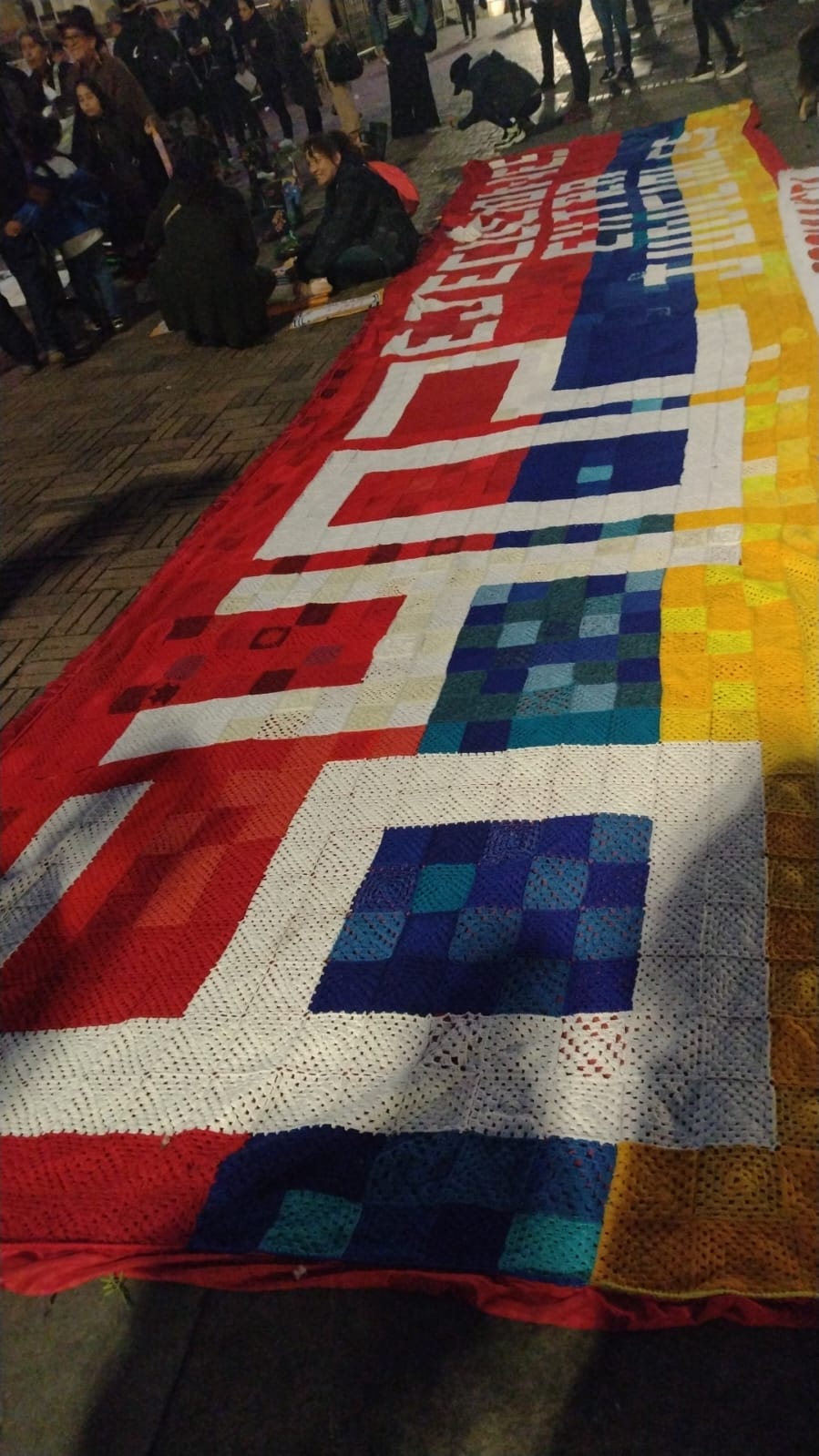
Construcción de paz desde la memoria
El acto de tejer memoria tiene profundas implicaciones en el proceso de paz colombiano. La memoria es fundamental para la reconciliación, pues reconoce el sufrimiento de las víctimas y les otorga un lugar legítimo en la narrativa histórica. Sin verdad, no es posible construir confianza ni cimentar las bases para una paz duradera. Las Madres de Soacha, con su incansable lucha, abren espacio para que las víctimas sean escuchadas y dignificadas.
Estas mujeres han reclamado que la verdad sea un eje central en los mecanismos de justicia transicional, como la Jurisdicción Especial para la Paz (JEP) y la Comisión de la Verdad. Su exigencia no solo busca responsabilizar a los perpetradores, sino también revelar las dinámicas estructurales que permitieron estas atrocidades.
Tejer memoria como símbolo de resistencia
El acto literal de tejer, que muchas de estas mujeres adoptaron en sus encuentros, es profundamente simbólico. Hilos y agujas se convierten en metáforas del trabajo colectivo para reconstruir lo roto: sus familias, sus comunidades y el tejido social de un país herido. Cada puntada es un acto de sanación y un grito de resistencia frente al olvido.
El trabajo de las Madres de Soacha es un ejemplo poderoso de cómo la memoria y la verdad pueden ser herramientas transformadoras en la construcción de paz. Su lucha es un recordatorio de que, aunque las heridas del conflicto armado sean profundas, el tejido colectivo de la verdad y la justicia puede sanar y prevenir nuevas violencias , es una verdad innegable y una frase acuñada decir que en este país solo habrá futuro si hay VERDAD.


One Response
Mujeres víctimas admiradas por su recilencia.